


Sodium Dodecylbenzenesulfonate grew out of the post-war push for more efficient, less soap-scum-producing detergents. In the forties and fifties, traditional soaps left residues because they struggled against hard water. Chemists worked to design molecules that performed in tough, mineral-rich water. Aromatic sulfonates like Sodium Dodecylbenzenesulfonate started replacing older formulas around the world. As industrialization pushed cities to rely on modern cleaning textiles, this compound found its way into thousands of homes, laundries, and factories. Notably, its introduction marked a shift from natural animal fats to synthetic raw materials, reflecting society's broader embrace of petrochemical refinement and new manufacturing capabilities.
Producers sell Sodium Dodecylbenzenesulfonate as powders, pastes, or liquids. It's a workhorse for surfactant applications, perfect for laundry detergents, household cleaners, and industrial degreasers. Its strong foaming nature makes it popular in products marketed for visual cleaning power. I see it in hand soaps at the public gym and in car-wash soaps. In the chemical supply chain, it sits comfortably among the most traded surfactants. Big players in chemical manufacturing offer versions tailored for bulk industry or consumer bottling, always tuned to strike a balance of cleaning strength and affordability.
Sodium Dodecylbenzenesulfonate appears as a white to light yellow solid or a viscous paste, with a sharp, characteristic odor. It dissolves readily in water, producing a milky solution due to its surfactant nature. It foams even at low concentrations, keeps oil and grease suspended, and handles temperatures up to the boiling point of water without breaking down. This compound’s molecular formula, C18H29NaO3S, reflects its bulky, branched side chain, which is key to breaking the surface tension of water. It is stable against acids and bases within the pH range normally found in cleaning products, limiting unwanted reactions in storage or use.
Buyers demand clear quality standards for Sodium Dodecylbenzenesulfonate, particularly in industries that can't tolerate variability. Specifications spell out purity percentages, moisture content, residual base, and linearity of the alkyl chain. Commercial labels list the sodium salt content, outlining active matter as a percentage by weight, and flagging any inert or related impurities. This data gives formulators the confidence to switch suppliers without risking production downtime or surprise results in their blends. Regulatory labeling should note safety warnings, shelf life, and recommended storage temperatures. In my experience, product sheets often mention compliance with standards like GB/T or ASTM for customers needing cross-checking assurance.
Manufacturers make Sodium Dodecylbenzenesulfonate through sulfonation of linear dodecylbenzene with sulfur trioxide, then neutralize it with sodium hydroxide. This process uses controlled reactors to avoid runaway exothermic reactions. The sulfonation step builds the molecule’s "head" that grabs water, while the benzene ring helps anchor the long, grease-penetrating tail. Consistent temperature control during the process locks in yield and purity, so scale-up from lab to industry didn't come easy — mistakes showed up as off-color, foul-smelling batches that failed foam stability tests. This is a process where good engineering makes a chemical both cost-effective and high-performing.
With its sulfonic acid group, Sodium Dodecylbenzenesulfonate resists breaking apart, but chemists can attach other groups or swap out the sodium ion for potassium or ammonium. Sometimes, blending it with nonionic surfactants improves cleaning at lower temperatures or reduces skin irritation in personal care products. 'Green chemistry' has steered research too, prompting tweaks that lower environmental persistence without compromising cleaning ability. Crosslinking or co-polymerizing with other surfactants can produce gels or thickened products for specialty industrial uses. My time in the lab showed that seemingly minor molecular tweaks give wide changes in foam height and grease cutting, proving this molecule isn’t just static but a point of invention.
Sodium Dodecylbenzenesulfonate goes by several names in trade: LAS (Linear Alkylbenzene Sulfonate), Sulfonic Acid Sodium Salt, and sometimes just “sulfonate detergent.” On ingredient lists in stores, you spot it as “sodium dodecylbenzenesulfonate” or “sodium alkylbenzenesulfonate.” Each of these reflects subtle structural differences, mainly in the branching of the carbon chain. Companies hang on to unique trademarks for blends or high-purity versions, but the backbone—the ring and the chain—always tells the story of this compound.
Sodium Dodecylbenzenesulfonate demands respect in handling. Powders drift easily and irritate eyes and lungs, so proper masks and ventilation matter in bulk processing. Solutions can cause skin irritation with prolonged contact. Labels flag the need for gloves and splash protection. Disposal regulations steer factories to treat waste water to break down the sulfonate group. The European Chemicals Agency and the U.S. Environmental Protection Agency assign classification codes that dictate storage, transport, and reporting standards. In workplaces I’ve visited, drum storage areas sit far from food and staff break rooms, and spill kits with neutrality agents stand ready by the mixing vats.
Household cleaning dominates its use, showing up in dish soaps, laundry powders, and floor cleaners. Food industry workers rely on it to de-grease complex machinery, and pulp mills prefer it for pigment dispersal. Textile processing depends on its power to lift oils and emulsify dirt. In mining, it helps separate minerals, floating valuable ores away from clay and rock. Some folks forget that even fire-fighting foams need strong surfactants like this one to knock down stubborn hydrocarbon flames. Road construction and asphalt emulsification round out the list; here, its job is to keep sticky tar spreadable in water-based mixes. With every use, cleaning performance, emulsification, and cost keep it in demand.
University labs work on tweaking the structure to reduce aquatic toxicity and boost biodegradability. Some projects explore alternate raw material sources, like bio-based dodecylbenzenes from plant oils, for greener surfactants. Patent filings show ongoing attempts to cover blends that combine Sodium Dodecylbenzenesulfonate with enzymes or dispersants. Industry pushes for formulas that perform well at low temperatures, slashing home energy bills and environmental footprints. A research group I’ve met experimented with nanocapsules that release this surfactant on command, promising even more targeted cleaning or controlled emulsification.
Early studies flagged concerns about the impact of persistent surfactants on aquatic life. Fish and invertebrates often take the brunt in areas where untreated wash water enters rivers. Modern Sodium Dodecylbenzenesulfonate mostly breaks down well in waste treatment plants, but high enough concentrations can still foam up stream beds and harm aquatic organisms. Chronic exposure in humans may cause skin irritation, but not cancer or serious systemic issues at consumer concentrations. Labs now focus on tracing breakdown products, ensuring byproducts like sulfophenyl carboxylates don’t outlast ordinary detergents or show up in tap water. Better wastewater management and greener product design will keep future risks down.
Demand isn’t fading. Economic development in emerging markets creates new chores for powerful, affordable cleaning agents. Sustainability keeps pressuring companies to transform old formulas, swapping in biodegradable side chains and renewable feedstocks. Regulations tighten every few years, forcing producers to stay nimble. Digital monitoring in wastewater plants and AI-assisted process optimization promise higher yields and less environmental leakage. As energy costs shape consumer choices, formulas with Sodium Dodecylbenzenesulfonate balanced for cold-water washing grab more shelf space. The move toward concentrated and single-use products asks chemists to push its limits again—finding ways to shrink packaging while keeping cleaning punch. Here, Sodium Dodecylbenzenesulfonate keeps adapting, shaped by society’s changing needs, advancing science, and the relentless drive for cleaner homes, industry, and waterways.
Open up any bottle of dish soap or glance at the back of a laundry detergent box. There it is: sodium dodecylbenzenesulfonate, a name that rarely rolls off the tongue. For decades, this chemical has helped keep kitchens and bathrooms clean by acting as a surfactant, which means it breaks up grease and grime about as easily as warm water melts butter. Sudsy bubbles do much of the scrubbing when you wash your hands or run a load of laundry, and sodium dodecylbenzenesulfonate stands behind much of that action.
A surfactant works by attacking the line between oily dirt and water. Normally, water alone slides right off oil. Toss in sodium dodecylbenzenesulfonate, and its molecules grab onto both the oil and the water. Grease, stuck on dishes or clothing, surrenders as this chemistry breaks up stubborn spots and flushes them away. Water can now wash those stains down the drain. The stuff also pops up in household hard surface cleaners, carpet shampoos, and even a few personal care products that need to foam, such as certain shampoos.
People see its effects daily, usually without realizing it. In my experience, a busy home throws all sorts of messes at cleaning products: oily pans after breakfast, coffee stains on a favorite mug, muddy socks from a weekend hike. Unless a soap lathers well and actually leaves items clean, nobody feels satisfied. Surfactants that work as well as sodium dodecylbenzenesulfonate give people a sense that their time and effort count for something. So many brands around the globe rely on it because it actually gets the job done, which drives why it stays in the mix despite ongoing chemical innovation.
Many people overlook what happens after the bubbles disappear. Sodium dodecylbenzenesulfonate has raised questions over water pollution, especially in places where wastewater isn’t fully treated. Research shows this chemical breaks down slowly in colder water, which can stress aquatic life. The more product that gets flushed down the drain, the greater the risk to rivers and lakes. The European Commission and several environmental groups keep a close eye on its use and require strict wastewater standards. Better biodegradability reduces pollution, which drives stricter guidelines. Where regulators see poor breakdown rates, consumer demand shifts toward gentler alternatives.
Switching out sodium dodecylbenzenesulfonate remains tough because it does its job at a good price, but small changes start to make a difference. Using concentrated cleaning formulas saves energy in shipping and packing. Makers who stick to only what’s necessary in each product cut down on overall chemical waste. Homeowners and businesses play a part by choosing eco-labeled soaps and using only as much as needed. Wastewater systems also deserve investment so they can clean up remaining traces before water hits streams.
People want products that do more good than harm. Factoring in both cleaning power and long-term effects on the environment steers companies toward investing in research and using better ingredients. Responsible decisions about surfactants like sodium dodecylbenzenesulfonate support both healthy homes and cleaner rivers—a result that makes everyone’s load a little lighter.
Sodium dodecylbenzenesulfonate (SDBS) turns up in all sorts of household products, especially cleaners and detergents. Its job boils down to this: SDBS helps lift grease and grime from dishes and laundry. I’ve seen folks scrub out bathtubs or wash produce in the kitchen, rarely thinking about what powers that foamy clean.
We’re told these products make life easier, but not everyone feels sure about their safety. Scientists have spent years looking at how SDBS breaks down in the environment or what long-term contact with skin means for us and our families. Some people balk at chemical names; others shrug it off as part of modern life.
Legitimate questions deserve honest answers. SDBS has no major skeletons in the closet, at least at the concentrations used in household cleaners. Toxicologists and independent labs have put it through the wringer, searching for links to cancer, hormone disruption, or lasting toxicity. Results show this surfactant doesn’t build up in the body, and it breaks up quickly in wastewater plants, where sunlight and bacteria finish the job. The U.S. Environmental Protection Agency and European Chemicals Agency give SDBS the green light for products meant for everyday use, as long as manufacturers follow safety limits.
I’ve seen families worry about washing baby bottles or fresh produce with soaps containing SDBS. Here’s the truth: at the levels found in regular cleaning products, risk drops close to zero if you rinse well. Skin irritation sometimes pops up—usually among people with sensitive skin, or if someone gets a splash straight from the bottle onto the hands and forgets to rinse. But I’ve never seen a reputable study tie SDBS to anything more serious, like birth defects or major organ trouble.
People sometimes miss a key piece of the puzzle: dose and exposure. No chemical is risk-free if you dump gallons of it directly into your water glass, but that isn’t how these products work. Most folks mix cleaners with water, scrub things down, then rinse everything clean. The actual amount of residue sticking to dishes, clothing, or skin lands far below the safety benchmarks set by health agencies.
Kids and pets put hands and paws everywhere. If any chemical has the chance to linger, it helps to check labels and use the recommended amount of soap or cleaner, not more. A quick rinse or an extra pass under running water finishes the job. Common sense does more heavy lifting than fear, and if someone still worries, plant-based alternatives using enzymes or milder surfactants offer peace of mind.
Anyone on the fence about SDBS can look up brand websites or the Environmental Working Group’s safety ratings. Knowing your household’s skin sensitivities or allergies helps, too—some people trade high-powered cleaners for fragrance-free or hypoallergenic products, cutting down on potential irritation. Local stores carry options with shorter ingredient lists, and online retailers spell out ingredient sources if you hunt through the details.
Cleaner homes don’t mean chemical overkill. Precise measurements, shorter label lists, and a dash of self-education protect families and the planet more than a blind ban on anything with an unfamiliar name. SDBS earns its place with straight-shooting safety data and over half a century in the cleaning aisle. With a watchful eye on how much and how often we use it, SDBS can stick around without stirring up trouble.
Ask someone in a lab or at a warehouse about sodium dodecylbenzenesulfonate and they’ll probably focus on its strong cleaning power. Strong as it is, this chemical brings some baggage along. At room temperature, it usually shows up as a white powder or flaky solid, carrying a distinct soapy odor. It clumps when exposed to moisture, can give off dust when moved carelessly, and reacts if stored poorly. It only takes one problem during storage to trigger headaches for everyone on site. I’ve seen full bags ruined from a single tear or careless stacking—not to mention the domino effects a dusty environment can bring.
Moisture will attack sodium dodecylbenzenesulfonate without mercy. Even a little bit in the air can turn a perfect bag hard as a brick. I used to think a simple plastic liner did the job, but this chemical laughs at half-hearted efforts. Humidity loves to sneak in through torn packaging, open bins, or poorly sealed lids.
Good storage means picking a dry, well-ventilated room. Use strong, moisture-proof containers—like lined drums with tight lids or sturdy polyethylene bags inside fiber drums. Storing off the ground with pallets keeps bags away from puddles or accidental spills on the floor. Don’t keep containers near sinks or windows where weather can play tricks. After several years in maintenance, I’ve learned the hard way—label every container, and double-check for leaks or dust caking up around the lid.
Sodium dodecylbenzenesulfonate has issues with strong acids, oxidizers, or anything that sparks fire. Mix-ups in storage can lead to nasty chemical reactions. Once, one of our shipments got stacked too close to a room where acids were handled; the result was a ruined batch and hours scrubbing floors. Always separate chemicals with clear signage and enough distance to avoid cross-contamination.
Sunlight isn’t friendly, either. Direct rays warm the room and add to the risk of breakdown or unexpected reactions. That’s why storage out of any sunlight, behind solid walls or tinted windows, makes so much sense.
I’ve heard more than one colleague grumble about goggles and gloves, but skin and eye contact with sodium dodecylbenzenesulfonate stings and dries out the skin. Always use proper PPE and keep an eyewash station nearby. Good handling in storage protects workers and keeps chemical use on track.
Don’t forget about spills and disposal. Keep spill kits handy near storage and train staff to clean up without spreading dust. Waste must go in line with local environmental laws—tossing it down the drain or mixing it with trash brings real fines and safety risks. Trust in checklists and keep logs current. If stock moves on a first-in, first-out basis, older material gets used before it sits too long and becomes clumpy or less effective.
Reliable storage of sodium dodecylbenzenesulfonate relies on a mix of common sense and strong routines. Frequent inspections and good labeling stop most problems before they start. Well-chosen packaging resists moisture and makes moving stock safer. Educating every worker, from new hires to old hands, ensures chemical safety isn’t left to chance. Keep spaces tidy and containers sealed, and this chemical loses its troublemaking potential.
Sodium dodecylbenzenesulfonate shows up everywhere—from laundry detergents to dishwashing liquids. Most people have never stopped to think what unfolds after those suds swirl down the drain. I still remember the first time I read about the stubbornness of many surfactants clinging to the environment long after doing their cleaning job. Many of us like the idea that after a rinse, everything just goes away. Truth is, some ingredients don’t always disappear as quickly as we imagine.
The label ‘biodegradable’ suggests safety, but there’s a catch. Biodegradability depends on conditions. Sodium dodecylbenzenesulfonate breaks down, but not as easily as some plant-based surfactants. Bacteria in wastewater treatment plants can chew through this chemical. They slice off the side chains first, then keep working through the main part of the molecule. Under typical treatment facility conditions, most of this surfactant gets broken down within a week to a month. Still, some research points out that in colder regions or in natural settings—such as lakes or streams—it takes a lot longer.
I remember a water treatment engineer telling me how temperature and oxygen shape the breakdown rate. Not all treatment plants run efficiently, especially in rural areas where budgets for high-tech systems run tight. It frustrates people like me who care about rivers and drinking water. Even if most sodium dodecylbenzenesulfonate vanishes at the treatment plant, the leftovers drifting through untreated water present a real problem. Some studies in Europe have flagged elevated surfactant levels near big cities. The story doesn’t always end at the drain.
Wildlife can feel the effects before most of us realize there's a problem. High surfactant concentrations harm aquatic organisms, especially tiny freshwater bugs and fish eggs. I have seen sections of rivers with excess foam, a sign of too many surfactants, where insect populations have dropped. That threatens the food web and the balance that local anglers and birdwatchers rely on. Even at low levels, these compounds disturb fish gill function and limit oxygen exchange. That’s not a minor issue—the ripple effects spread far.
Companies have options. They could switch to surfactants that break apart faster and more completely. The government can strengthen regulations, pushing for tighter discharge limits. Wastewater utilities benefit from updated processes and better monitoring technology. It helps when consumers step up too, picking products with safer profiles and less persistent chemicals. Small actions matter—choosing an eco-labelled detergent or supporting upgrades at local treatment plants, for example.
We can’t pretend that sodium dodecylbenzenesulfonate just floats away harmlessly. The world’s best cleaning routines still leave a mark, and the choices we make at the store shelves and city council meetings help decide how big or small that mark will be. Environmental science keeps giving us nudges to pay closer attention and demand more from products and policies alike.
Sodium Dodecylbenzenesulfonate pops up in laundry detergents, floor cleaners, industrial degreasers, and even some personal care products. Most people don’t realize they’re dealing with a bit more than just soap. It’s valued for its foaming and cleaning power. There’s no doubt it gets surfaces and fabrics clean – but questions about safety creep up every so often, especially among folks with sensitive skin or allergies.
This chemical is known to cause skin and eye irritation. After a day spent cleaning with water mixed with a heavy-duty powder, redness or stinging pops up on hands that didn’t get a glove. Even one-time exposure can give off a mild burning sensation or dryness. For workers in cleaning jobs – repeated skin contact ups the chance of chronic dryness, cracking, and occasionally, swelling. My own roommate, who cleaned houses in college, often complained about raw, itchy hands after a shift. It took switching to gentler soaps and religious use of barrier creams to stop the cycle.
Getting the stuff in your eyes feels worse. It delivers the kind of sting that lingers and, with enough exposure, can lead to temporary vision problems. Data from public health agencies back this up; irritation is the typical acute hazard.
Working with it in powder form truly bothers some folks. The dust can cause coughing or shortness of breath if inhaled. Even small exposures in a poorly ventilated room sometimes push people with asthma or allergies into wheezing or sneezing fits. Anytime I’ve seen industrial containers opened in a facility, anyone nearby usually tries to step away or pulls on a mask fast, which says a lot about its potential to affect lungs even during normal handling.
Most household users only face mild, short-lived symptoms. Industrial and cleaning staff run more risks because they’re often exposed for hours. Chronic exposure, especially in high concentrations, may disrupt natural skin barriers and make existing allergies worse. Some studies in animal models suggest repeat dosing leads to more severe tissue inflammation, although the strongest evidence for lasting harm still comes from chronic, high-level workplace contact.
Long-term links to cancer or major organ damage aren’t supported by current research. Still, any chemical that strips oils and proteins from tissues with repeated use deserves respect. Overexposure isn’t just an industrial issue – there’s a lesson here for those who wash hands a dozen times a day using harsh products or regularly mop up without gloves.
Simple steps reduce risks at home and work. Gloves cut down almost all skin issues. Goggles make sense anytime splashes or high concentrations come into play. In commercial settings, proper ventilation keeps dust or airborne droplets from becoming a problem. Product dilution matters too; using more soap isn’t always a good idea. Pay attention to red or flaky patches and switch to milder cleaners if problems start showing up.
The push for safer alternatives gains steam as people become more aware of chemical exposures. Some companies have rolled out “green” surfactants made from coconut or corn, sidestepping harsh sulfates or sulfonates. These work, though the cost remains a hurdle for now. As demand grows, you can bet safer options will get easier to find and affordable for everyone.
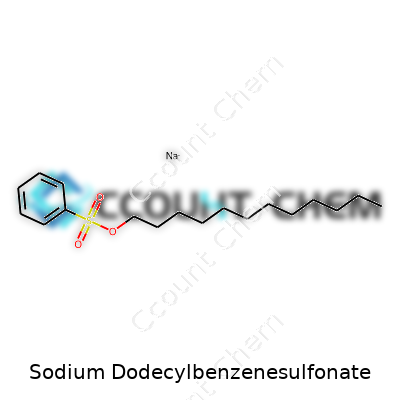
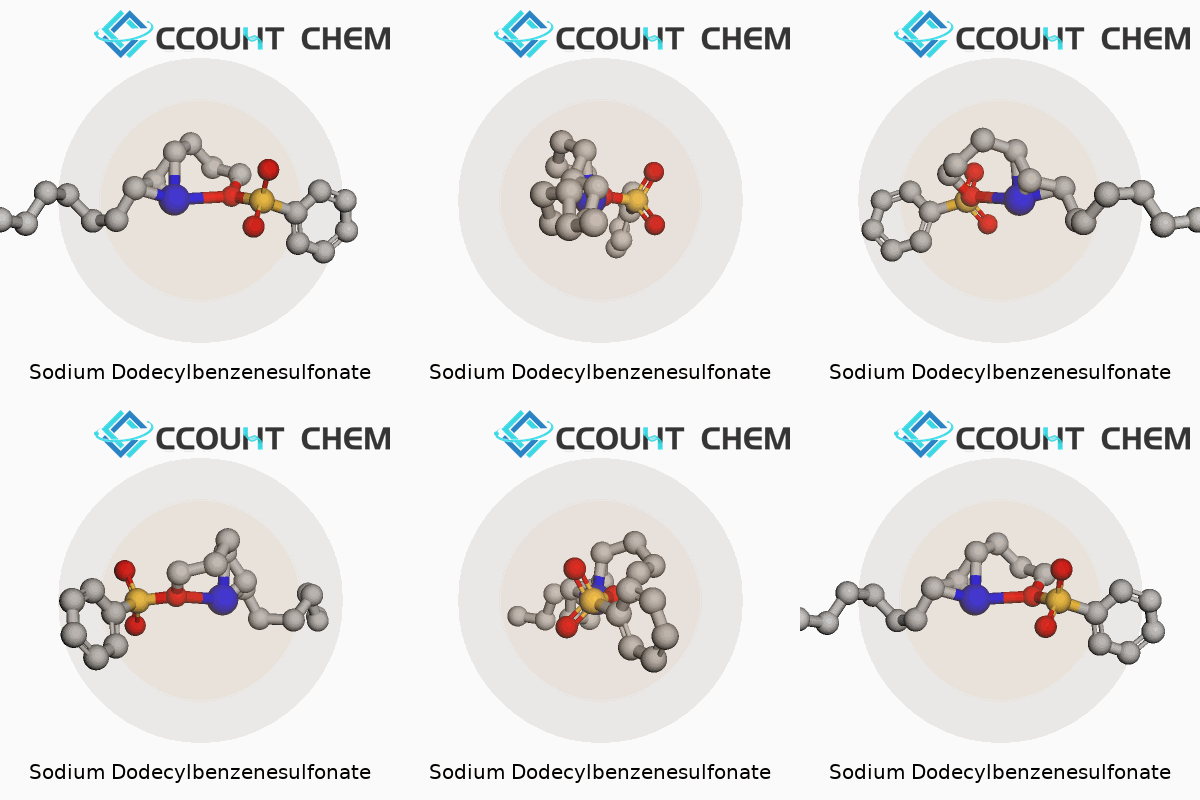
| Names | |
| Preferred IUPAC name | sodium 4-dodecylbenzenesulfonate |
| Other names |
SDBS Sodium Laurylbenzenesulfonate Sodium dodecylbenzenesulphonate Sodium alkylbenzenesulfonate Sodium dodecylbenzene sulfonate |
| Pronunciation | /ˈsəʊdiəm dəʊˈdɛsɪlˌbɛnˈziːnˌsʌl.fəˌneɪt/ |
| Identifiers | |
| CAS Number | 25155-30-0 |
| Beilstein Reference | 1908202 |
| ChEBI | CHEBI:9145 |
| ChEMBL | CHEMBL135153 |
| ChemSpider | 8276 |
| DrugBank | DB11310 |
| ECHA InfoCard | 100.102.414 |
| EC Number | Linear Alkylbenzene Sulfonate |
| Gmelin Reference | 108233 |
| KEGG | C14657 |
| MeSH | D002559 |
| PubChem CID | 23665486 |
| RTECS number | DB6560000 |
| UNII | WB0RUR574Z |
| UN number | UN 2586 |
| CompTox Dashboard (EPA) | DTXSID0035982 |
| Properties | |
| Chemical formula | C18H29NaO3S |
| Molar mass | 348.48 g/mol |
| Appearance | White to light yellow powder or flakes |
| Odor | odorless |
| Density | Density: 0.3 g/cm³ |
| Solubility in water | soluble |
| log P | -1.3 |
| Vapor pressure | Negligible |
| Acidity (pKa) | pKa ≈ 1-2 |
| Basicity (pKb) | > 6.5 |
| Magnetic susceptibility (χ) | -63.0e-6 cm³/mol |
| Refractive index (nD) | 1.485 (20 °C, 10% aq. sol.) |
| Viscosity | Viscous liquid |
| Dipole moment | 6.6 ± 1.6 D |
| Thermochemistry | |
| Std molar entropy (S⦵298) | 347.0 J⋅mol⁻¹⋅K⁻¹ |
| Std enthalpy of formation (ΔfH⦵298) | -538.3 kJ/mol |
| Std enthalpy of combustion (ΔcH⦵298) | -7521 kJ/mol |
| Pharmacology | |
| ATC code | C07AB |
| Hazards | |
| Main hazards | Harmful if swallowed, causes skin and serious eye irritation, may cause respiratory irritation. |
| GHS labelling | GHS07, GHS05 |
| Pictograms | GHS05,GHS07 |
| Signal word | Warning |
| Hazard statements | Harmful if swallowed. Causes skin irritation. Causes serious eye damage. |
| Precautionary statements | P264, P280, P301+P330+P331, P305+P351+P338, P337+P313 |
| NFPA 704 (fire diamond) | 3-0-2-Acido |
| Flash point | > 140 °C |
| Autoignition temperature | 400°C |
| Lethal dose or concentration | LD₅₀ (oral, rat): 438 mg/kg |
| LD50 (median dose) | 438 mg/kg (rat, oral) |
| NIOSH | SN2100000 |
| PEL (Permissible) | 15 mg/m³ |
| REL (Recommended) | 10 mg/m3 |
| Related compounds | |
| Related compounds |
Linear alkylbenzenesulfonates Dodecylbenzenesulfonic acid Sodium lauryl sulfate Alkylbenzenesulfonate Benzene sulfonic acid |



