


Back in the days when researchers explored new synthetic routes for sulphonates, sodium 2-bromoethanesulphonate started gaining attention. Early organosulfur chemistry saw this compound pop up mainly as a tool for introducing both sulfonic acid and alkyl bromide groups into molecules. Chemists in the mid-20th century valued it as a useful intermediary for various organic reactions requiring reactive halides and sulphonate functionalities. Through the decades, the compound evolved from laboratory curiosity to an industrially relevant material, especially as people realized its utility in chemical synthesis and microbiological research. Today, advances in purification techniques reflect the journey from rough early preparations to high-quality, consistent material that meets tighter scientific and industry demands.
Sodium 2-bromoethanesulphonate appears as a white to off-white, crystalline powder with a taste and odor not worth writing home about. This compound usually arrives in bottles with tightly sealed lids to keep the product from absorbing moisture. Its solubility in water, along with its ionic character, makes it easy to handle in most laboratory settings. Researchers fetch it mainly for chemical modification, biochemistry studies, and sometimes even for bacteriological tests since it intervenes in metabolic pathways. The compound’s packaging often states the minimum assay, signaling to buyers the product contains few impurities, giving confidence in both research and industrial settings.
With the formula C2H4BrNaO3S, sodium 2-bromoethanesulphonate stands out for its combination of an organobromide and a sulphonate group. These partners confer reactivity and solubility characteristics. The material crystallizes well, with a melting point hovering around 290°C, though it starts decomposing before hitting this value. It dissolves quickly in water, yielding clear and colorless solutions. The compound doesn't fare well in organic solvents, which can be helpful for selective extractions or purification steps where water solubility matters. It doesn't burn readily, though heating can produce hazardous gases like hydrogen bromide and sulfur oxides, putting a spotlight on the importance of good laboratory ventilation.
A good sample arrives with a label spelling out the chemical name, formula, batch number, and purity, most often exceeding 98%. Labels sometimes add storage recommendations—store in a cool, dry place, preferably in its original packaging. Bulk suppliers print hazard pictograms in line with GHS standards, so anyone handling it understands risk at a glance. Shipping documents list the product as non-flammable, but warn about its reactivity due to the bromide group. By industry consensus, an MSDS (Material Safety Data Sheet) accompanies every shipment, providing emergency guidelines and detailed information on toxicity, handling, and first aid.
The typical synthesis involves the reaction of sodium ethanesulfonate with elemental bromine or a brominating agent under controlled conditions. This process requires careful temperature regulation and an efficient extraction setup—the chemistry produces both hydrobromic acid and sulfur dioxide byproducts, which need neutralization or containment. Industrial setups often convert ethanesulfonic acid to its sodium salt before introducing the bromine, maximizing yield and simplifying purification. Crystallization from aqueous solution remains the most straightforward way to isolate the product, with repeated washing to remove traces of inorganic salts and residual reactants. Advances in continuous processing help reduce waste and boost efficiency, reflecting the push for green chemistry in manufacturing chemicals of this type.
Sodium 2-bromoethanesulphonate often serves as a precursor in nucleophilic substitution reactions due to the bromine's reactivity. Nucleophiles, such as amines, thiols, or cyanides, attack the bromine position to create functionalized ethanesulfonate derivatives. In metabolic studies, it acts as a selective inhibitor, blocking certain enzyme pathways by releasing the sulfonate group in biological systems. Chemists rely on this compound for producing quaternary ammonium salts through alkylation. Other modifications include reduction of the sulfonate group or derivatization with fluorescent tags, opening a lane for research in analytical chemistry and biotechnology.
On purchase orders or scientific papers, sodium 2-bromoethanesulphonate sometimes goes by other names—sodium bromoethylsulfonate, BESNa, or just “bromethanesulfonic acid, sodium salt.” International suppliers might label it slightly differently, but these synonyms lead chemists to the same molecule. Knowing its CAS number (as referenced in catalogs) helps avoid confusion, especially with similarly named compounds that bear different reactivities.
Work with sodium 2-bromoethanesulphonate always means looking out for eye, skin, and respiratory irritation. The bromide group can cause acute harm in large exposures, and the sulfonate group is no ticket to triviality either. Protective gloves, goggles, and lab coats land on every checklist. Spills require quick cleanup with dry absorbent while keeping the area ventilated to avoid breathing fumes. Disposal needs compliance with city or regional hazardous waste rules, not just a toss in the drain, to prevent bromide or sulfonate from damaging water systems. Emergency protocols—showers, eyewash stations—must be accessible. Regular training on safe chemical handling and up-to-date documentation plays a key role in preventing workplace injuries or environmental releases.
Researchers and industrial chemists turn to sodium 2-bromoethanesulphonate for more than just convenience—its dual reactivity unlocks creative routes in organic synthesis. In microbiology, it acts as a substrate analog, blocking certain metabolic reactions, helping researchers understand enzyme pathways in organisms like methanogenic archaea. In the pharmaceutical field, the compound’s role in structural modifications of drug candidates makes it a backbone material for medicinal chemists seeking to create new bioactive molecules. Water treatment scientists and environmental chemists sometimes use it to probe ion transport and membrane behaviors, thanks to its ionic nature and reactivity.
Labs across the world tap into sodium 2-bromoethanesulphonate for method development, especially in probing biological pathways and formulating new synthetic protocols. It has become a tool for structure-activity relationship studies, facilitating the creation of analogs through straightforward alkylation. R&D teams push for greener synthesis, lower toxicity byproducts, and innovative recycling methods, particularly as regulations on waste become stricter. Collaborations between academia and industry target improvements in stability, shelf life, and reactivity, aiming to create derivatives that offer even more functional versatility while minimizing safety concerns.
Animal studies, cell line experiments, and environmental testing all shine a spotlight on sodium 2-bromoethanesulphonate’s safety profile. Acute exposure mainly irritates the eyes, skin, and lungs. Chronic effects seem limited, though there is always caution about long-term bioaccumulation of bromides in sensitive ecosystems. Toxicologists conduct aquatic toxicity and soil absorption tests to pin down how degradation products move in the environment. In human safety protocols, findings make it clear that accidental ingestion or improper disposal pose risks far greater than handling dilute solutions under controlled conditions.
Sodium 2-bromoethanesulphonate’s rich toolset for chemistry and biology keeps demand strong. The push for greener, safer reagents shapes its future: industry and research are hunting for alternative brominating agents and cleaner synthetic routes to the same target. Ongoing advances in microbiology tease yet more possible uses, especially in controlling metabolic pathways for biotech and bioprocessing. Improvements in on-site neutralization technology may cut both environmental and financial costs. The next chapter for sodium 2-bromoethanesulphonate seems bound to include tighter integration with sustainability strategies, emerging synthetic techniques, and tougher safety oversight from the growing intersection of regulatory authorities and industry best practices.
Sodium 2-bromoethanesulphonate shows up mostly on lab benches and in scientific work, but most folks outside of chemical research circles likely haven’t heard of it. I first bumped into this compound during a stint at a microbiology lab. Its name sounds daunting, but inside a petri dish, its purpose is clear and specific.
The main job of sodium 2-bromoethanesulphonate centers on its action as a selective inhibitor in microbiological studies. Labs experimenting with methane-producing bacteria often pull this compound out. Methanogens—microbes found in sewage treatment plants, rumens of cows, and even wetlands—help turn hydrogen and carbon dioxide into methane. Scientists found that sodium 2-bromoethanesulphonate stops this process by acting as a stand-in molecule, jamming up key enzymes in these microbes.
This trick lets researchers figure out which parts of a biological process involve methane or methanogens, and what happens if you silence those pathways. Sodium 2-bromoethanesulphonate has shaped research on topics like biogas generation, greenhouse gas emissions, and how different microbes co-exist. My own test tubes showed a sharp drop in methane gas after adding it. The results were simple to spot, even without fancy machines, because the bubbles just slowed to a crawl. If you want to untangle a mixed bag of microbes and see what each group does, this is an easy call.
The compound isn’t just an academic curiosity—it touches practical problems, too. Wastewater treatment plants, for example, balance methane production to keep treatment efficient but reduce harmful emissions. Sodium 2-bromoethanesulphonate’s ability to curb methane helps test new ways of treating waste or managing biogas reactors. Environmental groups tracking greenhouse gases use it to map out methane’s journey in natural and engineered ecosystems.
Getting this part right matters, since methane has eighty times the warming power of carbon dioxide over the short term. If we want to keep the planet livable, tracking and managing methane is a must. This chemical makes experimental setups more precise, giving answers that can steer both research and policy decisions.
Safety data sheets flag the compound as an irritant, and I learned early not to handle it without gloves or eye protection. The powder stings and the dust irritates. Lab protocols ask for ventilated spaces and prompt attention to spills. It’s a good reminder that even tools designed to advance scientific understanding merit respect. Reviewing data on long-term health impacts and environmental persistence keeps the community careful and conscientious.
Sodium 2-bromoethanesulphonate does its job well right now, but scientists keep looking for new ways to sort out microbial behavior and curb methane. Work on genetic tools and precise chemical markers runs alongside experiments with this compound—there’s always a hunt for safer, even more targeted alternatives. More transparency about risks, regular reviews of lab protocols, and honest reporting of negative findings help shape safer research and better environmental outcomes.
Sodium 2-bromoethanesulphonate gives researchers a tool to answer tough questions about the world’s smallest inhabitants and their outsized impact on the atmosphere. Caring about how it’s used—and respecting the risks—builds trust far beyond the lab.
Sodium 2-bromoethanesulphonate doesn’t show up much in everyday conversations, but in labs, it holds a kind of quiet importance. This compound, with the formula C2H4BrNaO3S, lines up as a member of the sulfonate family, where a sodium atom bonds with a sulfonate group. Here you also get a bromo group attached to an ethane backbone. In simple terms, imagine taking a two-carbon chain, sticking a bromine atom on one end, and tacking on a sulfonate group paired with sodium on the other. There’s the core structure.
People working in research and diagnostics see sodium 2-bromoethanesulphonate as a handy piece for certain reaction pathways. In my university days, I saw it featured in organic synthesis experiments. Breaking down complex chains to prepare intermediates often requires something unique, and this is one of those stepping stones. It isn’t a household name, but in developing new reactions, chemical researchers lean on it to introduce sulfonate or bromine groups cleanly into molecules. It paves new ways to attach water-loving groups onto hydrophobic molecules, which can change how substances interact or dissolve. This ability helps with everything from pharmaceuticals to new polymer designs.
Chemical safety matters a lot, no matter the lab’s budget. Sodium 2-bromoethanesulphonate doesn’t throw out toxic fumes wildly, but working with it means sensible precautions anyway. Gloves, goggles, and a working hood remain the golden trio. Mistakes with skin or eye contact cause discomfort and possible burns. Cleaning up spills quickly and storing it away from moisture or heat save plenty of headaches. These habits build good routines for any chemical, not just this one. Chemical hygiene in academic or industry settings keeps small accidents from turning into big reports. Anyone teaching new students or employees in a lab will tell you that simple routines trump clever tricks every time.
Using brominated and sulfonated chemicals brings up environmental responsibility. Sodium 2-bromoethanesulphonate isn’t volatile, so it won’t just float off into the air. Still, sulfonates and brominated compounds sometimes linger in wastewater and can stress aquatic life. Many countries set rules about treating chemical waste before it leaves the lab. In some plants, treatment units scrub out these ions ahead of discharge. The sustainable route always tracks where waste goes, even if the starting chemical doesn’t seem all that threatening. Some labs have started running greener syntheses with fewer byproducts, and sodium 2-bromoethanesulphonate sometimes fits in because of its selectivity and the lower chance of unwanted side reactions.
Each chemical on the shelf has its own story. With sodium 2-bromoethanesulphonate, a simple formula packs a strong punch for chemists fine-tuning reactions. Knowing the risks, following site practice, and keeping an eye on waste streams shape the right way to use it. Science keeps moving forward, but the building blocks like this one stick around, giving us more options with each experiment designed and carried out thoughtfully.
Most folks in the lab or industry might only glance at the white powder in a bottle marked “Sodium 2-Bromoethanesulphonate,” but treating this chemical lightly tends to spark trouble later. This compound, used as an alkylating agent or an intermediate, holds promise in organic synthesis. What doesn’t hit the eye straight away is the chemical’s ability to degrade with moisture or under the wrong conditions, and that spells wasted supplies or – worse – risk to health.
Keeping this material dry stands as job number one. I once saw a colleague store a similar sulfonate on a benchtop without a desiccator. A month later, the inside of the bottle clumped together and the yield tanked. This chemical soaks up water from humid air, causing the reagent to lose potency and possibly change character. Storing it in tightly sealed containers keeps the powder from turning into an unusable mess. Glass or plastic containers with secure seals, preferably with desiccant packs inside, get the nod for everyday use.
People sometimes stash bottles wherever there’s room, but leaving Sodium 2-Bromoethanesulphonate near hot plates or in sunlit areas shortens its shelf life. Heat brings on unwanted breakdown, and while the science may sound dry, the results never are. Store in a cool, shaded place – refrigeration isn’t necessary unless recommended on the label, but the back of a well-organized chemical cabinet usually does the trick.
A good portion of lab incidents goes right back to bad or missing labels. Whether the container is full or half used, clear labeling stops mix-ups and prevents mistakes. Date every container upon opening, and jot down who last handled the bottle. This simple habit turns into a life-saver when questions pop up down the line. It’s a rule that comes from years of seeing confusion over faded or missing marks.
Sodium 2-Bromoethanesulphonate plays poorly with strong oxidizers and reducing agents. Mixing those by accident can bring on dangerous reactions. In my experience, organizing storage shelves by hazard class, rather than just alphabetical order, makes a difference. Keep sulfonates well away from acids, bases, and reactive compounds.
Gloves, goggles, and a lab coat never go out of style. I’ve seen minor spills turn into big headaches when someone scoops up a powder with bare hands or forgets eye protection. Clean spills immediately using appropriate techniques; a simple dustpan and some water won’t cut it, as water just makes things stickier and may cause a reaction. Dedicated spill kits designed for chemical powders work best, and having one on hand avoids scrambling during an emergency.
Many safety slip-ups start with copying the habits of the last person, not checking the latest guidance. The Safety Data Sheet (SDS) gives direct advice on storage and handling, and it always pays to review it before opening any new bottle. Regulations from authorized safety bodies, such as OSHA in the U.S. or local equivalents, shape lab habits for a good reason. Long story short: stick to well-documented protocols. Don’t cut corners just because liquid or solid chemicals have sat untouched for weeks.
Safe storage of Sodium 2-Bromoethanesulphonate comes down to a blend of dry, cool, clearly labeled, and segregated from incompatibles. I’ve found that heading off problems boils down to repeating these core steps every single time, no matter how rushed things get. Rely on up-to-date information and respect the power of even the plainest powder. That’s where both safety and value find their footing.
Sodium 2-bromoethanesulphonate sits on the shelves of many chemical supply rooms without drawing much attention. Its name alone makes it sound like something out of a textbook, not something most of us deal with daily. This compound shows up for a handful of specialized uses, often in research labs focused on biochemistry or medical studies. It works as an inhibitor for some types of bacteria and archaea, specifically targeting methanogens. That fact alone tells you it doesn’t just play nice with living things.
In my years around chemistry labs, I’ve seen a lot of “routine” chemicals lead to not-so-routine problems, especially when health and safety take a back seat. Sodium 2-bromoethanesulphonate falls in the group of chemicals that can pose a danger if handled carelessly. Research data from the Sigma-Aldrich safety sheets lays it out: this compound can irritate skin, eyes and the respiratory system. Even more concerning, animal studies show toxic effects if ingested, inhaled, or absorbed in significant amounts.People sometimes downplay these hazards because they trust lab procedures or the small volumes being used. That attitude has gotten folks in trouble before. The fine powder can become airborne during weighing, for instance. Accidentally breathing it in brings you closer to respiratory irritation and unknown long-term impacts. This hits home for those of us who got cocky early in our careers and paid for it with a nasty cough and a lesson in humility.
No one likes to talk about what goes down the lab sink, but it matters. Sodium 2-bromoethanesulphonate, like many sulfonate compounds, doesn’t break down easily in the environment. Trace amounts can slip through waste management systems and end up in watercourses. Biodegradability is low, so it builds up. Methanogens aren’t just a problem in labs—they work in sewage plants and wetlands. Dumping even tiny amounts of this chemical hampers those microbes, which throws off waste processing or climate-related processes.Lab techs, students, and waste handlers deserve respect, not just instructions. PPE like gloves and lab coats do the heavy lifting, but only if folks wear them. Eye protection becomes essential as splashes and dust pose real risks on a messy bench. Chemical safety showers and eyewash stations shouldn’t gather cobwebs. Good safety practices have grown from accidents—each label warning, every training slideshow slides over past mistakes that shaped the current system.
Practical fixes don’t live solely in textbooks. Controlled storage, clear labeling, and secondary containment mean fewer spills and mix-ups. I’ve seen teams avoid disaster by keeping a sharp eye on chemical inventory and checking expiry dates before opening an old bottle. Transparency and real reporting, not just compliance paperwork, help catch problems before someone gets hurt. Employers who run regular drills and reward smart safety choices create a lab culture where everyone looks out for each other.Disposal should follow more than just a quick water flush. Specialized waste containers for halogenated organics keep sodium 2-bromoethanesulphonate out of the public water supply—because none of us want to see the long-term impact of ignoring this step. Universities and companies need to connect with certified waste handlers. Regulatory agencies play their role by tracking waste streams and holding labs accountable.
Sodium 2-bromoethanesulphonate isn’t a household name, but it demands the same respect as the heavyweights. Experience teaches that every label on the bottle is written in someone’s sweat or, sometimes, blood. Being careful protects not just individuals but whole ecosystems down the line. Keeping eyes open, sharing lessons learned, and following well-established guidelines make sure this chemical—and others like it—don’t end up causing more harm than good.
If the idea of sourcing Sodium 2-Bromoethanesulphonate sounds straightforward, a quick look into supply chains tells a different story. This isn’t something a casual shopper finds on the pharmacy shelf. It’s a specialty chemical, most often used in labs or by specific industries. Plenty of requests for it start with a specific research project or a need tied to waste treatment. That means the people looking aren’t hobbyists, but trained folks—scientists, industrial engineers, professionals who already know safety protocols.
Several online vendors show up on a basic web search, but reliability doesn’t come guaranteed. Companies like Sigma-Aldrich, Alfa Aesar, and TCI America have reputations for quality and regulatory compliance. I remember getting a few supplies from Sigma-Aldrich back in college for a lab project, and the paperwork was as rigorous as the standards for purity. This level of trust matters. Companies listing ambiguous details or refusing to share certificates of analysis raise red flags right away. Quality issues go hand-in-hand with risks—imagine getting an impure batch and seeing months of research go down the drain or grappling with unexpected hazards.
Purchasing this compound isn’t just about swiping a company card and waiting for delivery. Sodium 2-Bromoethanesulphonate counts as a controlled substance in several regions, with regulations focused on both safety and downstream use. In the United States, suppliers require proof of institutional affiliation and often request justification for use. Europe and parts of Asia add layers: import permits, chemical user registration, end-use declarations. At every step, keeping sharp records becomes essential. A friend working at a biotech startup described having to jump through hoops just to get basic reagents. The logistical cost slowed their project by weeks, but at least their team avoided compliance headaches later on.
Pricing doesn’t come set in stone, either. Even before the pandemic, specialized chemicals often saw price fluctuations. Now, with routine supply chain snags, delays are common and prices spike as much as 40% over a year. Direct importers usually save by buying in bulk, but academic buyers get caught between grant restrictions and supplier minimum order sizes—meaning middlemen sometimes become the only option. All this adds up when budgeting a project.
One real risk—more pressing in recent years—comes from counterfeit or substituted chemicals, especially through unregulated online markets. A mislabelled bottle can lead to safety incidents, lost resources, and even legal woes. That’s why sticking with suppliers who trace every batch, follow storage guidelines, and guarantee lot-to-lot consistency is not negotiable. Leveraging university or research purchasing consortiums often swings better rates and tighter oversight. Collaborating with established partners for group buys can cut costs without sacrificing traceability. Those starting up on their own can reach out to peers at local research institutions. Turn to them for recommendations and access to vetted procurement channels, making the maze of sourcing a little less overwhelming.
The real weight of sourcing Sodium 2-Bromoethanesulphonate rests on putting it to good use—safely and ethically. This goes beyond checking off a bulk order. It’s about making sure the right people handle, store, and dispose of it properly, never cutting corners for the sake of speed or saving a few bucks. I’ve seen too many cases where poor restrictions led to avoidable incidents, proving that careful sourcing goes hand-in-hand with practical lab responsibility. For anyone not already embedded in a professional setting, the best path forward remains sticking to licensed vendors and learned networks. This holds up, not just for research, but for public trust and industry reputation, too.
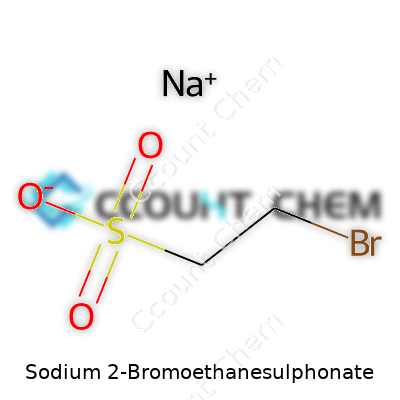
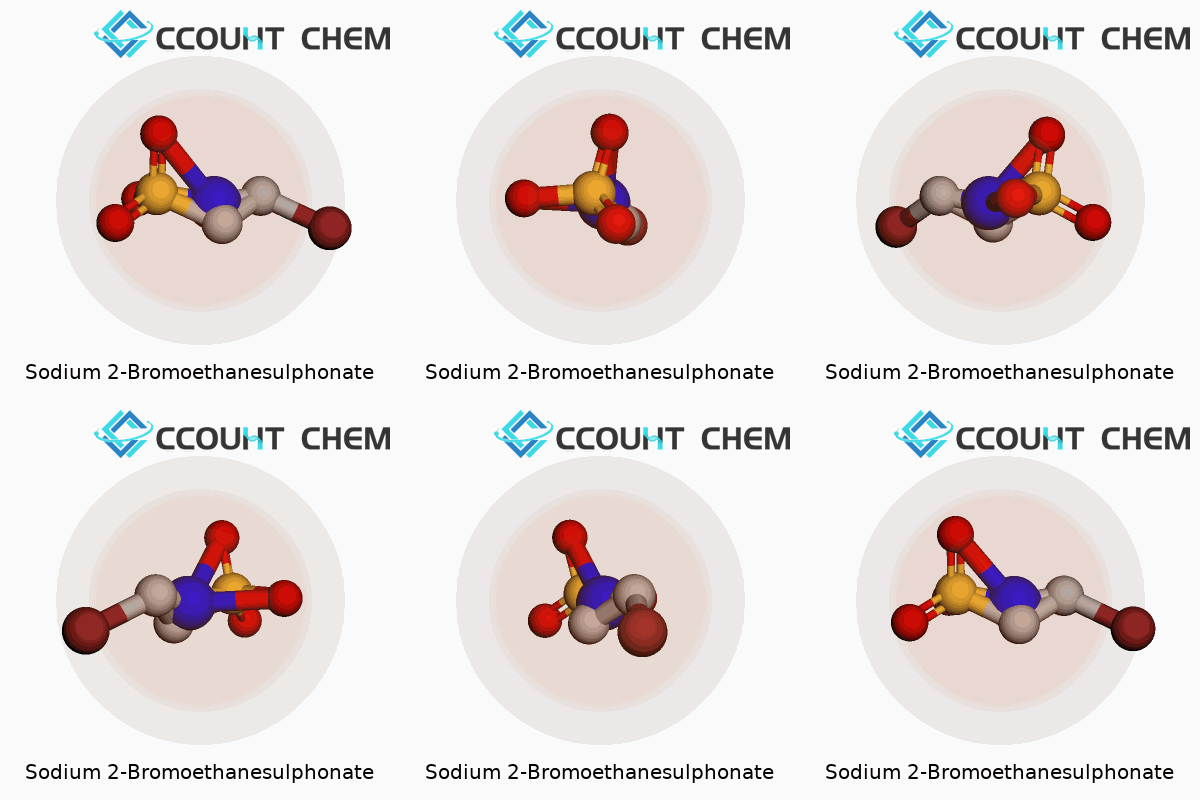
| Names | |
| Preferred IUPAC name | Sodium 2-bromoethane-1-sulfonate |
| Other names |
BES sodium salt 2-Bromoethanesulfonic acid sodium salt Sodium bromoethanesulfonate Sodium 2-bromoethanesulfonate Sodium 2-bromoethane-1-sulfonate |
| Pronunciation | /ˈsəʊdiəm tuː ˌbrəʊməʊˌiːθeɪnˈsʌlfəneɪt/ |
| Identifiers | |
| CAS Number | 1622-98-8 |
| Beilstein Reference | 1653887 |
| ChEBI | CHEBI:47400 |
| ChEMBL | CHEMBL15460 |
| ChemSpider | 21469513 |
| DrugBank | DB08307 |
| ECHA InfoCard | '03b94c21-2eca-482d-b47e-2d21cab73fb6' |
| EC Number | 214-199-3 |
| Gmelin Reference | 8785 |
| KEGG | C01537 |
| MeSH | D013429 |
| PubChem CID | 23665797 |
| RTECS number | GE7175000 |
| UNII | U3R2H36I5U |
| UN number | UN2811 |
| Properties | |
| Chemical formula | C2H4BrNaO3S |
| Molar mass | 208.04 g/mol |
| Appearance | White powder |
| Odor | Odorless |
| Density | 1.672 g/cm³ |
| Solubility in water | Soluble in water |
| log P | -2.0 |
| Vapor pressure | Negligible |
| Acidity (pKa) | -1.3 |
| Basicity (pKb) | pKb ≈ 5.7 |
| Magnetic susceptibility (χ) | −51.0×10⁻⁶ cm³/mol |
| Refractive index (nD) | 1.498 |
| Viscosity | Viscous liquid |
| Dipole moment | 5.6800 D |
| Thermochemistry | |
| Std molar entropy (S⦵298) | 224.6 J·mol⁻¹·K⁻¹ |
| Std enthalpy of formation (ΔfH⦵298) | -692.7 kJ/mol |
| Pharmacology | |
| ATC code | V03AB05 |
| Hazards | |
| Main hazards | Harmful if swallowed. Causes skin irritation. Causes serious eye irritation. |
| GHS labelling | GHS02, GHS07 |
| Pictograms | GHS07 |
| Signal word | Warning |
| Hazard statements | H302, H315, H319, H335 |
| Precautionary statements | P280, P305+P351+P338, P337+P313, P261, P304+P340, P312 |
| NFPA 704 (fire diamond) | 1-0-0 |
| Explosive limits | Non-explosive |
| Lethal dose or concentration | LD₅₀ (oral, rat): 660 mg/kg |
| LD50 (median dose) | LD50 (median dose): Rat oral 680 mg/kg |
| NIOSH | GN8575000 |
| PEL (Permissible) | Not established |
| REL (Recommended) | 0.05 ppm |
| Related compounds | |
| Related compounds |
Methanethiosulfonate Ethanesulfonic acid Bromoethane Iodoethane |



