


Octanoic acid, more commonly known as caprylic acid, didn’t just pop up in the science labs one day. It came to light as chemists dug into the composition of coconut and palm oils in the mid-19th century. The study of fatty acids was all about scratching beneath the surface of traditional fats and oils. Researchers wanted to break down what made these oils tick, how they contributed to nutrition, and what other roles they could play. The industrial revolution had a hand in spurring on the investigation of natural resources. This drive to use natural fats in more than just cooking and lamp oil led to octanoic acid finding its way into a long list of applications. Chemists in France and Germany played a big role in isolating, naming, and figuring out the practical value of this eight-carbon fatty acid. The knowledge they carved out over generations kept turning up in medicine, food science, and later, in industrial formulations for everything from antimicrobials to synthetic lubricants.
Caprylic acid crops up as a colorless, oily liquid with a slightly rancid, unsettling smell. The stuff you’d pick up from a chemical supplier comes in drums lined with protective coatings since fats like octanoic acid can eat away at basic metals over time. It’s rarely found pure in the wild. Plants and animals carry it as a component of various triglycerides. Coconut oil and palm kernel oil stand out among the top sources. You’ll see it listed among ingredients in everything from nutritional supplements and animal feed to specialty cleaners and personal care products. The industrial world appreciates this acid for its ability to cut through grime, kill microbes, and break down tough fats in processing plants.
Octanoic acid comes with a molecular formula C8H16O2 and a molar mass just shy of 144 g/mol. Its boiling point climbs to just under 240°C and it freezes at 16-17°C. In most conditions, it refuses to mix well with water—hydrophobic to the core—but shows good solubility in ether, ethanol, and other organic solvents. As a straight-chain fatty acid, it shows none of the double bonds found in unsaturated relatives. This shapes its animal-like odor and lends a certain stability when processed under industrial conditions. Chemically speaking, it reacts like other carboxylic acids—ready to donate a proton, form esters with alcohols, or pair with bases to make salts used in soaps and sanitizers.
Quality standards help keep octanoic acid safe on the job and shelf-stable. Analysts use gas chromatography or titration to confirm purity, which usually lands between 98% and 99.5% for refined grades. Excess moisture gets flagged because it can trigger early spoilage or skew the molecule’s behavior in formulations. Impurities—mostly other fatty acids, aldehydes, and ketones—have to be held down to accepted levels set by groups like the USP, FCC, and local food safety authorities, depending on the intended use. Labels on commercial drums display batch numbers, net weight, contaminant analysis, and safety warnings for skin and eye protection. In food or feed, caprylic acid gets labeled as E number E570, a nod to its legal status as a food additive.
Producers typically secure octanoic acid from natural fats by hydrolyzing coconut or palm oils. The process involves heating the raw oil with water and an acid or base, which forces the long chains to break down into their constituent fatty acids. The resulting mixture goes through distillation under reduced pressure—octanoic acid boils off at a lower temp because of its intermediate chain length. Chemical synthesis options exist but don’t make economic sense for food, feed, or pharmaceutical grades because renewable oils supply a cleaner and greener option. Some labs also turn to microbial fermentation using yeasts and bacteria, offering a biotechnological route aligned with today’s push for sustainable production.
Octanoic acid lines up for the same basic reactions as other carboxylic acids. It can swap out its acidic hydrogen in a classic neutralization, giving rise to octanoate salts—handy in soaps and disinfectants. Reaction with alcohols makes esters, which carry fruity, waxy aromas—think flavors and fragrances in processed foods. Reducing the acid with lithium aluminum hydride strips off the carboxyl group, dropping it to octanol, a handy solvent. On the industrial side, you’ll see hydrogenation and halogenation modifications to tailor solubility or turn it into a building block for even larger specialty chemicals.
Octanoic acid goes by plenty of aliases, each one snagged from different branches of science or commerce. Chemists stick with octanoic acid or caprylic acid. The food and pharma world prefers E570 or octanoate. In product catalogs you’ll spot N-Octanoic Acid, 1-Heptanecarboxylic Acid, and C8:0 Fatty Acid. Regional legal frameworks sometimes assign CAS numbers or harmonized codes for import and export, essential for supply chain transparency.
Working with octanoic acid means keeping gloves on and splashes off your skin. Its pungency isn’t just about a sour nose—direct contact will irritate skin and burn eyes. Inhalation of its fumes can trigger coughing fits and throat soreness, especially in confined spaces. Occupational standards lock down airborne concentrations and insist on chemical goggles alongside simple nitrile gloves. Drip and spill kits need to be on hand, since the fatty liquid can stain floors and eat into certain plastics. Regulatory frameworks want good ventilation in workspaces and have guidelines for safe disposal, especially because fatty acids can gum up water systems or feed unwanted bacteria during breakdown.
Caprylic acid carves out a spot in several industries. Food processing outfits use it as an emulsifier and preservative, keeping cheeses and dried meats shelf-stable and free from spoilage. Supplement companies tout its antimicrobial effects, putting it into pills for gut health or energy metabolism support. Livestock and poultry feed blends contain it to fight pathogens without antibiotics, a big step forward for responsible farming. Cleaners and sanitizers made for dairies and breweries feature octanoic acid because it can break up biofilms and kill stubborn bacteria with less risk of toxic residue. Cosmetics brands use it in creams and lotions to adjust pH and add a touch of emollient action. In specialty chemical circles, it’s a starting point for making esters, plasticizers, and other compounds where a tough, stable fatty chain matters.
Research on octanoic acid keeps moving beyond old assumptions. Microbiologists dig into its ability to kill yeast, mold, and bacteria without turning to hazardous chemicals. Universities compare its antimicrobial kick against other organic acids, hoping to use it in food preservation without the downsides of synthetic chemicals. Biochemists tease out its effects on brain chemistry, since medium-chain fatty acids can cross the blood-brain barrier thanks to their size and shape. R&D teams have started probing fermentation and enzymatic upgrading of plant oils so the acid can be harvested with a lighter environmental footprint. A good portion of this work focuses on renewable production, refinement of medical-grade caprylic acid, and the use of the acid as a building block for biodegradable polymers.
Plenty of lab animal studies and clinical trials have helped map out caprylic acid’s safety profile. At the doses used in food, supplements, and cosmetics, toxicity risk stays quite low. The gastrointestinal tract breaks down most of it quickly, shipping it off as energy fuel before it can accumulate or linger. High bolus doses in rats have shown stomach upset, loose stools, and some changes in enzyme markers, but only at quantities far above what humans encounter. Chronic exposure studies have not rung alarm bells for carcinogenicity or genetic damage. All the same, concentrated liquid forms can irritate exposed tissues or set off allergic reactions, so every industry using it has locked in handling protocols and medical monitoring where large volumes are handled.
Caprylic acid looks ready to find a bigger profile as the world hunts for biobased, low-impact chemicals. Farmers and feedmakers seek alternatives to antibiotics, and octanoic acid has already been slotted in as a control for gut pathogens in livestock. Sustainable packaging designers look at its derivatives for biodegradable plastics. In personal care, the ingredient lists keep growing as consumers look for plant-sourced, non-toxic options. University labs keep scanning the horizon for new microbial strains that turn trash into this medium-length fatty acid. A future shaped by renewable feedstocks, safer sanitation options, and advanced materials probably has a larger role waiting for octanoic acid.
Octanoic acid, sometimes called caprylic acid, shows up in more places than most people realize. It's a fatty acid found in coconut oil, palm kernel oil, and even in goat milk. Food manufacturers and nutritionists both pay attention for different reasons. Some see it as a food additive, others spot its potential benefits for health or household uses.
As someone with a personal interest in nutrition, I notice octanoic acid on supplement labels. Supplement makers often promote it for supporting energy and gut health. The body digests it quickly, turning it into fuel faster than many other fats. Athletes chasing extra energy during workouts find medium-chain fatty acids like octanoic acid appealing for this reason. Research published in the Journal of Nutrition shows that MCTs—medium-chain triglycerides—get used faster than long-chain fats, providing a quick energy source.
Besides supplements, the food industry relies on octanoic acid as a flavoring agent and preservative. It can help extend shelf life by stopping the growth of certain bacteria. Even so, the U.S. Food and Drug Administration considers it “generally recognized as safe” (GRAS) for use in foods, which should offer peace of mind for anyone cautious about additives in their meals.
Octanoic acid shows up in cleaning products for a reason: It breaks down grime and helps knock out mold and fungi. Folks with experience fighting household mildew know it’s more than just soap—some natural cleaners tap into these fatty acids for a safer, less irritating clean. Hospitals sometimes look to similar compounds to keep surfaces germ-free, especially since overuse of harsh chemicals fuels calls for gentler alternatives. One study in Antimicrobial Agents and Chemotherapy highlights this compound’s ability to disrupt cell membranes in bacteria and fungi.
Anyone who struggles with sensitive skin might spot octanoic acid on shampoo or lotion labels. It helps balance the texture of creams and can act as an emollient, smoothing skin and reducing moisture loss. For people managing dry skin or eczema, gentler ingredients matter. Dermatologists sometimes talk about fatty acids like octanoic acid as safer options compared to heavier oils or synthetic additives.
There’s another side to any chemical used widely. Those with allergies or sensitivities need clear labeling. Manufacturers should stick to transparent ingredient lists and avoid allowing cost or convenience to outweigh safety. Some research links high doses of medium-chain fats with digestive upset, especially for people not used to them. Moderation, as always, makes sense; busy families already juggling multiple food intolerances don’t need more on their plates.
People want simpler ingredient lists and transparency from the companies making food, cleaning products, and personal care items. As research keeps moving forward, I hope to see more long-term studies that can confirm which uses of octanoic acid are safe and which leave room for concern. In my own life, I check labels and keep an eye on anything new I bring into the house. Doctors and nutrition experts I speak with often suggest the same approach: Read up, trust research, and watch for updates as science uncovers more about these common but sometimes overlooked ingredients.
Octanoic acid, often called caprylic acid, crops up in many conversations about fats and food safety. It naturally shows up in coconut oil, palm kernel oil, and some dairy products. In some kitchens, it's used as a supplement or a preservative to prevent spoilage. The popularity around medium-chain triglycerides (MCTs) has pulled octanoic acid into the spotlight, making people curious about the impact on human health.
People have eaten foods containing octanoic acid for generations—think cheese, milk, and coconut products. The U.S. FDA classifies it as "generally recognized as safe" (GRAS) for use in foods. That status comes from scientific reviews and a long track record of safe use. Researchers have looked at its effects in animal studies and human trials. The digestive system breaks it down quickly, and the liver can process it without trouble when consumed in moderate amounts.
Medical experts use octanoic acid in specialized hospital diets, especially for people with trouble absorbing other fats. For example, patients with epilepsy sometimes follow ketogenic diets high in MCTs, which include octanoic acid, and studies show good toleration among adults and children in these cases. Still, that does not mean anyone should go overboard or toss handfuls of caprylic acid into daily smoothies.
Octanoic acid's safety depends mostly on dosage and the person eating it. Large amounts can trigger stomach cramps, nausea, or diarrhea. The same goes for most fatty acids—not really a reason for alarm, but a good reminder of moderation. People with rare metabolic diseases need to talk to a doctor before using any MCT supplements. Some dietary supplements contain high doses, so labels matter. Not all supplement products undergo strong quality control, and that causes headaches in the nutrition world.
I remember reading stories from folks trying MCT oil for the first time and ending up with digestive troubles. The culprit usually involved rushing into high doses. Label reading and gradual introduction help people avoid these issues.
Farmers use octanoic acid in small amounts for plant disease control and as an antimicrobial agent in livestock. Food industries rely on it for shelf-life and safety. These uses bring benefits, but they raise questions about environmental build-up or worker exposure. So far, scientific evaluations show little risk to humans when handling or eating food treated with approved amounts.
Researchers keep watch for new risks, and regulators update guidelines as needed. Food safety organizations monitor levels in processed foods and review cases from hospitals or the broader community.
For most people, regular diets already provide small, safe quantities of octanoic acid from dairy or plant oils. The trend toward using it as a supplement might tempt people to try high doses, but that's a place for careful thought. Anyone with underlying health conditions needs professional advice before starting anything new. Looking for third-party tested products and asking questions in the supplement aisle protect both wallet and well-being.
Food safety doesn’t stand still, and neither do the ways people use ingredients like octanoic acid. Keeping informed from credible sources—registered dietitians, regulatory agencies, and science-backed reviews—always pays off. The way we eat shapes health, and understanding even one molecule at a time can make a big difference.
Octanoic acid, sometimes called caprylic acid, crops up everywhere in daily life, even when we don’t stop to notice. This fatty acid carries a straightforward structure—eight carbon atoms linked together with a carboxylic group at the end. The chain size drops it between the shorter, sharper fatty acids found in vinegar and the much longer “greasy” ones in animal fats. The result? Its characteristics fall somewhere in the middle, recognizable by anyone who has spent time working with organic chemicals.
Octanoic acid shows up as a colorless to slightly yellow oily liquid. If a lab tech splashes a few drops onto a surface, the result is a sheen that lingers. It looks harmless, but the strong, slightly “goaty” odor gives it away almost immediately. That smell comes from its natural presence in the fat of goats and other ruminants. Folks in the dairy industry know it well—too much of it makes cheese taste off.
This acid has a melting point just above room temperature—around 16 to 17°C (about 61°F). On a chilly morning in the lab, it might set into a soft, waxy solid, but most days it pours easily from a bottle. Hit it with some heat and octanoic acid boils off at around 239°C (462°F). For those handling extractions or distillations, these numbers matter. They help separate it from other fatty acids during production and purification, especially since these ranges aren’t always easy to measure without the right gear.
If you drip a bit of octanoic acid into a glass of water, it floats at the top, forming droplets that barely mix in. That’s because its long hydrocarbon tail wants nothing to do with water, although the acidic end manages a little interaction. Its water solubility clocks in at less than 70 mg per 100 mL at 20°C. That’s pretty low, so bigger uses involve dissolving it in non-polar organic solvents—think ethanol, ether, or chloroform. Soap makers take advantage of this property: octanoic acid combines well with lye, producing soaps that lather up richly while still washing away.
Octanoic acid reacts much the same as other carboxylic acids. Working with it in my university days taught me that it’s surprisingly stubborn—simple bases like sodium hydroxide neutralize it cleanly, but strong reducing agents are needed to break it down further. Breathing in too much of its vapor can bring on a sharp cough, so good ventilation keeps the experience much more pleasant.
Chemists and engineers look at those physical traits—melting and boiling points, odor, solubility—because they direct how octanoic acid gets used. In food production, small, controlled amounts adjust flavors. In the field of nutrition, it serves as a building block for specialty fats found in infant formula. The stubborn oily nature means it helps form barriers and coatings, whether in pharmaceuticals, packaging, or specialty lubricants.
The odd combination of an “oily” body and tart, pungent smell means it always draws attention in the lab. It’s tough to ignore those strong scents, but those same physical properties give octanoic acid a role far beyond the chemistry textbook. Understanding them keeps food safe, products stable, and industrial processes running smoothly—provided you can tolerate the aroma.
Octanoic acid—also known as caprylic acid—shows up in a lot of products people use, from food flavorings to specialty lubricants. Most folks don’t spend time thinking about fatty acids, but this one shows up in natural sources like coconut oil, palm kernel oil, and milk from cows and goats. The interesting thing is, there’s not enough of it to harvest straight from plants or milk for commercial needs. So, industries had to figure out smarter ways to get enough of it. These days, production takes a science-driven route that keeps costs in check and supply steady.
A lot of octanoic acid comes from working with natural fats and oils. Chemists start by breaking down triglycerides from coconut oil or palm kernel oil—oils that naturally carry medium-chain fatty acids. Through a process called hydrolysis, they split up the fat to get free fatty acids. What’s left is a mixture holding different chain lengths. Octanoic acid sits right in the middle. Extracting only the eight-carbon acid needs good separation tools, so distillation comes next.
Fractional distillation does the trick since each type of fatty acid boils at a different temperature. The result is octanoic acid pulled away from the heavier and lighter cousins. It’s not perfect in one run, so sometimes the material passes through the columns many times to improve purity. This takes energy and a sharp understanding of chemical behavior. Labs keep a close eye on the process—too much heat and the product can break down; not enough and the separation won’t work as planned.
To keep up with growing use in pharmaceuticals, disinfectants, and even niche agriculture, chemists leaned into synthetic routes. One method starts with ethylene and carbon monoxide, using a combination of catalysts. These catalysts guide the transformation into carboxylic acids with a specific eight-carbon chain. Sometimes, producers use oxidation of octanol, a plain alcohol with a very similar structure. This route gives them more control and lets them crank out tons of acid without waiting on seasonal crops.
Chemical synthesis has obvious upsides: no worry about bad harvests, and it cuts out a lot of variability you get from natural materials. Yet, the manufacturing plants must deal with issues like catalyst residue and solvent management. Keeping contaminants out of the finished product takes constant vigilance. A single misstep can mean batches go to waste, or worse, tainted chemicals get into food or medicine supplies. Oversight and regular quality control lab tests make all the difference.
Most people might not care where their octanoic acid comes from, but I’ve seen how sloppy processes create headaches downstream. Bacteria can thrive on poorly separated fatty acid batches, which means bad odors or ruined food products. It’s no exaggeration to say that safety depends on attention to detail at every step, from raw material inspection to final purification. The food and pharma worlds hold strict standards for purity, and legacy methods sometimes struggle to meet them without improvements.
A major challenge boils down to balancing efficiency with sustainability. Many commercial plants now recycle the solvents they use, and research points to bio-based alternatives that lower waste. I’ve seen manufacturers work hand-in-hand with environmental engineers to keep emissions low, which isn’t just about meeting regulations but protecting workers and communities nearby.
Octanoic acid may seem like just another ingredient, but when companies get the process right, people feel the benefits everywhere—safer food, better health products, fewer pollutants in the air and water. For producers, the smartest move links old chemical know-how with deeper responsibility for the world downstream.
Octanoic acid rarely pops up in everyday conversation, but it plays a quiet role in plenty of items used daily. Many people have encountered it without even knowing—maybe in personal care products, preservatives, or even some foods. Factories lean on it for its fatty acid properties, using it to create soaps, lubricants, and disinfectants. Hospitals and food processors look for this acid when they need reliable antimicrobial action, since it wipes out bacteria and extends shelf life. Researchers from the National Institutes of Health have shown octanoic acid effectively inhibits the growth of mold and yeast. That matters for anyone worried about food safety or spoiled products.
Dairy farmers and food scientists both count on octanoic acid’s specialty. In cheese production, trace amounts add to flavor and aroma. Too much, and food starts to smell odd, but the right concentration steers fermentation in a way that gives sharp cheddar or blue cheese that certain punch. Food manufacturers sometimes use it to inhibit mold in baked goods and dairy items. Anyone who works with bulk dairy or processed food sees firsthand how a little help from fatty acids keeps waste down and quality up.
Cosmetic chemists look to octanoic acid for a very practical reason—it keeps creams and lotions from going rancid. The beauty world leans hard on it as an ingredient in shampoos, conditioners, and lotions, helping products bring moisture without leaving a greasy mess. Its ability to stabilize emulsions helps manufacturers keep products fresh on the shelf. The American Contact Dermatitis Society even lists octanoic acid as a low-risk ingredient for those with skin allergies, making it a trusted choice.
Industrial uses stretch from plastics to textiles. Octanoic acid acts as a starter for plasticizers, paving the way for flexible plastics and some biodegradable alternatives. Textile mills like that it helps set dyes and soften fabrics. Plant operators have found it helps in metalworking fluids because it reduces corrosion and friction, letting machines run smoother for longer stretches. Its traits even serve as building blocks in synthetic lubricants for cars and machinery. According to industry sources, the global demand for fatty acids has steadily climbed, with octanoic acid gaining a strong foothold thanks to durability and cost-effectiveness.
Sustainability matters more each year. Many of the big producers extract octanoic acid from renewable sources like coconut oil or palm kernel oil. This feeds into the green chemistry drive since these methods produce less waste compared to older petroleum-based approaches. Some startups are experimenting with biotech routes, engineering microbes to churn out octanoic acid using plant waste. With increased interest in biodegradable plastics and eco-friendly surfactants, octanoic acid is positioned for a bigger role.
One pressing challenge with any industrial chemical comes down to safety and sourcing. Smart companies train staff to handle and store fatty acids safely to prevent hazardous spills or exposure. Regulatory agencies like the FDA and the European Food Safety Authority keep tabs on how much octanoic acid lands in food and consumer products. Greater transparency in sourcing, especially for plant-derived acids, wins trust with buyers and regulators alike. Pushing for more bio-based production can cut reliance on fossil fuels and keep prices steadier in the long run.
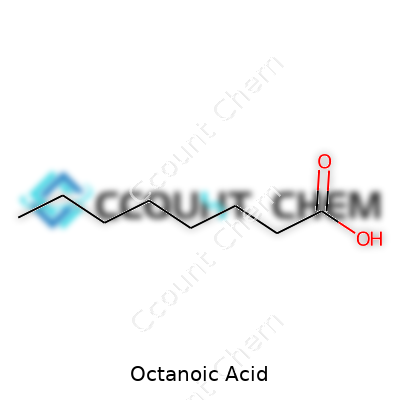
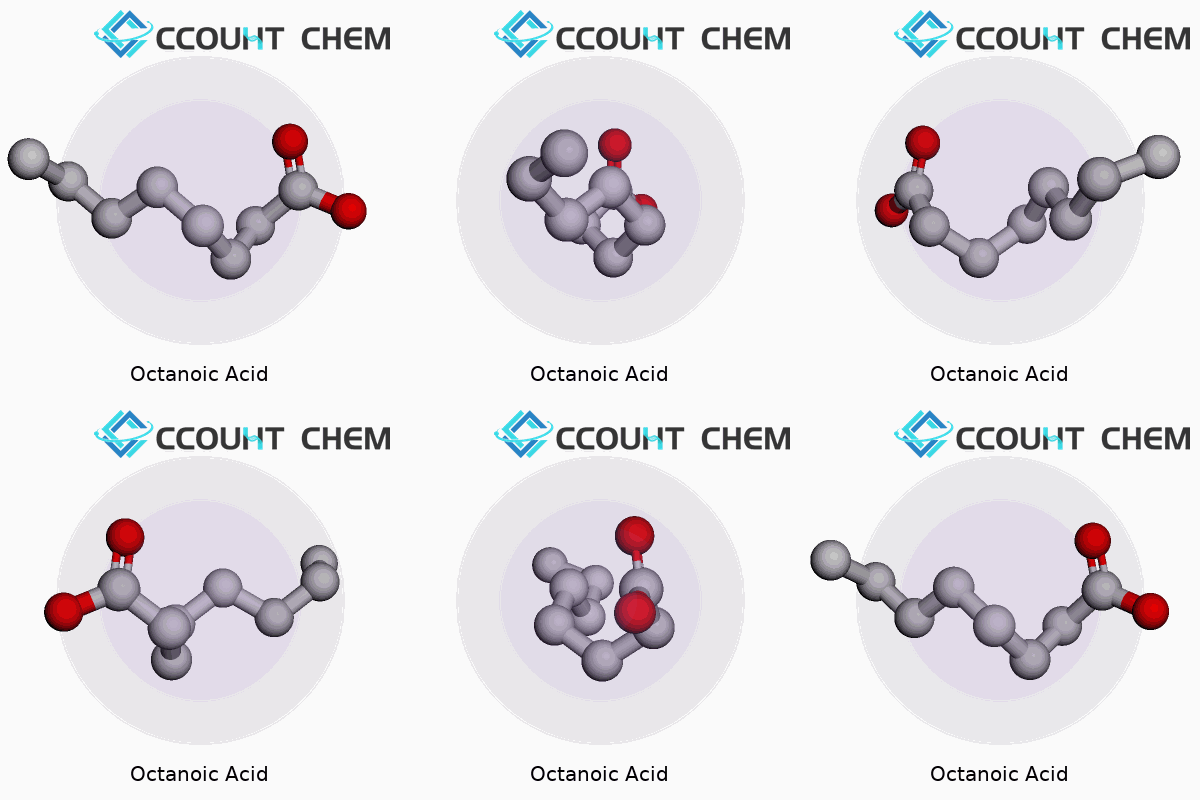
| Names | |
| Preferred IUPAC name | Octanoic acid |
| Other names |
Caprylic acid n-Octanoic acid Pelargic acid C8 fatty acid |
| Pronunciation | /ɒkˈteɪ.nɪk ˈæs.ɪd/ |
| Identifiers | |
| CAS Number | 124-07-2 |
| Beilstein Reference | 1901243 |
| ChEBI | CHEBI:28838 |
| ChEMBL | CHEMBL504 |
| ChemSpider | 6510 |
| DrugBank | DB00179 |
| ECHA InfoCard | 17c018282e |
| EC Number | EC 204-677-5 |
| Gmelin Reference | 7231 |
| KEGG | C00712 |
| MeSH | D008068 |
| PubChem CID | 311 |
| RTECS number | RG1675000 |
| UNII | 7JNCB2O63Q |
| UN number | UN3077 |
| Properties | |
| Chemical formula | C8H16O2 |
| Molar mass | 144.21 g/mol |
| Appearance | Colorless to pale yellow liquid |
| Odor | Rancid, unpleasant |
| Density | 0.910 g/cm³ |
| Solubility in water | slightly soluble |
| log P | 3.05 |
| Vapor pressure | 0.09 mmHg (25°C) |
| Acidity (pKa) | 4.89 |
| Basicity (pKb) | 7.55 |
| Magnetic susceptibility (χ) | -74.0e-6 cm³/mol |
| Refractive index (nD) | 1.403 |
| Viscosity | 12.3 mPa·s (25 °C) |
| Dipole moment | 1.6907 D |
| Thermochemistry | |
| Std molar entropy (S⦵298) | 276.6 J·mol⁻¹·K⁻¹ |
| Std enthalpy of formation (ΔfH⦵298) | -485.8 kJ/mol |
| Std enthalpy of combustion (ΔcH⦵298) | –4960.7 kJ/mol |
| Pharmacology | |
| ATC code | A05BA02 |
| Hazards | |
| GHS labelling | GHS02, GHS05, GHS07 |
| Pictograms | GHS07,GHS08 |
| Signal word | DANGER |
| Hazard statements | H226, H315, H318, H411 |
| Precautionary statements | P210, P260, P280, P301+P310, P303+P361+P353, P305+P351+P338, P312 |
| NFPA 704 (fire diamond) | 2-1-0-~ |
| Flash point | 130°C |
| Autoignition temperature | 365 °C |
| Lethal dose or concentration | LD50 (oral, rat): 2,050 mg/kg |
| LD50 (median dose) | LD50 (median dose) of Octanoic Acid: "3 g/kg (rat, oral) |
| NIOSH | RN2130000 |
| PEL (Permissible) | PEL = 5 mg/m3 |
| REL (Recommended) | 500 mg |
| IDLH (Immediate danger) | 500 ppm |
| Related compounds | |
| Related compounds |
Pentanoic acid Hexanoic acid Heptanoic acid Nonanoic acid Decanoic acid |



