


Long before most folks paid attention to sulfonic acids, researchers tinkered with modifications of simple hydrocarbons to make them more useful for industrial chemistry. Back in the 1900s, the wave of oil-driven industries kicked off a search for better surfactants and separations, pushing chemists to experiment with alkane sulfonation. Octane-1-sulfonic acid became interesting, not because it was rare, but because its chain length hit a sweet spot for both solubility and hydrophobicity. During the mid to late twentieth century, interest surged when ion-pair chromatography needed new reagents. The compound didn’t change the world overnight, though it quietly powered some major technical leaps in purification, allowing folks to separate and analyze compounds with higher precision.
Octane-1-sulfonic acid stands out among straight-chain alkyl sulfonates for its role as an ion-pairing agent. Chemists know it as a strong acid that doesn’t shy away from tough environments. Blending the oil-loving octane backbone with a powerful sulfonic group lands it squarely in the toolkit for analytical and preparative chemists. It appears most often as a white to off-white powder or granule, hugging moisture from the air due to its hygroscopic nature. Labs rely on it for its ability to tweak the separation of peptides, small molecules, and even some pharmaceuticals in high-performance liquid chromatography (HPLC).
Octane-1-sulfonic acid brings together an eight-carbon chain and a sulfonic acid head. Its molecular formula, C8H18O3S, shapes its behavior in water and organic solvents. The compound dissolves well in water and alcohol but balks at mixing with nonpolar solvents. The white crystalline powder gives off no smell worth reporting and keeps fairly steady at room temperature, but it doesn’t like to be heated beyond 200°C — past that, decomposition takes over. Its melting point sits above 200°C, and the strong acid group pushes its pKa well below zero, meaning it dissociates fully in solution. That acidic strength makes it valuable for tweaking ionic balance in both analytical and industrial applications.
Reputable suppliers provide octane-1-sulfonic acid under strict labeling guidelines. Product labels list purity, typically not falling short of 98%. Water content gets special mention, since the compound loves to pick up moisture, impacting both its weight and reactivity. Some lots come as sodium or potassium salts, and suppliers indicate form on the front of the package. Labels also cite lot number, manufacturing dates, storage guidance, and sometimes chromatographic suitability for HPLC. Many labs check the bulk identity themselves, running FTIR or NMR tests to guard against any substitutions or unexpected contaminants.
Production of octane-1-sulfonic acid rarely strays far from sulfonation chemistry. The preferred method starts with n-octanol or n-octane. Direct sulfonation, using sulfur trioxide or chlorosulfonic acid, targets the terminal carbon of the octane chain. Operators carry out the reaction under anhydrous conditions to avoid runaway side reactions. The resulting sulfonic acid hydrolyzes further, followed by neutralization, then isolation by evaporation or crystallization. Purification takes center stage because incomplete reactions can leave unreacted starting material, which can throw off HPLC separations or downstream synthetic steps.
Most folks use octane-1-sulfonic acid as it arrives from the bottle, but it takes well to further chemical tweaks. Converting to sodium or potassium salts helps in applications requiring tailored solubility or ionic balance. Some enterprising researchers have attached functional groups or used the acid as a starting block to make longer-chain derivatives for surfactant design. It reacts cleanly with strong bases, forming water-soluble salts ideal for chromatography. Under high heat or strong oxidizers, the molecule may degrade, so operators stick to room temperature and controlled conditions when working with derivatives.
In catalogs and scientific writing, octane-1-sulfonic acid also answers to a scattering of names, including 1-octanesulfonic acid and n-octanesulfonic acid. Popular salt forms carry similar monikers, tacking on “sodium salt” or “potassium salt.” Some suppliers abbreviate it in chromatography shorthand as OSA or OSA-Na for its sodium counterpart. The diversity in names can throw off a new user, so anyone buying or researching must check both the CAS number and structural diagram to avoid a mix-up with similar chain-length sulfonates.
Safety data for octane-1-sulfonic acid draws from its acidity and sulfonic nature. Its corrosive effect on eyes and skin means gloves and goggles go on before a bottle opens. Inhalation doesn’t pose a chronic hazard, but dust can irritate respiratory tracts, so working in a fume hood is standard. Storage insists on sealed containers, away from bases and oxidizing agents. Spills clean up with plenty of water; operators mop up crystals then flush surfaces without strong acids or bases. Disposal routes through standard waste acid channels, and since the molecule isn’t particularly toxic or persistent, it avoids special hazardous listings, yet caution stays the rule in any sizable operation. Regulatory agencies recommend thorough labeling and immediate clean-up if containers break or spill, reducing the risk of confusion with noncorrosive lab powders.
Analytical chemistry crowns octane-1-sulfonic acid as a favorite for ion-pair chromatography, especially in separating pharmaceuticals, alkaloids, and peptides that wouldn’t otherwise stay distinct on the column. The sodium salt turns up regularly as a mobile phase modifier in HPLC, shifting retention times by controlling ionic interactions. Some water treatment specialists experiment with sulfonic acids as mediators for removing heavy metals, though octane-1-sulfonic acid works best in controlled lab setups rather than in municipal plants. A few surface chemists tinker with it as a template for new surfactants or emulsifiers, but its limited volatility narrows its use to only select coatings and detergent research. Even so, its mainstay action in lab separations remains its claim to fame.
Interest in new uses for octane-1-sulfonic acid pulses highest among chromatographers and polymer researchers, especially as regulatory demands tighten for pharmaceutical purity. Many labs focus development on refining the compound for high-spec HPLC applications, limiting interfering side chains and exploring even purer sodium and potassium salts. Recent research explores sulfonic acid-modified surfaces to boost selectivity in sensors, hinting that the structure could play a role in next-generation detection methods. Some startup labs explore grafting alkyl-sulfonic acids onto polymers, searching for membranes with sharper ion selectivity for batteries and fuel cells. As synthetic chemistry looks to sustainable feedstocks, the industry circles the drain for greener sulfonation routes, aiming to cut down on noxious byproducts and energy waste.
Toxicological testing of octane-1-sulfonic acid puts it in the mid-tier for risk, mostly due to its acidity. Acute ingestion causes burns to tissues, though systemic toxicity stays low after neutralization by stomach contents. Environmentally, its chain length means it doesn’t travel far before breaking down, reducing the worry about widespread contamination. Still, chronic skin exposure or mishandling can sensitize tissue and spark dermatitis. Comparatively, it stacks up safer than aromatic sulfonic acids, and typical lab usage rarely leaks out due to the compound’s solid state and low volatility. Animal studies show little to no bioaccumulation, and regulatory checks on HPLC residues in pharmaceuticals assure the compound doesn’t lurk in finished products beyond trace levels.
As science keeps pushing for cleaner, more efficient ways to separate pharmaceuticals, peptides, and fine chemicals, octane-1-sulfonic acid stands ready to stay relevant. Chromatography needs keep rising, driven by stricter drug regulations and more complex analyses. The hunt for purer grades, more predictable performance in ultrahigh-pressure chromatography, and tweaks for green chemistry all push research forward. Advances in polymer chemistry may lift the molecule from the modest ion-pairing desk into broader roles, maybe as a controlled-release agent or template for new materials. If biochemists uncover more about peptide separations and surface modifications, octane-1-sulfonic acid and its derivatives could show up in diagnostics, drug delivery, and even energy storage. In the meantime, its reliability cements its spot as a quiet workhorse in science, connecting chemistry’s past to its emerging future.
Octane-1-sulfonic acid might sound like something you’d find stashed in the back of a chemistry storeroom, but this chemical turns out to be a steady workhorse in today's analytical labs. Folks working in pharmaceutical or environmental testing lean heavily on it for High Performance Liquid Chromatography, or HPLC as most chemists know it. If you’ve ever wondered how labs sort microscopic amounts of drugs, pollutants or amino acids from complex mixtures, this compound often plays a big role.
HPLC is a tool many scientists treat almost like a Swiss Army knife—it can check blood samples for medication, measure food purity, and spot trace pesticides in water. But HPLC needs helpers to get the best separation of molecules, especially charged ones. Octane-1-sulfonic acid, in particular, works well for separating sticky or hydrophobic (water-avoiding) molecules.
It acts as an ion-pairing reagent. In simpler terms, it sticks to charged molecules in a sample, helping them travel more smoothly through the chromatographic column. This allows substances like antibiotics, sulfa drugs, and even certain plant extracts to become much easier to spot and measure, even at extremely tiny concentrations. Many commonly used medicines, such as sulfonamides, simply won’t separate cleanly without an additive like octane-1-sulfonic acid.
Drug manufacturers need to prove their products are pure and show exactly what’s inside every pill. Regulatory agencies such as the FDA demand precise, validated data. By improving the sharpness and clarity of HPLC results, octane-1-sulfonic acid plays into those efforts at reliable quality control. Without good separation, tiny contaminants might hide beneath the main drug signal and escape detection. Missed impurities cause recalls and endanger patient safety, so the value of a reliable ion-pair reagent grows every year.
Not just pills but also clean water and safe food depend on this compound. Useful for teasing apart traces of herbicides, preservatives, and certain food additives, octane-1-sulfonic acid shows up in food-testing protocols around the world. Environmental chemists rely on its properties to dig out small traces of pollution from rivers or drinking water—often the kind that goes missed without an effective reagent.
No one wants hazardous chemicals loitering on the lab bench. Octane-1-sulfonic acid, like many strong acids, requires care in handling. Lab techs suit up in gloves and goggles, and good ventilation helps prevent accidental exposure. Waste management grows more important as tons of analysis happen yearly, which brings attention to greener or safer replacements.
Teams in industry and academia keep working on new ion-pairing options, sometimes chasing safer, less harsh alternatives that still deliver clear analytical results. Sharing knowledge in publications and at scientific meetings helps everyone learn fast—if a greener solution works just as well, the word spreads quickly. Until then, octane-1-sulfonic acid remains trusted by labs that want unambiguous, consistent results.
Octane-1-sulfonic acid, with the chemical formula C8H18O3S, shows up in labs that care about separating complicated mixtures. The formula tells you the backbone of eight carbons, just like octane from gasoline, but the sulfonic acid group (–SO3H) attaches at one end. This small change opens up a world of chemistry you won’t find in fuels. You start with a standard hydrocarbon chain but add something that brings water solubility and acidity into play.
In my own lab experience, you run into octane-1-sulfonic acid while working with high-performance liquid chromatography (HPLC). The compound acts like a traffic cop for ions, herding them so that mixtures separate just the way you want. If you think about it, each element in the formula tells you something essential: the chain length influences interaction with other molecules, and the sulfonic group holds power over both solubility and reactivity.
I once spent weeks troubleshooting overlapping peaks during an HPLC run. Swapping in sodium octane-1-sulfonate brought sharper separations. The real win comes from understanding the structure behind the formula. It turns out, this simple combination of carbon, hydrogen, oxygen, and sulfur can sway the results in pharmaceutical labs, food testing, and even pollution studies.
Sitting through basic chemical safety lectures doesn’t do enough to drive home the risks that simple formulas can hide. Sulfonic acids can sting the skin and stress your lungs. I learned quickly that to respect these materials goes beyond memorization. Working with octane-1-sulfonic acid means using gloves and eye protection every time. Not doing so, even once, leads to regrets — red skin, persistent coughs, and a renewed respect for the data on a bottle’s label.
Inaccurate labeling can lead to accidents, wasted runs, or exposure. To cut these risks, double-checking the molecular formula on incoming bottles matters. Clear storage guidelines and secondary containment reduce the chance for spills.
Safety training grows stale if nobody sees the impact firsthand. Bringing in real stories from accidents and near-misses reminds everyone that formulas like C8H18O3S mean more than a jumble of letters. Labs that run regular check-ins on chemical labeling and involve technicians in planning storage protocols keep people safer. Employers who keep safety data accessible and updated see fewer sick days and stronger morale.
Beyond safety, knowing the formula means you spot fakes or impurities faster. That translates into better science and more reliable test results down the line. If industries and schools commit to clear education and up-to-date chemical management, the benefits carry through every analysis and every lab notebook.
Whether you care about cleaner drinking water, accurate medical diagnostics, or simply finishing a lab report, the exact chemical formula plays a massive role. Each atom in octane-1-sulfonic acid tells you how the substance will behave — and what it means for safety, science, and industry reliability. My work and the experience of colleagues prove that knowledge of what’s in the bottle is as valuable as any tool in the lab.
Walk through any chemical storage area in a university or an analytical lab, and odds are you’ll see containers labeled with names like Octane-1-sulfonic acid. Most folks know it for its role in chromatography, helping chemists separate and analyze complex mixtures, often in food, water, or pharmaceutical testing. These applications increase the frequency of handling this compound, so understanding what it really means to work with it becomes important—especially with safety on the line.
People have a healthy respect for acids, and for a good reason. Octane-1-sulfonic acid presents hazards you can’t ignore. Its very structure—a sulfonic group tethered to a hydrocarbon chain—gives it strong acidity and surfactant qualities. Touching it with bare skin can sting or even burn, sometimes more harshly than household vinegar or citric acid. The sulfonic part, in particular, pulls moisture from skin and mucous membranes, leading to irritation. Eyes exposed to the powder or vapors end up red, painful, and watery. Breathing in any sort of acid dust, even in small amounts, feels rough—think of how spicy powder tickles the back of your throat, only sharper. I once breathed in microscopic acid dust in a poorly ventilated storeroom; the cough stuck with me for an hour and left my throat raw for the rest of the day. Most chemists will tell you this isn’t something you want to chance, especially day after day.
Most safety data places Octane-1-sulfonic acid in a moderate risk category for toxicity. Accidental swallowing, uncommon but possible in busy environments, leads to abdominal pain or internal burns. Some animal studies hint at organ stress when large amounts are ingested, which doesn’t paint a friendly picture for people, either. No long-term, high-profile human toxicity studies exist today—ethics keep that sort of experiment off the table—but repeated minor exposures show cumulative irritation, even with protective gloves and goggles. Over years, chronic skin contact causes dermatitis. The acid salt form, often used in labs, carries similar issues, so swapping to a “safer” sodium salt doesn’t let anyone off easy. Wastewater concerns top the list too: excess dumping creates acidity spikes in water streams, threatening aquatic life.
International safety bodies classify Octane-1-sulfonic acid as corrosive. Fact sheets from Sigma-Aldrich and ScienceLab publish clear warnings: eye damage risk, bodily injury possibility, and environmental hazard questions. The U.S. Occupational Safety & Health Administration highlights that no chemical, even those in routine use, should ever fall out of safety protocols. Countries across the European Union echo similar guidance, frowning heavily on careless disposal.
Protecting yourself from Octane-1-sulfonic acid boils down to good habits. Always wear goggles, gloves, and a lab coat—never cut corners. Work in a spot with decent ventilation or, if you can, go for a fume hood. Clean spills fast with lots of water and an absorbent pad, then follow up with a pH check. As someone who has been splashed a few times, I head for the eyewash station long before irritation sets in. Chemical waste should go in a proper container kept far from drains—never pour solutions into the sink. Training matters just as much as equipment; every new lab worker deserves a quick intro to chemical safety. I’ve seen too many “it won’t happen to me” moments end with ice packs, burns, or even short trips to urgent care.
Octane-1-sulfonic acid isn’t a household danger like bleach or ammonia, but it doesn’t qualify as harmless either. Cutting down on risk means respecting it, knowing where problems might crop up, and sticking to smart, simple safety routines every time it comes out of storage. Investing in protective equipment and refusing shortcuts pays off—health and safety make for a stronger, more confident team in any lab or facility. Clean practices prevent those headaches, hospital bills, and long-term regrets.
Every lab or industrial facility that relies on Octane-1-Sulfonic Acid knows this chemical does more than just play a supporting role. It’s essential for chromatographic analysis, buffers, and other precise chemical tasks. Any corner cut during storage spells problems down the line. From what I’ve seen, mishandling this compound often leads to degraded results, ruined equipment, or even health hazards.
This chemical isn’t as friendly as it looks on a bottle label. It can irritate skin, eyes, and respiratory tracts. Accidental spills eat away at metal, corrode surfaces, and spark reactions with the wrong materials. Those who work with it quickly realize the importance of solid storage routines—not just for regulatory compliance, but for day-to-day safety.
Heat and moisture don’t get along with Octane-1-Sulfonic Acid. Storing it away from direct sunlight preserves its stability. Any dab of humidity creeping into the container can cause caking, clumping, or even reactions some folks might not expect. My experience has taught me the safest option is a dry, air-conditioned space, preferably in a climate-controlled chemical storeroom. Even small lapses—like a forgotten window left open overnight—can spoil a batch.
Separating this compound from bases, oxidizers, or organic solvents prevents headaches. Once saw a case where someone kept acids and bases side by side. One mislabeled jug, followed by a spill, forced an entire area to shut down for decontamination. Anyone with experience in a shared lab can tell you: keep chemicals that don’t mix far apart.
Octane-1-Sulfonic Acid belongs in high-quality, airtight polyethylene or glass containers. Metal lids or shelving, in my own work, have led to rusty surprises or even tiny leaks. Always label each container clearly, with hazard warnings facing out. Double-checking bottles before each use seems simple, yet it catches the rare but dangerous cracks seen after months of regular handling.
Goggles, gloves, and lab coats come out every time. Some folks skip these steps, thinking five seconds won’t matter—it always does, especially with strong acids. In my experience, the extra minute to put on gear saves hours handling paperwork from accidents.
Staying organized with logs, checklists, and regular audits guards against accidents. Inventory checks never feel glamorous, but they stop missing bottles, misplaced containers, and outdated products from piling up. Reflecting on colleagues who suffered accidental exposures, I know the paperwork isn’t just for traceability—it builds habits that pay off during emergencies.
Eyewash stations, spill kits, and up-to-date emergency contacts should always be within reach of storage areas. I’ve seen emergencies handled smoothly because the right equipment was already nearby. Preparedness stops small problems from growing into major incidents.
Every step in storing Octane-1-Sulfonic Acid, from controlling the environment to separating it from reactive chemicals, draws on lessons learned the hard way. Cutting corners or skipping steps never ends well. Solid storage practices protect people and equipment, reduce downtime, and keep processes running as planned. Experience—and plenty of spilled acids—makes that clear.
Octane-1-sulfonic acid looks like just another chemical in the lab, but it brings a mix of power and risk. Anyone working with this compound gets a reminder: lab coats and gloves aren’t just for show—they’re your everyday shield. Over ten years of working in chemistry labs, I’ve seen careless handling of strong acids turn into medical emergencies faster than you’d expect. A splash on the skin can sting and burn; fumes near your nose will make you cough hard.
This acid doesn’t stay quiet if mixed sloppily or spilled. As soon as it hits water, especially in large volumes or without stirring, it reacts with heat and sometimes splatters. The U.S. National Institutes of Health outlines how it irritates skin, eyes, and lungs. The Centers for Disease Control points out that proper storage and clear labeling make a big difference for those who walk into storage closets daily. It’s not just about theory—most accidents happen while people refill bottles, rush a weighing, or overlook a leaking seal.
A crisp white coat protects but not nearly as much as thick nitrile gloves. I switched to safety goggles with side shields after a friend got acid in one eye using only basic glasses. Face shields help when pouring bigger amounts. Long pants and closed shoes keep small spills off your legs and toes. Lab tradition says, “dress for the spill, not the job.” No one forgets the pain of burning acid after getting a drop on bare skin.
Fume hoods are a must. Pouring or mixing outside a hood turns your air toxic quickly. The vapors don’t just evaporate harmlessly—they move around and linger near your face. One summer, a broken bottle of octane-1-sulfonic acid had my whole floor coughing even after we opened the windows. Clean up quickly, using baking soda or a commercial neutralizer, and always keep a spill kit close by.
Keep containers tightly closed. I learned the hard way that loose lids cause slow leaks and big headaches later. Acid-proof, clearly labeled plastic containers cut down confusion, especially if others use the same storage area. Never stack concentrated acids near bases or anything flammable. The label should scream “corrosive”—not just a barcode. Everyone in the workspace benefits when every bottle tells the full story.
Teaching every new lab member the ins and outs of acid handling saves time, money, and skin. Lessons stick better with real-world examples rather than a slideshow. Emergency showers and eyewash stations need to be clear—no boxes or trash in the way. I’ve seen people scramble for fifteen seconds just to move a mop bucket, wasting precious time.
Routine practice with drills, restocking spill kits, and updating safety data sheets ensures nobody’s caught off guard. Daily walk-throughs spot problems before they hurt anyone. Chemistry brings risk, but with steady habits and solid gear, those risks shrink. The experience of seasoned colleagues shows that safe habits are contagious and make every lab a better place to work.
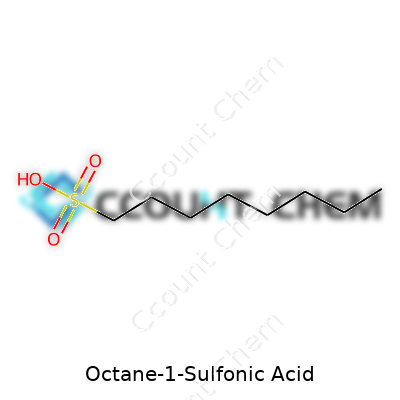
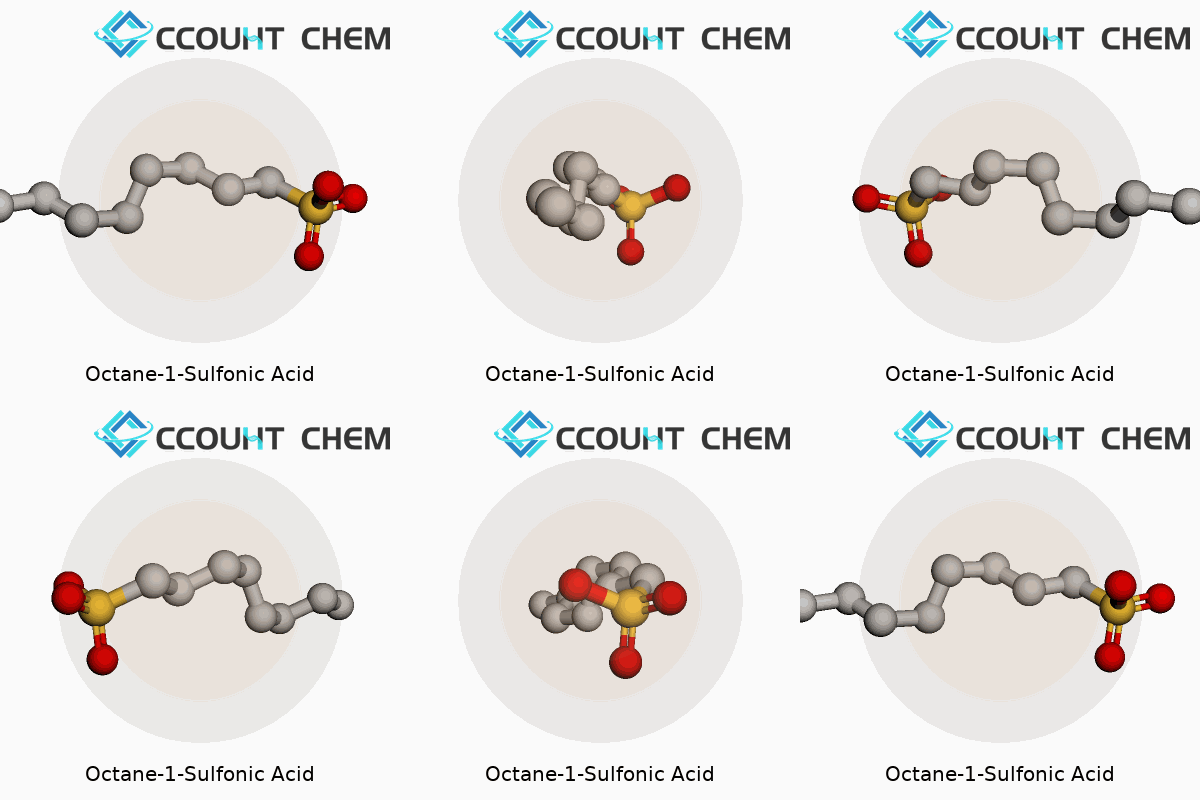
| Names | |
| Preferred IUPAC name | 1-octanesulfonic acid |
| Other names |
1-Octanesulfonic acid n-Octane-1-sulfonic acid n-Octanesulfonic acid Octanesulfonic acid 1-Sulfooctane |
| Pronunciation | /ˈɒk.teɪn.wʌn sʌlˈfɒn.ɪk ˈæs.ɪd/ |
| Identifiers | |
| CAS Number | “1120-25-8” |
| 3D model (JSmol) | `/lodato3d/model/?model=octane-1-sulfonic%20acid&format=jsmol` |
| Beilstein Reference | 1711861 |
| ChEBI | CHEBI:30915 |
| ChEMBL | CHEMBL468174 |
| ChemSpider | 15366 |
| DrugBank | DB03808 |
| ECHA InfoCard | 100.005.972 |
| EC Number | EC 223-978-9 |
| Gmelin Reference | 85728 |
| KEGG | C02344 |
| MeSH | D011805 |
| PubChem CID | 12038 |
| RTECS number | RG7510000 |
| UNII | YL912VX62L |
| UN number | UN2581 |
| CompTox Dashboard (EPA) | DJ0KHQ3M4S |
| Properties | |
| Chemical formula | C8H18O3S |
| Molar mass | 208.28 g/mol |
| Appearance | White to off-white solid |
| Odor | Odorless |
| Density | 1.14 g/cm3 |
| Solubility in water | soluble |
| log P | -0.5 |
| Vapor pressure | 0.000212 mmHg at 25°C |
| Acidity (pKa) | -2.8 |
| Basicity (pKb) | pKb = -3.72 |
| Magnetic susceptibility (χ) | -67.0e-6 cm³/mol |
| Refractive index (nD) | 1.442 |
| Viscosity | Viscosity: 18 mPa·s (at 20 °C) |
| Dipole moment | 3.17 D |
| Thermochemistry | |
| Std molar entropy (S⦵298) | 231.6 J·mol⁻¹·K⁻¹ |
| Std enthalpy of formation (ΔfH⦵298) | -895.8 kJ/mol |
| Std enthalpy of combustion (ΔcH⦵298) | -10522.8 kJ/mol |
| Pharmacology | |
| ATC code | A16AX13 |
| Hazards | |
| Main hazards | Causes severe skin burns and eye damage. |
| GHS labelling | GHS07, GHS05, Warning, H315, H319, H335 |
| Pictograms | OCS(=O)(=O)OCCCCCCCC |
| Signal word | Warning |
| Hazard statements | H314: Causes severe skin burns and eye damage. |
| Precautionary statements | Precautionary statements: P280, P305+P351+P338, P310 |
| NFPA 704 (fire diamond) | 3-1-2-W |
| Flash point | Flash point: 192 °C |
| Lethal dose or concentration | LD50 oral rat 1800 mg/kg |
| LD50 (median dose) | LD50 (median dose): Oral rat LD50 = 1800 mg/kg |
| NIOSH | UN1759 |
| PEL (Permissible) | Not established |
| REL (Recommended) | 10-30 mg/L |
| IDLH (Immediate danger) | Not established |
| Related compounds | |
| Related compounds |
Methanesulfonic acid Ethanesulfonic acid Butanesulfonic acid Hexanesulfonic acid Octanesulfonic acid sodium salt Dodecylbenzenesulfonic acid |



