


Methyl Methanesulphonate (MMS) didn't emerge out of thin air; its story is tied to a wave of chemical curiosity that swept through the 20th century. Chemists in the 1940s and 1950s, eager to push the envelope on organic synthesis, saw methylating agents as key to unlocking new pathways for making pharmaceuticals and polymers. MMS got its ticket to the big leagues thanks to its strong alkylating power, outpacing many of its cousins. Researchers quickly realized MMS not only served lab work but also acted as a tool for studying DNA repair by causing genetic mutations that mimic the harsh chemical world our genetic material encounters. This dual-use trait set it apart, giving it a unique place in both industrial and academic labs.
Ask anyone in a chemical lab what they use to probe DNA or create methylated molecules, and MMS often comes up. As an organic compound, it sits in clear or lightly colored liquid form, with a sharp odor that’s impossible to miss. Its structure—CH3SO3CH3—makes it both reactive and compact, nudging chemical reactions without making a fuss. MMS walks a fine line; for some, it’s a chemical to be wary of, given its knack for triggering mutations, yet researchers keep it close at hand for experiments where understanding or modifying DNA matters most.
MMS boils at 126°C, letting off steam below the point you’d think for a molecule that can unsettle DNA. It dissolves right into water and many organic solvents, drawing a fine balance between being user-friendly in reactions and dangerous if mishandled. Its density hovers around 1.27 g/cm³ at room temperature, heavier than water but not so much that it's unwieldy. This reactivity springs from its methyl group, ready to hop onto other molecules under the right conditions. Mix it with bases or strong nucleophiles, and it shows off by splitting apart quickly—sometimes too quickly, which calls for careful planning when used in synthesis or research.
Working with MMS, one gets used to a wall of caution labels. Bottles come etched with UN numbers, hazard codes, GHS pictograms, and warnings in bold red fonts. Suppliers don’t skimp on details—CAS Number 66-27-3, EINECS No. 200-638-2, and accurate weight and purity measurements are always front and center. This isn’t bureaucratic fluff. With MMS’s strong mutagenic potential, every extra bit of information on a label means a higher chance of keeping workers safe and research reliable. Certificate of Analysis and Safety Data Sheets come standard—nobody should handle MMS without double-checking both.
Making MMS doesn’t require fancy machinery but it does demand respect for safety. Most methods start with dimethyl sulfate or methyl iodide reacting with sodium methanesulfonate, nudged along with solvents like dichloromethane or acetone. Some prefer methyl methanesulfonyl chloride with base, a slightly different approach but the chemistry under the hood boils down to efficiently tacking a methyl group onto the methanesulfonate backbone. Reaction temperatures and times stay tightly controlled because MMS doesn’t forgive overcooking or sloppy handling. Small-scale preparations in academic labs practice the same caution as large-scale manufacturers—exposure to MMS fumes or splashes isn’t an option.
MMS leaves its mark in the world of synthetic chemistry—the methyl group it donates isn’t picky, reacting with DNA, proteins, and other biological molecules. That reactivity opens doors for both laboratory mutagenesis and chemical derivatization. In the test tube, MMS can create methylated DNA bases, helping geneticists trace repair pathways or model mutations that could lead to cancer. On a preparative scale, MMS alkylates amines or thiols, and researchers sometimes tweak its structure to study how changing the sulphonate group affects its power. Because of its energetic profile, small changes—like lengthening the sulfonate chain—change how quickly or completely it methylates targets, giving scientists ways to tune its activity for different projects.
On shop shelves and safety records, MMS wears many names. You’ll see it as Monomethyl methanesulfonate, Methanesulfonic acid methyl ester, and Methylsulfomethane, among others. Even in research articles, writers bounce between names depending on local standards or company branding. Consistency in naming matters. Too often a researcher finds a surprising incompatibility simply because the bottle on the bench went by a synonym on a previous shipment or in a published procedure. Suppliers address this by tagging products with clear cross-references in catalogs and paperwork.
Any trace of MMS in the air or on work surfaces makes strict safety routines unavoidable. At my own bench, I’ve watched how quickly even experienced hands reach for double gloves, chemical goggles, and splash aprons before uncapping MMS. Fume cabinets hum constantly, pulling stray vapors away. Accidents aren’t abstract—the mutagenic effects show up vividly in historical case studies where exposure led to increased mutation rates in test organisms. Spill kits and eye-wash stations sit close, and you see frequent inspections and refresher training where MMS appears on a list of lab reagents. The cost—both human and regulatory—of a slip-up outweighs any short-term gains from shortcuts.
In the world of molecular biology, MMS works its way into experiments that push the boundaries of genetic research. By methylating DNA, scientists can model the kind of damage cells face from pollution or chemotherapy, letting them uncover springs of repair mechanisms that help cells bounce back or go awry in disease. Across industry, MMS’s methylating force drives the production of specialty chemicals—especially when precision is called for in making pharmaceuticals or studying how methyl groups change the properties of larger molecules. No replacement offers the same strong balance of reactivity and reliability for these jobs, keeping MMS on the order sheets of labs and manufacturers.
Research in the 21st century doesn’t stand still, and there’s no exception for chemicals as notorious as MMS. Academic labs pore over the pathways MMS takes when it methylates DNA, using ever-more sensitive instruments to map out each methyl mark and its biological fallout. In pharmaceuticals, safer derivatives or process tweaks try to minimize accidental exposure, but still use MMS as a benchmarking tool for newer, greener alkylators. Leading journals fill with studies using MMS to simulate and understand the cellular cascade that leads from genetic insult to cancer, uncovering genetic vulnerabilities and possible drug targets at a speed that makes yesterday’s experiments look tame. Companies patent modified sulfonates with the hope of keeping precise methylation but shedding the mutagenic risk.
The danger in MMS takes on a harsher edge once you read the dose-response curves in classic toxicity studies. As little as a few milligrams per kilogram can drive up mutation rates in bacteria and mammals, making its way into regulatory reviews on chemical safety. Chronic exposure links tightly to increased risks of cancer and developmental damage. Animal studies, and the startling clarity of bacterial Ames tests, show why no regulatory agency lets MMS roam untracked. Researchers pick it for its reliable ability to cause mutations in controlled settings—so understanding its toxicity isn’t just theoretical. New rules and safer packaging evolve directly from decades of watching what goes wrong in its presence.
Despite the hazards and public scrutiny, MMS holds onto its place thanks to a demand nobody’s figured out how to sidestep. Environmental restrictions shape who can use MMS, how much, and under what circumstances, but calls for alternatives struggle when nothing quite offers its sharp methylation speed. The search for substitutes—chemicals that methylate with precision but leave cells unharmed—brings hope, but as of today, MMS still dominates in mutagenesis research and specialty manufacturing. Automation and remote handling cut down direct risk, and newer microfluidic technology makes containment easier, but the need to stay wary never fades. Research into selective inhibitors and scavengers that could neutralize stray MMS molecules before they do harm keeps gaining ground. If the field keeps up its momentum, tomorrow’s labs might finally phase out MMS for good, but for now, it stays locked in as a chemical that everyone respects, fears, and relies on in equal measure.
Anyone who’s spent enough time in a scientific lab has probably heard of Methyl Methanesulphonate, or MMS. The name pops up in safety briefings and research papers, usually alongside some tough warnings. MMS gets used as a powerful chemical tool, mostly because it has a knack for interacting with DNA. A lot of cancer research and genetics work calls for MMS since it can cause changes in DNA that help scientists understand how mutations start or how cells repair themselves after damage.
Back in grad school, I remember colleagues wearing what looked like hazmat suits just to handle this stuff for a cell mutation assay. The risk isn't just hype—MMS can cause real harm if not respected. It acts as an alkylating agent, which means it sticks a methyl group onto molecules inside cells, especially DNA. Once those methyl groups attach, the DNA gets confused, sometimes failing to make an accurate copy of itself. This kind of controlled chaos has helped scientists create models for diseases like cancer and rare genetic conditions. Without MMS, it would be a lot tougher to tease apart the steps that lead to gene damage.
Even folks outside the lab should care about chemicals like MMS. Accidents have happened at universities and research centers, often when someone underestimates just how reactive MMS can be. Fresh researchers sometimes rush, thinking a few drops can't do much. That ends up putting an entire lab team at risk. Instead of cutting corners, trust the gloves, the fume hoods, and eye shields. No publication is worth a hospital trip.
The dangers linked to MMS don’t end with spills. If it leaches into the environment, it could mess with more than lab data—local water and soil could get contaminated. Proper disposal rules feel strict for good reason. Laboratories need strict training and oversight, not just signed waivers. Regular audits, mentoring from seasoned chemists, and ongoing refreshers on chemical management build a safer workplace. Transparency helps too. Reporting even a near-miss gives everyone a chance to learn before something worse happens.
Cancer treatments and gene therapy both owe progress to chemical agents like MMS. Laboratories use controlled MMS exposure to figure out which drugs might reverse or block DNA damage. Think about how medicines got developed for kids with inherited diseases—chances are, early studies used chemicals like MMS to mimic the damage that these patients have in their cells.
The problem is, the public rarely hears about the upside of such harsh chemicals. If we pull back resources from academic labs because of fear, innovation takes a hit. That doesn’t mean running wild with dangerous compounds. Instead, research should stick to tough standards: regular outside reviews, rigorous safety drills, and open data sharing. People work better when science isn’t hidden behind closed doors.
Most folks won’t ever use MMS directly, but the results of those experiments touch our lives in new treatments and better tests for genetic risk. As someone who’s seen both the thrill and tension in those labs, I believe responsibility and curiosity have to travel together. That’s how chemicals with scary reputations turn into tools that help people instead of hurt them.
Methyl methanesulphonate, or MMS, packs a punch well beyond its small molecular structure. This stuff ranks as a potent alkylating agent, making it valuable in labs but hazardous for workers. Years back, a chemist I knew told me about a severe lab accident involving a single drop absorbed through a glove. She got lucky, but that story stays fresh in my mind. Safety rules around MMS don’t come from thin air—they draw from real risks and close calls. The toxicity—especially on DNA—is significant enough for many labs and companies to treat it with utmost respect.
Start with solid personal protective equipment (PPE). A thin latex glove stands no chance against MMS; always go for layered nitrile gloves. One chemical splash can ruin your day, so sturdy goggles or a face shield matter a lot. Donning a lab coat or chemical-resistant apron keeps accidental spills off your clothing, protecting your skin. Closed-toe shoes should be a given. If you think you’re overdoing it, just ask a lab tech who experienced a glove failure. Prevention tops clean-up every single time.
Many folks rely on standard lab airflow, but working with MMS in an open room invites trouble. Chemical fume hoods pull vapors away from your nose and lungs. Fume hoods—when tested and maintained—cut exposures dramatically. Failing to use proper ventilation isn’t just a guideline misstep; it can set workers up for headaches, nausea, or worse. So, before cracking that bottle, check the fume hood certification and airflow. If the hood hums and pulls paper, it’s doing its job.
MMS doesn’t ask for fancy storage, but it reacts badly with water and some metals. Keep it sealed tight, and mark every container with a clear hazard label. A close call in our college chemistry stockroom once led to a major overhaul. Now, corrosives, strong oxidizers, and water-reactives live far apart. Secondary containment trays can catch leaks and spills, sparing the shelves from damage and workers from burns. Frequent inventory checks help spot leaks before they grow into emergencies.
Once used, MMS doesn’t turn harmless. Pouring it down a drain risks harm to both humans and the environment. Trained staff should collect waste in marked, chemical-resistant bottles. I’ve seen labs suffer fines because folks skipped segregation rules or ignored disposal needs. Get support from your Environmental Health and Safety (EHS) office—they have the know-how and resources to make safe waste pickup routine. Never gamble with local rules; agencies watch hazardous waste violations closely.
Even careful folks make mistakes. Know the nearest eyewash and safety shower location, not just on a tour day, but during your regular work. Seconds count during a chemical splash. Up-to-date spill kits, first aid know-how, and emergency contacts posted around the room boost everyone’s chances. It pays off to rehearse what to do—my colleague’s accident proved real emergencies follow no schedule.
Rules on paper won’t save anyone unless the people in the lab trust and follow them. Fresh on the job or a ten-year vet, staying current on training is key. Ask questions, remind coworkers, and report hazards. Creating a culture where folks speak up about safety without fear builds trust and saves lives. After all, nobody plans to have an accident, but everyone can help prevent one.
Methyl methanesulphonate, often shortened as MMS, carries the chemical formula C2H6O3S. Seeing this, some folks might immediately spot the building blocks: two carbons, six hydrogens, three oxygens, and a sulfur atom. Each element brings on unique behavior. Affecting DNA, for instance, isn’t just about molecular size—it’s about a structure that readily gives up a methyl group. MMS delivers, and that’s what makes it both fascinating and risky. I learned in the lab why it demands careful handling, especially since DNA changes can snowball fast.
Its structure tells the story. There’s a methyl group (–CH3) sitting tight alongside a methanesulfonate group. The methanesulfonate itself splits into yet another methyl (also –CH3), bonded to a sulfur, which latches onto three oxygens. One of those oxygens forms a single bond with the methyl group on the opposite end. Pull it together, and you get: CH3SO3CH3. I remember sketching this out on whiteboards—those single lines and double bonds, highlighting how sulfur shares space with both oxygen and carbon. It stands out as a relatively simple ester, but its real-world effects stretch far beyond the simplicity of this formula.
MMS isn’t something I’d expect to find in everyday products at home, but step into a biotech lab and it’s a different story. It appears whenever you look at DNA repair research or mutagenesis studies. The ester bond within, the one linking the second methyl group to the sulfonate, is what allows this molecule to pass along that methyl piece—fast and with force. One exposure and those methyl groups zero in on DNA bases, creating mistakes in the genetic code. That’s how researchers use it to test how resilient cells are, studying which DNA repair pathways jump into action. The precise arrangement of those methyl and sulfonate groups, held together just so, brings challenges and probability into every experiment. If one piece shifts, the molecule just doesn’t work the same way. That experience is humbling—I found out quickly just how much the placement of an atom changes chemical behavior.
Anybody handling MMS least wants to breathe it in or have it touch skin. It threatens more than the cells in a Petri dish. This compound is a proven mutagen and a potential carcinogen. Regulations tie in here, and lab safety officers make sure that nobody walks into a cloud of this stuff by mistake. I used to think that gloves alone were enough; they’re not. Proper ventilation, storage away from heat, double-checking for leaks—those habits save real headaches and health scares later on. Following the guidelines found in the Safety Data Sheet isn’t busywork.
Finding a less harmful substitute can challenge a team, because MMS does a job other compounds can’t match easily in terms of speed or predictability of DNA methylation. Still, research pushes forward. Alternatives are under review, especially where cell culture work doesn’t need that specific methylating action. Training every new group on the risks and best practices helps too, minimizing accidents through shared experience rather than just warning signs on a bottle.
MMS plays a significant role in medicine and genetic research. Many breakthroughs trace back to fundamental experiments using this compound to map out the ways DNA recovers from chemical disruptions. Its formula might look simple, but the effect on genome stability is anything but. Relying on evidence—and learning directly in the lab—drives home just how tightly science ties together formula, structure, and real-world impact.
Methyl Methanesulphonate, best known among scientists as MMS, brings real dangers to the laboratory or industrial setting. I’ve seen people underestimate clear liquids before, treating them like harmless water because they don’t smell bad or burn right away. Yet MMS is toxic and mutagenic, with a reputation for causing damage to genetic material in cells. A simple splash or a little vapor getting loose can do far more harm than most folk realize, which is why careful storage and disposal matter so much.
Those glass bottles in labs might look tough, but one careless moment can lead to broken containers and hazardous spills. All MMS containers require sealing tight, with lids screwed down securely. My old supervisor always kept everything clearly labeled and away from anything that caught fire easily. That makes sense, since MMS comes with a pretty low flash point and gives off nasty vapors at room temperature.
Nobody wants fumes sneaking out, so storing this chemical in a flammables cabinet with solid ventilation and spill containment just makes sense. Locking cabinets and restricted access help too, especially when less experienced folks work nearby. It’s wise to keep only the amount you need on hand—not a drop more. During a routine check, a small leak can become a major headache if extra bottles stacked up for “convenience.”
Temperature swings raise another red flag. Hot environments speed up decomposition, sometimes releasing gas that nobody wants to breathe. So, controlled and steady temperatures, low humidity, and dim lighting come together to limit the breakdown of the chemical. Skipping those steps because “it’ll be fine” often leads to regret. The labels should show hazards clearly, so even folks who step in for a day know what they’re handling. That’s what saved a colleague of mine after a busy shift mix-up.
Dispose of MMS like it’s as dangerous as it really is—not as some leftover solvent. Dumping it down the drain or tossing it in a regular bin can cause immediate harm to people or the environment. The waste law doesn’t just say “Be careful”; it spells out that toxic organic liquids belong in hazardous waste containers, built for chemical resistance and with tight-fitting lids. My early days in research labs drilled that lesson in the hard way after a costly spill clean-up.
Experts in hazardous waste pick up MMS containers from qualified facilities, following rules laid out by the EPA and state health agencies. Transporting, treating, and storing this waste gets logged with official paperwork. I often see people try shortcuts, thinking it’ll save time, until the audit shows up or—worse—someone gets sick. If you’re unsure, always check the safety data sheet and call the hazardous waste officer. Staff training matters more than any sign on the wall; regular drills and refreshers keep everyone sharp.
Working with MMS calls for thinking ahead and sticking with best practices. Workers in the lab and industry need real knowledge, not just a quick warning. I’ve learned from years of watching near-misses that most accidents stem from rushing or ignoring protocols. Good habits come from steady attention—monitoring the supplies, making sure PPE fits and works, and double-checking how waste leaves the building.
Using less hazardous alternatives works for some jobs, and automated handling equipment reduces the human risk even further. Local exhaust ventilation, spill kits nearby, and access to emergency showers all factor into the equation. Nobody expects an emergency, but the right preparation takes the sting out of a bad day. In the end, showing respect for chemicals like MMS means taking these protective habits seriously, not just ticking boxes.
Walk into any biotech lab and you’ll spot glass vials labeled with chemicals you probably can’t pronounce. Methyl Methanesulphonate, often shortened to MMS, definitely fits the bill. This chemical slides under the radar in most conversations, but its impact deserves the spotlight. Used mostly for research, MMS does a job as a mutagen, which means it can mess with the DNA inside living cells. If you don’t work in science, that might not ring alarm bells, but the dangers are real, and not just for folks in white coats.
MMS doesn’t just hang out on surfaces or float through the air without action. Once it gets into the body, it starts seeking out DNA, forming bonds and causing those tiny rips and breaks researchers dread. Cancer research teams have shown that DNA-altering chemicals like this one often create mutations. Over time, repeated or high-level exposure can send those mutations spinning into cancer growth, especially in rapidly dividing cells. It’s not just a theoretical risk either—the World Health Organization lists DNA-damaging substances among key contributors to cancer worldwide.
Direct contact with MMS spells trouble for skin, eyes, and the delicate tissue inside your nose and throat. I’ve talked to lab techs who learned this the hard way, experiencing redness, burning sensations, and, in more serious cases, painful blisters. If vapors escape into the air—maybe from a spill or poorly sealed container—breathing in the fumes can irritate the lungs and throat, leading to coughing fits, sore throats, and sometimes more severe respiratory issues. Those who work near MMS say the smell gives it away, but irritation often starts before you can react.
Labs push hard for innovation, and that pace sometimes tempts people to cut corners on safety. Not wearing gloves or goggles, skipping the chemical hood for a quick test—these choices add up. The risk goes beyond just spilling a drop on your hand; even a mistake cleaning up afterward can spread the chemical to places it shouldn't be. I remember a colleague who tossed his gloves too soon, winding up with a nasty skin rash that lingered for weeks. Cleaning tools, workbenches, and equipment takes both attention and discipline, and every step counts.
No fancy tech fixes will ever replace old-fashioned caution. Routine training stands as the backbone for labs handling MMS. Clear steps on what to do with spills, proper ventilation, and top-quality gloves and eye protection need to be baked into daily routines, not pulled out for inspections. It helps to track and limit who handles MMS, making sure newer staff never face it alone. Regularly checking storage areas and updating safety protocols based on incident reports goes further than any warning sign.
Methyl Methanesulphonate brings value to science, especially in genetics and cancer research, but never without its share of risks. From the stories of burns and mutations to the lessons carved from small mistakes, the message is clear—treat it with respect, not fear, and don’t forget the basics. Turning safety into second nature keeps those silent hazards from becoming tomorrow’s headlines.
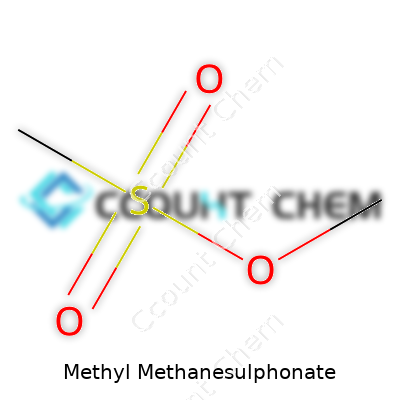
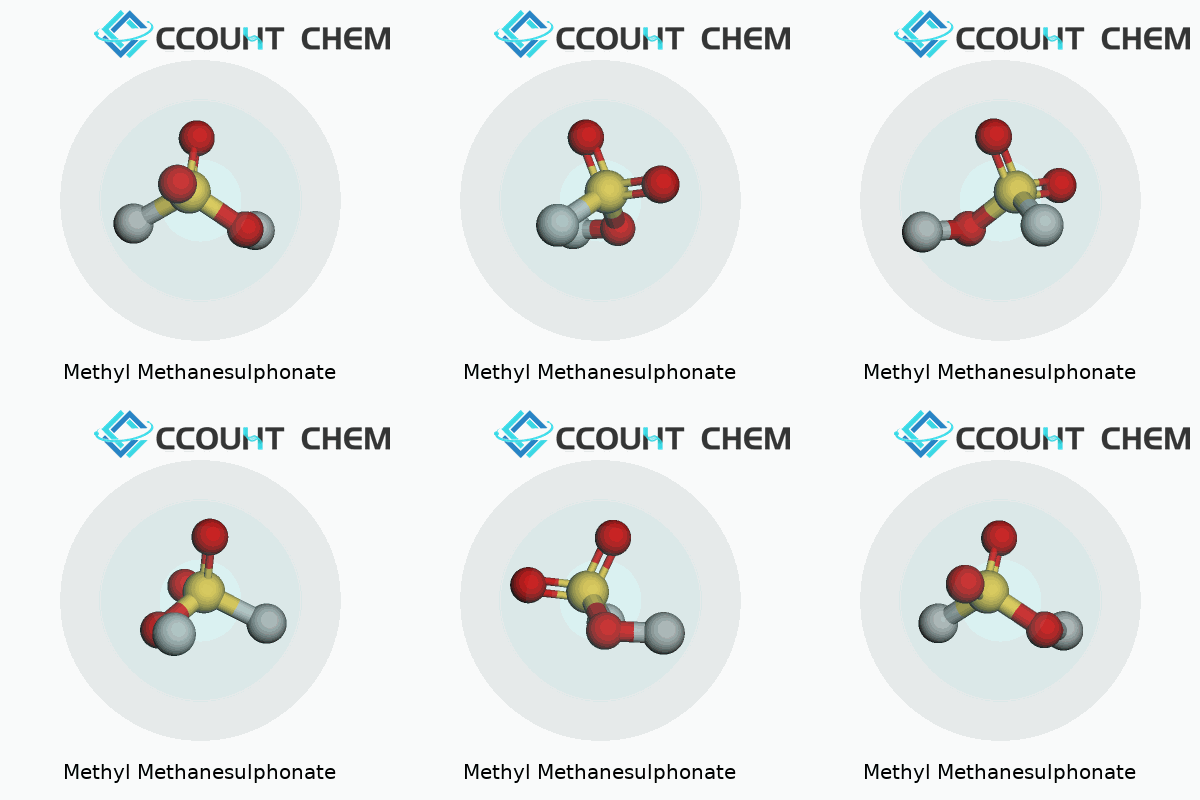
| Names | |
| Preferred IUPAC name | methyl methanesulfonate |
| Other names |
Methanesulfonic acid methyl ester MMS Methyl methanesulfonate |
| Pronunciation | /ˈmɛθɪl mɛˌθeɪnˈsʌlfəˌneɪt/ |
| Identifiers | |
| CAS Number | 66-27-3 |
| Beilstein Reference | 1209284 |
| ChEBI | CHEBI:75161 |
| ChEMBL | CHEMBL1569 |
| ChemSpider | 15202 |
| DrugBank | DB07307 |
| ECHA InfoCard | 100.022.330 |
| EC Number | 200-521-5 |
| Gmelin Reference | 7727 |
| KEGG | C01970 |
| MeSH | D008766 |
| PubChem CID | 6327 |
| RTECS number | PA9625000 |
| UNII | JI3A33J4Z2 |
| UN number | UN3277 |
| Properties | |
| Chemical formula | C2H6O3S |
| Molar mass | 110.13 g/mol |
| Appearance | Colourless liquid |
| Odor | Odorless |
| Density | 1.206 g/mL at 25 °C |
| Solubility in water | Soluble |
| log P | -1.2 |
| Vapor pressure | 11 hPa (20°C) |
| Acidity (pKa) | pKa ≈ –2 |
| Magnetic susceptibility (χ) | -7.48 × 10⁻⁶ cm³/mol |
| Refractive index (nD) | nD 1.417 |
| Viscosity | 2.41 mPa·s (25 °C) |
| Dipole moment | 3.04 D |
| Thermochemistry | |
| Std molar entropy (S⦵298) | 235.8 J·mol⁻¹·K⁻¹ |
| Std enthalpy of formation (ΔfH⦵298) | -462.4 kJ/mol |
| Std enthalpy of combustion (ΔcH⦵298) | -802.0 kJ/mol |
| Pharmacology | |
| ATC code | V03AX24 |
| Hazards | |
| GHS labelling | GHS02, GHS05, GHS06, GHS08 |
| Pictograms | GHS06,GHS08 |
| Signal word | Danger |
| Hazard statements | H301, H311, H317, H331, H341, H350, H370 |
| Precautionary statements | P210, P233, P280, P302+P352, P305+P351+P338, P308+P313, P403+P235 |
| NFPA 704 (fire diamond) | 2-3-2 |
| Flash point | 79 °C |
| Autoignition temperature | 215 °C (419 °F; 488 K) |
| Explosive limits | Explosive limits: 1.1–6.2% (in air) |
| Lethal dose or concentration | LD50 oral rat 215 mg/kg |
| LD50 (median dose) | LD50 (median dose): 245 mg/kg (oral, rat) |
| NIOSH | NIOSH: PF9960000 |
| PEL (Permissible) | PEL (Permissible Exposure Limit) of Methyl Methanesulphonate: Not established |
| REL (Recommended) | 400 ng/L |
| IDLH (Immediate danger) | Unknown |
| Related compounds | |
| Related compounds |
Dimethyl sulfate Ethyl methanesulfonate Methanesulfonic acid |



