


Methanesulphonyl chloride, sometimes people call it mesyl chloride, has been in the chemist’s toolkit since the early decades of the twentieth century. Back then, research labs were chasing after new reagents to make molecules cleaner and faster. The real rise of this compound came with the growth in organosulfur chemistry, powering the development of sulfonamides and a long list of pharmaceutical breakthroughs. Labs in Europe and the United States led efforts shaping the early narrative—folks realized pretty quickly that a molecule with both a sulfonyl group and a chloride could trigger precise and reliable molecular changes. Industrial scale production picked up around the 1940s, and by the 1960s, the chemical had become a standard route toward sulfonate esters and many medicinal signatures we now take for granted. Looking back, it’s easy to spot how each leap in synthetic strategy or drug design would seem empty without the simple, yet ferocious, reactivity of methanesulphonyl chloride.
Clear, colorless liquid that isn’t much to look at, yet packs a punch in so many transformations—chemists know methanesulphonyl chloride for its reliability. Its pungent, sharp odor makes it impossible to confuse with plainer solvents. Delivered in glass or high-density plastic, maybe a metal drum if you’re running big batches, most manufacturers keep water far away from their warehouses. This isn’t just a reagent for the academic bench; industry counts on its high purity for fine chemicals, crop protection, and intermediates that flow straight into pharmaceuticals. In research, mesyl chloride acts as the go-to activating agent, offering a clean shot to install sulfonate groups where they’re needed most. With specs focused on water content and acid residue, producers work hard to guarantee consistency—no one wants unexpected byproducts setting back weeks of synthetic effort.
Sitting at roughly 64° Celsius for its boiling point, and with a melting point sinking to -32°, this liquid stays fluid across most laboratory environments. People who work with it recognize the density, about 1.48 g/cm³, gives a physical hint toward its tough chemical profile. It dissolves in ether, benzene, and chloroform, but toss water into the mix and it undergoes violent hydrolysis—spewing hydrogen chloride, creating methanesulphonic acid on the fly, and heat enough to corrode metal. The refractive index falls in the 1.45 range, making quality verification pretty straightforward. What sets it apart is the clean, reactive sulfonyl chloride bond; chemists rely on this single electron arrangement to convert alcohols into mesylates and amines into sulfonamides. That transformation opens doors to almost every branch of organic synthesis.
Manufacturers don’t cut corners here—water needs to hit less than 0.05% to meet big pharma’s standards, while chloride impurities are tracked down to below 0.05%. The chemical usually ships as a minimum 99% pure liquid, most often stabilized with a tiny bit of acid to stop decomposition. Labels always show UN 3246 for proper transport; pictograms warn of corrosive danger plus those for acute toxicity. SDS documentation covers the risk of inhalation injury, eye burns, and strong reaction with water. Every drum carries batch numbers, manufacture date, and expiry, since any hint of breakdown could bring nasty surprises downstream. Tight regulations in North America and Europe dictate precisely how it’s packaged and moved, making sure health and safety isn’t a roll of the dice.
Hydrogen chloride gas reacts with dimethyl sulfoxide to start one of the common syntheses, but industrial-scale plants stick with chlorination of methanesulphonic acid using phosphorus pentachloride or thionyl chloride. Process engineers tune flows and reaction time to capture high yields and keep side reactions in check, venting gases only after scrubbing. I spent an early stretch of my grad school days running pilot runs of this very reaction—getting a whiff of the product taught me more about PPE discipline than any classroom. The careful removal of residual acid and excess reagent keeps things clean for downstream application. Though the overall process works well, its aggressive chemistry demands respect—the right ventilation, gloves, and fume hoods make all the difference between a successful batch and an emergency shutdown.
In practical lab use, methanesulphonyl chloride makes its reputation by converting alcohols into mesylates, turning even tough secondary and tertiary positions into excellent leaving groups for nucleophilic substitutions. Reaction with amines delivers sulfonamides, tightening up the backbone of dozens of antibiotic drugs. Its quick hydrolysis gives a powerful route to methanesulphonic acid, which turns up in everything from electroplating to high-performance batteries. The chemistry isn’t just one-way—base hydrolysis, nucleophilic attack, reductions, and selective couplings open even broader synthetic paths. Each route leans on the reactive yet controllable sulfonyl chloride group, giving organic chemists a reliable tool to shape complex target molecules. In medicinal chemistry, it gives a shortcut to introduce groups for later transformation, allowing for rapid screening of pharmaceutical candidates.
Plenty of trade names travel through international supply chains: mesyl chloride, methylsulfonyl chloride, and even the German Methylsulfonsäurechlorid pop up in technical catalogs. CAS number 124-63-0 crops up on most bottles, avoiding confusion between similar-sounding chemicals. Producers like Sigma-Aldrich, Thermo Fisher, and Indian manufacturers list it by their catalog-specific numbers, but savvy chemists always double-check the actual label—one swapped bottle in a crowded cabinet brings real danger.
Handling methanesulphonyl chloride never becomes a casual affair. Its fumes hit the lungs hard, with reports of burns and persistent coughs among under-prepared users. Even the smallest spills can eat through lab benches and burn skin if not scrubbed up quickly. Modern facilities rely on engineered controls: rated fume hoods, spill containment stations, face shields, and strict chemical compatibility sheets to judge every transfer. The safety culture around this compound grew out of hard lessons—old stories tell of days lost to eye injuries or caustic burns. Proper emergency eyewash and acid-resistant gloves make a real-world difference, turning a minor splash into a one-minute fix, not a trip to urgent care. Firefighting guidelines flag the risk from corrosive gases, with rescue teams trained in chemical PPE rather than standard turnout gear.
Applications reach deeper than just academic curiosity. Industrial scale use sees methanesulphonyl chloride feeding sulfonate intermediates into herbicides, dyes, and bulk drugs nearly every working day. In pharmaceutical manufacturing, the mesylate ester route offers a critical step toward HIV medications, antifungals, and blood-pressure treatments, cutting the cost and raising yields of active compounds. The semiconductor industry turns to it as a surface modifier, prepping wafers and connectors for specialty coatings. Custom synthesis shops rarely pass a month without breaking out a bottle, whether for pilot-scale kilo chemistry or fast-turnover research molecules. Every new route to better patient outcomes or precision electronics touches, in some chain, the reactive pathways unlocked by this compact reagent.
Research continues to nudge new uses and cleaner processes into the frame. Teams at leading universities look for catalysts that can swap out the heavier-metal byproducts, seeking routes that cut energy use and lower environmental impact. The hunt for safer solvents, reusable reaction media, and milder reaction conditions gets a boost from grants and industry partnerships. Molecule designers in biotech firms run screens for new drug scaffolds, building diverse compound libraries where mesylates serve as flexible building blocks. Analytical chemists keep testing for trace impurities, refining purification techniques and detection limits to weed out unknown risks. My years in collaborative research have shown that the right tweak around methanesulphonyl chloride chemistry often cracks stubborn synthetic puzzles, changing the map for entire fields in drug discovery.
Methanesulphonyl chloride’s toxicity isn’t theoretical—it inflicts severe irritation on skin, eyes, and especially the respiratory tract. Acute exposure stings, but chronic low-level inhalation creates risks for bronchial disorders and chemical sensitization. Animal studies paint a clear picture: unprotected application causes visible skin lesions, while even light vapor inhalation brings coughing and fluid buildup in lung tissue. Regulatory guidelines limit allowable airborne levels; any workplace running this chemical must continuously monitor air quality. Workers rely on closed-system transfers and routine safety drills to catch leaks before they escalate. Waste management protocols call for solid neutralization with dry bases, then proper hazardous disposal. Ongoing studies into long-term effects keep pushing out safer practices and new risk-reduction strategies, reflecting the cost of earlier decades spent learning through missteps.
Methanesulphonyl chloride keeps punching above its weight as green chemistry pushes for less toxic, more efficient reagents. Companies invest in continuous-flow production to slash waste and energy, breathing new life into this old standby. New applications in materials science—especially in battery technology and biodegradable polymers—offer growth beyond pharmaceuticals. Research looks set to deliver milder activation conditions, alternative leaving groups derived from mesyl chloride, and strategies to recycle sulfonic acid byproducts with minimal fuss. The challenge for the next generation: balance the hard-edged reactivity that makes this chemical useful with a softer, safer footprint at every scale of operation. My time on the lab floor taught me to respect its hazards, yet I never saw another reagent open as many doors with such tiny changes—so long as chemists carry that respect forward, the future remains bright for smart, responsible progress.
Pharmaceutical chemists rely on methanesulphonyl chloride for building complex molecules. It’s a popular pick for turning alcohols into sulfonates, which act as important stepping-stones during drug development. Transforming these groups helps create active pharmaceutical ingredients that do their job in the body more efficiently. For example, mesylates—compounds formed from methanesulphonyl chloride—show up as components in heart medications, anti-cancer treatments, and antibiotics. Having spent time in a lab, I have seen that without reagents like this, researchers would face longer timelines and less reliable chemistry in drug pipelines.
Farmers count on modern crop protection, and chemists use methanesulphonyl chloride to build some of those solutions. The compound helps form sulfonylurea herbicides, which have changed crop management over the past few decades. These herbicides target weeds without causing as much harm to the crops themselves. Sulfonylurea class products cut down on overall chemical usage, making them a safer bet for soil and waterways. People I know who work with small-scale agriculture appreciate any tool that can help them use fewer resources and still fight pests effectively.
Textile and pigment manufacturers turn to methanesulphonyl chloride to achieve durable, vivid colors. The compound reacts with amines and phenols—helping generate bright, stable dyes that hold fast after washing. Clothing brands try to please customers with long-lasting colors, and this intermediate plays its part behind the scenes. Anyone who has inadvertently ruined a favorite t-shirt in one laundry cycle can appreciate why chemical stability in colorants matters.
Chemists in food and fragrance sectors turn to this versatile reagent. Methanesulphonyl chloride helps mask unwanted flavors or stabilize fragrant compounds, especially those that need to hold up in processed products. It can preserve certain notes in citrus oils or stabilize aroma chemicals under heat, making those morning coffees or scented candles more enjoyable. As someone who can’t stand “off” tastes in packaged foods, I find these tweaks worthwhile.
Methanesulphonyl chloride brings clear advantages, but it poses challenges. The chemical can be hazardous, especially without proper safety measures. Labs and factories have to invest in protective equipment and proper ventilation. If spills happen, clean-up demands full attention to avoid risks to people and the environment. Regulations exist for good reason, and training is crucial to minimize exposure. In my own experience, rushing through protocols—especially with aggressive compounds—never ends well.
On the environmental side, waste management matters. Careful disposal cuts down on water and soil contamination. Some companies now explore greener alternatives or recycling options, but progress is gradual. Workers, communities, and regulators have to stay vigilant, pushing for updates as technology improves.
Methanesulphonyl chloride sits at the crossroads of modern industry and chemistry. It delivers results in medicine, agriculture, color, and scent. Each application comes with considerations that demand respect for safety and the environment, pointing to a careful balance as science moves forward.
Methanesulphonyl chloride can look harmless, sitting in clear glass bottles on a shelf. Its appearance doesn't give much away, but its fumes and splashes pack a punch you might not expect. During my years working in chemical labs, I’ve seen more than one colleague cut corners, only to land in trouble. Skin burns, lung irritation, or emergency eye flushes tend to stick in your memory much longer than the dull ache of routine safety checks.
A sturdy set of safety goggles comes first—methanesulphonyl chloride stings eyes like no other. Face shields are a smart move if you’re pouring large amounts or working at eye level. I always trust in thick chemical-resistant gloves. Forget lightweight latex; this stuff will eat right through thin barriers over time. Nitrile, neoprene, or butyl gloves hold up better. Aprons or lab coats give extra backup against surprise splashes.
I’ve learned never to leave exposed skin or use short sleeves. Fumes can irritate even before any liquid hits you, so never ignore that faint whiff in the air.
Few things compare to good air movement in a lab. Methanesulphonyl chloride can fume, and those vapors hurt lungs fast. Always work in a well-maintained fume hood. Don’t wave your hand around to check “how bad it is”—use air sensors if available, and trust your nose and lungs to alert too late. Keep the sash low and work with equipment that contains splashes and vapors. Sometimes folks prop the sash open for “better access”—don’t.
Store methanesulphonyl chloride away from water, strong bases, and anything that might set off a chain reaction. It reacts violently with moisture in the air, so always use tightly sealed bottles. I check seals and labels every time I come across bottles, not just my own. Keeping chemicals on lower shelves reduces the risk of spills from accidental bumps.
No one expects a spill or an accidental splash. Still, stations with eyewash and safety showers save skin and life. In one old lab job, I saw a newbie hesitate to run for the eyewash, worried about office gossip. Faster action would have meant a much easier recovery. Every lab needs clear signage and accessible emergency gear—and everyone needs to practice emergency responses at least once a year.
Anyone working with methanesulphonyl chloride has to understand the SDS (Safety Data Sheet) and local chemical policies. At every new job, I looked for regular refreshers, not just a dusty training manual in a locked cabinet. Seasoned chemists and new faces both benefit from regular walk-throughs on handling, disposal, and spill response.
Keeping a well-ventilated, organized workspace pays off daily. Simple routines—labeling waste containers, neutralizing leftovers, and double-checking compatibility before mixing—save stress. Disposal must follow strict local regulations. Never pour leftovers in the sink or “dilute away” the hazard. Professional chemical disposal services take the burden off your conscience and prevent environmental headaches down the line.
Handling methanesulphonyl chloride isn’t about bravado or cutting corners to save a minute. It’s about respecting chemistry and looking after yourself and everyone around you so science can move forward, safer and smarter.
Chemistry can get complicated, but certain compounds stand out for how useful they’ve become in research and industry. Take methanesulphonyl chloride as an example. This chemical serves as a key building block when making medicines, dyes, and crop protection products. Its formula—CH3SO2Cl—does more than sit in a textbook, spurring chemical transformations in countless labs and manufacturing plants.
The formula for methanesulphonyl chloride, sometimes shortened to MsCl, reads CH3SO2Cl. Each letter and number tells a story about atoms and their bonds. There’s a methyl group (CH3), a sulfonyl group (SO2), and a chlorine atom (Cl). Chemists like this structure because it reacts cleanly, swapping the chlorine for all sorts of other groups.
The straightforward structure boosts reliability. In labs, you want reactions to go smoothly and predictably, and this one pulls its weight. Sulfonyl chlorides, including methanesulphonyl chloride, help chemists attach “handles” to molecules for the next step in making things like antihistamines or heart medicines.
Calculating the molecular weight is a rite of passage in chemistry class. Methanesulphonyl chloride tips the scale at about 114.55 grams per mole. Here’s how it adds up: Carbon (12.01), hydrogen (3 x 1.01), sulfur (32.07), oxygen (2 x 16.00), and chlorine (35.45). Tools like accurate electronic balances and reliable suppliers matter because even slight mistakes in the mass can throw off large batches of product.
Measuring out chemicals by the gram feels routine in science, but there’s a lot at stake. If you’re running a pilot plant, a miscalculated dose of methanesulphonyl chloride can spell trouble—ruined products, safety risks, lost money. In research labs, the numbers must add up to create reproducible results. From personal experience mixing chemicals for undergrad projects, getting the exact amount changes the outcome every time.
Every chemist I’ve worked with keeps detailed logbooks. These notes don’t just satisfy curious minds—they protect people. Mistaking a decimal or forgetting a chlorine atom in a formula puts safety on the line. Reliable reference materials and careful cross-checking build trust in laboratory teams everywhere.
Working with methanesulphonyl chloride isn’t just about the numbers or the chemistry books. It demands respect. The compound releases corrosive fumes if exposed to water, including humid air. Goggles, gloves, and fume hoods stand between the chemist and a trip to the emergency room. I remember colleagues telling stories of accidental spills—none pleasant, all preventable with a bit more care.
Good training helps. So do standard operating procedures and clear labeling. In big chemical plants, alarms and leak detection systems add another layer. Trust in the compound grows when everyone around knows how to deal with mishaps—practice isn’t just for beginners.
Keeping tools sharp—whether it’s a balance in a university lab or an industrial mixing tank—goes far in chemistry. Refreshing training every year reminds even seasoned pros how fast things can go wrong. Suppliers who provide purity certificates and batch analysis help too. When you know exactly what’s in your bottle of methanesulphonyl chloride, you work with less worry.
Every time people ask about chemical formulas or molecular weights, it isn’t just curiosity. Getting those facts right keeps science honest, industries productive, and most of all, people safe.
Methanesulphonyl chloride shows up in labs more often than most folks realize. I remember handling it during my time as a junior chemist—its strong, choking odor lingers in the mind, and so does the sting if a drop splashes out. The thing is, storing this chemical correctly could save more than product; it fends off serious risk to workers, property, and the environment.
This colorless liquid isn’t just another bottle to toss on a shelf. It fumes, and those fumes burn the nose, eyes, and lungs. Water anywhere near it triggers vigorous reactions and releases corrosive gases. I’ve seen colleagues hurrying to clean up tiny spills; even a few drops demand attention. Spilled, it eats through organic material and damages lab benches badly. Safe storage starts with knowing its stubborn volatility and its love for reacting with moisture.
The best place for methanesulphonyl chloride sits away from water sources—no sinks, no humid corners, no dripping condensation from old pipes. A cool, dry cupboard with a solid door works. Metal cabinets line a lot of university labs for this very reason, but plastics resistant to acid attack also fit the bill. Ventilation matters—chemical vapors drift up and around—and I’ve found that cabinets with small vents up high make a real difference.
Keep it out of sunlight. Sunlight warms the bottle and speeds up decomposition, especially if a poorly sealed cap lets in a trace of moisture. Label the container clearly and use secondary containment like a plastic tray. I used to keep silica gel nearby, checking regularly for signs of moisture. Don’t just trust a label; get hands-on and confirm the body's clean and the cap’s tight after each use.
Donning goggles, gloves, and a lab coat might feel routine, but skipping those precautions with this chemical invites trouble. I saw a glove failure once—a small tear led to burns in minutes. Nitrile gloves and splash-proof eyewear offer real protection, especially if opening a fresh bottle or pouring new stock.
In industrial settings, methanesulphonyl chloride usually fills drums or tightly sealed steel containers. A storage facility I visited used tilt racks that let workers pour without lifting barrels, cutting down on accidents. Drum storage works best where floors drain away spills to a neutralizing pit. Sprinkler systems using water won’t extinguish a fire caused by this chemical; specialized foam and dry chemical systems step in instead.
Temperature control goes far beyond comfort—summer heat can increase vapor pressure inside sealed containers until caps burst. Fire marshals in my city require temperature logs for all volatile chemicals and monthly checks to spot rusted containers or those swelling from pressure buildup.
Plenty of labs overlook the risk until they face an incident. Training all staff helps, but walking through actual drills seals the lessons in. Regular audits, done by someone who hasn’t grown complacent, spot the missed cracks and leaks. Local emergency numbers sit on the wall by every chemical store I’ve worked in, and eye wash stations get monthly testing.
Safe storage isn’t just about ticking boxes or following code; it’s a habit. Those habits, built from experience and solid information, keep people, property, and the wider community safe from chemicals that don’t forgive carelessness.
Methanesulphonyl chloride doesn’t show up in the news like asbestos or lead, but that doesn’t make it any less concerning in the right context. Over the years, I’ve come across folks in chemical plants and labs who brush off some of these specialty chemicals. Their masks hang off their necks or goggles fogged up on their heads. People get comfortable around what they know, and that’s where the real risk grows.
I remember my first job in a small contract lab. Everyone respected the acids and the bases, but specialty reagents like methanesulphonyl chloride felt routine. Turns out, breathing in even small amounts sends your airways into panic—coughing, tight chest, burning throat. This stuff sits in the air as vapors you can’t always see coming. Too much exposure, you may start to notice wheezing, and some develop chronic coughs. Chemical pneumonia isn’t as far-fetched as most think. Hospitals have seen it after spills and improper handling.
Gloves and thick lab coats usually stand between your skin and chemical burns. Methanesulphonyl chloride doesn’t need much time to leave blisters or painful redness. Coming into contact with it can mean weeks of healing for just a brief mistake. Eye splashes can cause long-lasting damage—temporary or even permanent vision trouble.
Most of the known health risks come from animal studies and workplace incidents. Repeat exposure in animals led to airway damage, lung irritation, and even lost body weight. In people, too much inhalation eventually leads to respiratory tract injury. Nose bleeds, sinus pain, never-ending headaches—all can creep into the workday if basic safety steps fall to the wayside. Some research points to possible immune reactions and heightened asthma symptoms after regular exposure.
In my experience, companies rely heavily on the assumption that fume hoods and respirators never fail. It only takes a small mistake—a splash, a failed seal, someone skipping a glove change—for accidents to stack up. This isn’t just a chemical for trained scientists, either. Textile workers, pharmaceutical techs, and even people in electronics manufacturing run into methanesulphonyl chloride without always knowing the full story.
Better safety grows out of real training, not just paperwork. I’ve seen the difference after sessions where workers handle these chemicals under supervision, learning where splash risks show up, or how vapors escape simple enclosures. Proper ventilation—checked often—is key, especially in older buildings where air flow isn’t guaranteed. Companies that invest in chemical sensors give their teams a fighting chance to catch invisible leaks before symptoms appear. Immediate access to eyewash stations, chemical-resistant gloves, and fitted respirators can limit the damage from a single slip-up.
One simple but overlooked fix: workers need time to clean up spills and change gear without pressure to rush. A “just get it done” pace sets up future hospital visits. The value of an open-door policy where anyone can report concerns or suggest safety improvements without fear of backlash can’t be overstated. People at every level—from supervisors to temp workers—should expect clear labels, relevant training, and honest discussion of risks linked to substances like methanesulphonyl chloride.
Methanesulphonyl chloride will stick around because industry depends on it for specialty reactions and manufacturing steps. It doesn’t make sense to banish it outright. Instead, straight talk, respect for the chemical, and habits built on true stories—not just rulebooks—create healthier workplaces. Real safety rests on the decisions made before the first bottle gets opened.
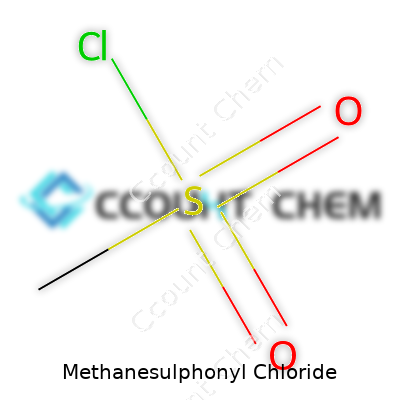
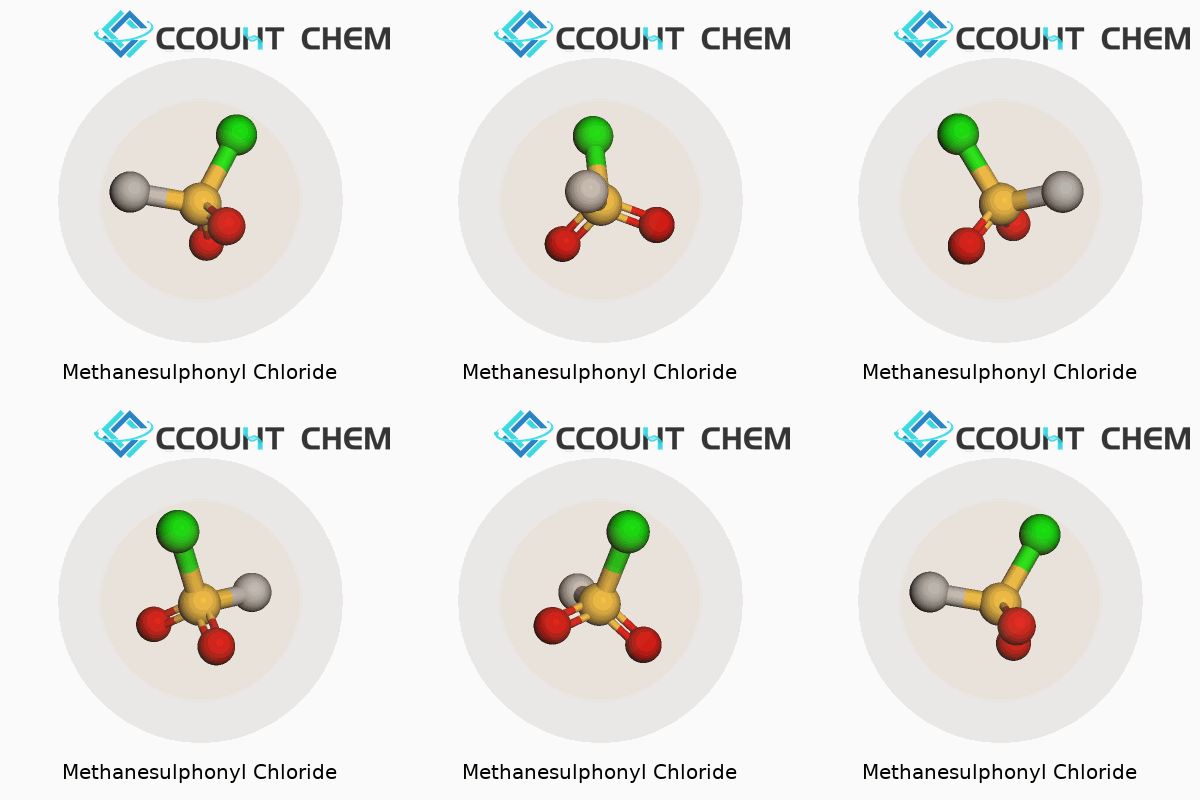
| Names | |
| Preferred IUPAC name | Methanesulfonyl chloride |
| Other names |
Methanesulfonyl chloride Methanesulphonic acid chloride Mesyl chloride MSCl Methanesulfonic acid chloride |
| Pronunciation | /mɛˌθeɪn.sʌlˈfəʊ.nɪl ˈklɔː.raɪd/ |
| Identifiers | |
| CAS Number | 124-63-0 |
| Beilstein Reference | 1716605 |
| ChEBI | CHEBI:35880 |
| ChEMBL | CHEMBL135885 |
| ChemSpider | 7687 |
| DrugBank | DB14062 |
| ECHA InfoCard | DTXSID5020154 |
| EC Number | 200-898-6 |
| Gmelin Reference | Gmelin 1994 |
| KEGG | C01162 |
| MeSH | D008756 |
| PubChem CID | 7831 |
| RTECS number | WS6125000 |
| UNII | 866R6QJ13Z |
| UN number | UN1235 |
| Properties | |
| Chemical formula | CH3SO2Cl |
| Molar mass | 114.55 g/mol |
| Appearance | Colorless to pale yellow liquid |
| Odor | Pungent |
| Density | 1.479 g/mL at 25 °C (lit.) |
| Solubility in water | Reacts |
| log P | -0.2 |
| Vapor pressure | 23 hPa (20 °C) |
| Acidity (pKa) | -1.6 |
| Basicity (pKb) | -7.2 |
| Magnetic susceptibility (χ) | -62.5 × 10⁻⁶ cm³/mol |
| Refractive index (nD) | 1.424 |
| Viscosity | 30 cP (25 °C) |
| Dipole moment | 2.89 D |
| Thermochemistry | |
| Std molar entropy (S⦵298) | 247.8 J·mol⁻¹·K⁻¹ |
| Std enthalpy of formation (ΔfH⦵298) | -333.7 kJ/mol |
| Std enthalpy of combustion (ΔcH⦵298) | -577 kJ·mol⁻¹ |
| Pharmacology | |
| ATC code | Not assigned |
| Hazards | |
| Main hazards | Corrosive, causes severe skin burns and eye damage, harmful if inhaled, may cause respiratory irritation, reacts violently with water. |
| GHS labelling | GHS02, GHS05, GHS06 |
| Pictograms | GHS05,GHS06 |
| Signal word | Danger |
| Hazard statements | Hazard statements: Causes severe skin burns and eye damage. Harmful if swallowed. Harmful in contact with skin. Harmful if inhaled. |
| Precautionary statements | P261, P264, P271, P273, P280, P301+P330+P331, P303+P361+P353, P304+P340, P305+P351+P338, P312, P337+P313, P362+P364, P405, P501 |
| NFPA 704 (fire diamond) | 3-0-2-W |
| Flash point | 36 °C (closed cup) |
| Autoignition temperature | 150°C |
| Lethal dose or concentration | LD50 oral rat 204 mg/kg |
| LD50 (median dose) | LD50 (median dose): Oral rat 1600 mg/kg |
| PEL (Permissible) | Not established |
| REL (Recommended) | 150 mg/m³ |
| IDLH (Immediate danger) | 1 ppm |
| Related compounds | |
| Related compounds |
Methanesulfonic acid Sulfuryl chloride Methanesulfonamide Methyl chloride Benzenesulfonyl chloride Chlorosulfonic acid |



