


Benzenesulphonic acid has roots stretching back to the early days of industrial chemistry. Chemists in the 19th century, hungry for new pathways to dyes and detergents, landed on sulfonation of benzene as a key move. Progress built on the shoulders of practical problem-solving, not just theory. Early plant operators wrangled with harsh reaction conditions and needed gear tough enough for large-scale runs, and engineers steadily improved reactors as demand for sulfonated colorants and synthetic detergents exploded. The next time you see a bottle of bright dish soap, realize that its very existence grew out of these moments of industrial creativity. Old patents and faded textbook pages show real struggles—heat, pressure, corrosion, messy process streams—that led to today’s more reliable routes.
If you were to line up a set of strong acids used in industry, benzenesulphonic acid holds a special spot. It's a colorless to light brown oily liquid or, at times, appears as lumps or flakes when solid. Chemists value it as a building block, not just a reagent. It stands as a backbone for detergents, the starting point for sweet-smelling cleaning agents, and a stepping-stone to some pharmaceuticals. Businesses use benzenesulphonic acid because it delivers where others fail—stability at high temperatures, tough on stains, yet predictable in the lab. Plenty of products in your laundry room and under your kitchen sink trace their key ingredient back to this single acid.
Benzenesulphonic acid runs with sulfuric acid in the league of strong protic acids. This oil-wet solid or viscous liquid dissolves readily in water, shedding heat as it forms a clear solution. Density lands around 1.26 g/cm³ and its melting point sits comfortably between 40–45 °C, making it fairly easy to handle in factory settings, much less fussy than some cousins. Boiling it directly isn't practical; above 160°C it starts to decompose instead. The molecule, C6H5SO3H, holds on to its sulfonic group tightly, resisting breakdown—a huge plus in production and storage. Its acidity pKa sits near -2.5, underlining why it so easily donates protons to push reactions along.
This acid doesn’t come with many frills on the technical sheet, but the details mean safety and performance. Industrial grades usually tout purity above 98%, with water content and inorganic impurities kept low. Color frequently gets specified, as a dark product signals contamination that can disrupt later synthesis. Most packaging features clear hazard labeling—corrosive pictograms and warning codes—to drive home the message: treat it with care, gloves and eye protection are standard. Shipping barrels often arrive with batch tracking, expiry dates, and handling instructions in plain text, not just regulatory codes. Overlooking this labeling has led to more than a few accidents in rushed plants.
Factories make benzenesulphonic acid by feeding benzene and sulfuric acid together under heat. Traditional batch processes saw sulfur trioxide bubbling through benzene in big steel kettles, with exothermic reactions releasing plenty of heat. Continuous processes now dominate, delivering controlled feed rates and tight temperature holds, lowering operator risk while juicing yields. This preparation requires careful venting of fumes, handling of acid mists, and a solid grasp of the fact that benzene’s own health risks ride alongside. Post-synthesis work-up neutralizes extra sulfuric acid and peels away by-products, aiming for a pure acid stream. Scaling this up takes a mix of chemical know-how and respect for what can go wrong fast: pressure surges, leaks, and runaway heat if you lose focus.
Few molecules transform as flexibly as benzenesulphonic acid in the lab. It serves as a ready-made gateway for introducing sulfonate groups onto aromatic rings, facilitating further substitutions difficult by other means. Neutralization with sodium hydroxide or calcium carbonate yields the famous sodium salt, mainstay in detergents and dye work. Under strong conditions, the acid group can be swapped for amines, helping generate sulfa drugs that still save lives. Chemical engineers and R&D folks lean on its reliability—you can often swap functional groups, build on the sulfonic acid, or tweak reactivity by shifting pH or temperature, all without losing the aromatic core. It’s not flashy chemistry, but it works, year in and year out.
Benzenesulphonic acid wears many names on packaging and technical papers. Older literature calls it “Benzenesulfonic acid”, a simple swap, but you’ll also spot trade names referencing “BSA” or “Benzene-1-sulphonic acid” on safety data sheets. Its sodium salt, sodium benzenesulphonate, pops up in detergent formulas. Sometimes it’s bundled under blend labels for sulfonated aromatics. Regulatory filings might refer to CAS 98-11-3 or drop in EINECS and UN numbers for shipping. Industry insiders rarely trip up on names, but newcomers sometimes get thrown by all these aliases—it pays to double-check paperwork to avoid expensive mistakes with the wrong chemical.
Handling benzenesulphonic acid goes well beyond goggles and gloves. Contact with skin burns fast, and splashes sting deep in eyes. Workers learn respect early, using acid-resistant gear, face shields, and splash aprons. Ventilation pulls acid vapors away from breathing zones in both large plants and bench labs. Spills pull trigger for an immediate clean-up using neutralizers, not just water. Emergency showers and eyewash stations must stand ready nearby. Companies must train staff to handle accidental exposures and demand regular audits to shore up weak spots. Over time, regulatory bodies such as OSHA and REACH have grounded their rules in accident records, showing what real exposure looks like, not just theoretical risks.
Much of modern cleanliness and color chemistry leans on benzenesulphonic acid. Soap and detergent companies rely on it for sulfonated surfactant manufacture, fighting greasy stains. Textile dye producers reach for its salt forms to bind vibrant colors onto cotton and wool. Pharmaceutical companies, specializing in sulfonamide antibiotics, use derivatives to beat back tough bacterial infections. Organic synthesis labs keep stocks ready for introducing sulfonic acid groups, opening pathways to numerous specialty chemicals. Even water treatment facilities use modified versions to knock out heavy metals and organics from waste streams.
R&D efforts keep pushing the borders of how benzenesulphonic acid shows up in products. Chemists tweak its structure to tune detergency or to lower toxicity in consumer-facing goods. Recent patents show new uses as catalysts in greener organic reactions, aiming for shorter synthesis cycles and less chemical waste. Digital models and high-throughput labs help predict reaction yields, cutting down on costly pilot plant runs. Cross-disciplinary teams study how acid’s structure interacts with biological molecules, hinting at future medical uses that stretch far beyond today’s sulfa drugs. Future labs will keep drawing on these foundations, mixing practical bench skills with computational foresight.
Safety groups and toxicologists have kept a steady eye on benzenesulphonic acid for decades. It causes severe burns on skin and eyes and, if inhaled, can damage sensitive respiratory linings. Animal studies flagged its corrosive effects, but didn’t show persistent, widespread long-term toxicity at low concentrations. The main health risks come from improper handling rather than slow chronic exposure. Environmental scientists track its breakdown in waterways—it hydrolyzes, dilutes, and ultimately gets taken up by bacteria, but concentrated spills trouble aquatic life. Increasingly, manufacturers supply detailed tox profiles and publish regular updates to meet evolving regulatory standards.
Benzenesulphonic acid sits at a crossroads, balancing tradition and reinvention. Efficiency targets press for less energy-intensive synthesis. Circular chemistry concepts encourage reusing production streams and recycling wash waters tight to cut costs and cut out waste. Researchers reach for bio-based feedstocks to lower dependence on crude benzene. In the era of sustainability, safer derivatives and surfactants with rapid biodegradability will rise in importance. Young engineers need training not just in technical specifications, but also in environmental stewardship, placing benzenesulphonic acid in a broader landscape of responsibility. Early innovators may shift the center of gravity away from bulk commodities towards specialty chemicals, creating value by knowing where to tweak—down to the last molecule.
Benzenesulphonic acid might sound like something you only run into in a high-level chemistry class, but it matters more to daily life and industry than most people realize. This stuff comes from benzene, which is a basic building block in industrial chemistry. A bit of sulfuric acid added to benzene in the right conditions gives you benzenesulphonic acid, and at that point, the molecule steps onto a bigger stage.
One of the top uses I’ve run across is in the creation of surfactants. Most folks have used detergents or soaps at some point. The blend of molecules in these products owes a lot to sulfonic acids. Producers take benzenesulphonic acid, neutralize it with sodium hydroxide, and suddenly you have sodium benzenesulphonate. This substance helps break down oils and allows water to sweep away grease and grime. Without this chemical, you could say goodbye to the cleaning power found in many legacy laundry and dish soaps.
Benzenesulphonic acid doesn’t just clean things up; it puts color into fabrics and materials. Textile dye makers rely on this compound to anchor dyes better to fibers. It helps keep colors from running or fading after a wash. The acid’s structure makes it a choice material when working with aromatic dyes, which cover everything from vivid t-shirts to upholstery fabrics.
Getting medications right means the molecules need to dissolve as expected and stay stable over time. In the pharmaceutical world, benzenesulphonic acid is used to make what are called sulfonate salts of certain drugs. For a chemist, that’s a handy way to tweak solubility or shelf life. Looking at popular medicines like antihistamines or anti-infectives, you’ll find it used for shaping ingredients into more reliable, usable forms.
Many organic compounds don’t just leap from raw materials into their final forms. The journey from raw chemicals to useful products requires steps for which benzenesulphonic acid acts as a catalyst. In my own experience with basic organic chemistry reactions, using this compound has sped up certain reactions and made others clean and efficient. Amphetamine and sulfa drugs can both trace parts of their production to steps involving this acid.
The flipside to such a versatile chemical is always safety and environmental impact. Sulphonic acids, if not managed correctly, can harm waterways and aquatic life. Factories have a responsibility to handle their waste products with care. There’s a growing push for greener production processes, and some newer detergents look for biodegradable alternatives or different surfactant bases. Governments and scientists keep searching for ways to reduce leftover pollution, including better treatment systems and stricter oversight.
In the big picture, benzenesulphonic acid remains essential to industry. Responsible production, ongoing research for substitutes, and tighter environmental practices give this chemical its place in modern life without unnecessary hazard. Using knowledge from chemists, regulators, and real-world experiences, safe handling and innovation go hand in hand. The story of benzenesulphonic acid is just one piece of the puzzle in making the substances we rely on both practical and safer for people and the planet.
Benzenesulphonic acid sits at the intersection of science classrooms and industry across the world. Its formula, C6H6SO3, looks simple on paper. You’re looking at a benzene ring, which is six carbon atoms with six hydrogen atoms, plus a sulfonic acid group—SO3H—attached. This addition transforms what’s a fairly inert molecule into one with a range of practical applications.
Thinking back to my own experiences handling benzenesulphonic acid, I remember the unmistakable tang of it in a chemistry lab. This compound isn’t just interesting because of its formula: the sulfonic acid group impresses with its strong acidic nature. During synthesis, seeing how that one group changes everything about the original benzene taught me how structure can totally remake function.
People tend to overlook the sheer reach of substances like benzenesulphonic acid. It finds its way into detergents, dyes, and drugs. The strong acid group allows the molecule to blend well with water, making it vital in cleaning products. Years back, the switch from older laundry soaps to sulfonated detergents kicked off a cleaning revolution—and it’s all grounded in that molecular formula.
The pharmaceutical industry leans heavily on it as well. It serves as a chemical building block, a reliable starting point for synthesizing more complex compounds. That’s one reason researchers keep returning to this formula: it’s sturdy, predictable, and opens doors to so many other reactions.
Benzenesulphonic acid’s properties tie directly to environmental impact discussions. Modern wastewater treatment teams battle sulfonated aromatic compounds lurking in streams and rivers, a legacy of years of synthetic waste. Although the strong bond between benzene and the sulfonic group means these molecules want to stick around, there’s ongoing research into better breakdown methods. Scientists experiment with advanced catalysts and bacteria engineered to tackle these persistent chemicals, inching closer to greener solutions.
Focusing only on the formula misses the larger story. C6H6SO3 isn’t just an arrangement of atoms. Its impact shows how the details in chemistry ripple into factories, medicine cabinets, households, and even environmental policy. A clear grasp of these details forms the foundation for safer handling and better innovation.
Looking to the future, transparent labeling and robust education about chemicals play a real part in public health. Companies that work with benzenesulphonic acid owe consumers solid safety information, proper disposal instructions, and alternatives when possible. Teachers and professors should encourage students to see beyond memorizing formulas and focus on the chain reaction that chemistry sets off in daily life. Every molecule tells its own story, and C6H6SO3 proves just how far a single formula can carry its influence.
Benzenesulphonic acid shows up in a lot of industrial settings, from detergents to dyes. This isn’t some household chemical; it packs a punch. Speaking from time working around chemical storage at a wastewater treatment facility and from plenty of conversations with those managing chemical safety in research labs, benzenesulphonic acid gets more caution than other routine substances. The reason boils down to the way it can harm living tissue and the challenge it poses in confined spaces or poorly ventilated work areas.
Anyone who’s worked with strong acids remembers the sting—and sometimes scars—from accidents that linger long after handling. Benzenesulphonic acid doesn’t evaporate the way typical volatile solvents do, but that doesn’t mean it’s safe around your hands or eyes. Its contact burns are immediate and deep. I’ve seen new lab techs underestimating just how fast this clear liquid damages gloves and skin. Direct eye exposure brings a trip to the emergency room. People wear face shields and neoprene gloves for good reason.
The acid’s strong sulfonating power makes it useful for producing dyes and certain pharmaceuticals. Chemists favor it for its ability to install sulfonic acid groups onto aromatic rings, a reaction that few other reagents handle so efficiently. Paper, detergents, and even some resins get their properties thanks to this chemical. The problem: risk increases with concentration and quantity handled. Transportation and storage require containers that resist not just corrosion, but accidental release from impact or temperature swings.
Straight from the European Chemicals Agency and the U.S. Environmental Protection Agency, benzenesulphonic acid earns classifications as corrosive. Inhalation of mists leads to severe respiratory tract irritation. The acid's environmental risks include harm to aquatic life if spills enter water. Regulations force facilities to keep containment and recovery protocols tight. Safety Data Sheets list splash goggles, acid-resistant gloves, and fume hoods as standard—not optional—gear. If you walk into a plant handling this stuff, the smell and signage let you know extra awareness is expected.
Experts recommend swapping in less aggressive acids when technical needs allow—but substitutes don’t always give the same result. Training makes the biggest difference. Newcomers need to learn spill response by practicing with harmless substances first. Labs now use color-changing pH tapes and smart sensors to spot early leaks. On the industrial scale, companies invest in advanced containment and scrubber systems that handle accidental releases.
Government agencies advise storing benzenesulphonic acid in cool, dry areas with specific labelling and secondary containment (like spill pallets). Emergency eyewash stations and deluge showers must sit close to work zones. Clear records track what’s on site, so emergency crews waste no time if things go sideways. From personal experience: no one who’s handled this chemical for more than a year will say it’s just another acid. It earns respect—and with good reason.
Benzenesulphonic acid isn’t something you want spilling in your storage room. This substance carries a punch with its corrosive action and strong odor. Even seasoned professionals can run into trouble if safety routines get pushed aside. Skin burns and eye injuries are real risks; anyone who has worked with powerful acids knows how painful—even dangerous—an accident can be. I once saw someone in a neighboring lab end up in urgent care after a minor splash. Hearing about that rattled everyone and upped our caution.
Storing this acid means more than tucking it away on a shelf. Acid-resistant, tightly sealed containers work best. Polyethylene or glass containers hold up well and stop fumes from seeping out. Steel rusts and certain plastics soften, which can lead to leaks. Shelves made from acid-proof materials stand up better to accidental spills. Strong shelving also prevents accidents from shaking or shifting during a busy workday. Some places keep acids in locked cabinets – a step that protects both staff and cleaning crews who may not know what they're reaching for.
Humidity wrecks havoc on containers. Over time, damp air corrodes lids or makes seals brittle. A cool, dry space with good airflow prevents these problems and slows down the chances of chemical reactions starting up from stray moisture. Direct sunlight or a warm corner near equipment means more vapor, which can trigger both health issues and chemical changes. Keeping storage temperatures steady feels like a minor headache, but even small fluctuations increase risks.
Stacking other chemicals beside benzenesulphonic acid might seem harmless, though certain compounds don’t play well together. This acid reacts with strong bases, oxidizers, and water. Some years back, I saw a box of sodium hypochlorite sitting beside acids, which could have gone up in toxic smoke on a bad day. Clearly marked shelves keep these mishaps from happening. Labels that stand out save way more time than they take to print or handwrite.
No one plans on a spill. The key lies with readiness: acid-neutralizing agents like sodium bicarbonate, face shields, gloves, and good ventilation. Emergency showers and eyewash stations must stay clear of boxes or mop buckets. I once heard about a spill handled cleanly because someone actually read the material safety data sheet. Just knowing where that red binder sat saved a costly cleanup and a trip to the ER.
Real-world protection comes down to people. A well-trained crew understands that shortcuts lead to burns and ruined tools. I make it a point in every new job to map out the chemicals and storage layout on my first day. Regular checks, shared reminders, and easy-to-remember safety rules create a routine that sticks. It’s not just about following a checklist but building habits that hold up under pressure.
The price of mishandling chemicals rarely shows up on the day of the incident. Over time, leaks cost money, fracture trust, and damage the environment. Insurance claims pile up. Replacing ruined workspace supplies or paying fines feels avoidable if you stick to the basics. Old habits like double-checking container lids or wiping up minor drips sidestep bigger disasters later on.
Benzenesulphonic acid counts as a major player in the world of organic chemistry. Recognizable by its sharp, distinct aroma, this compound delivers more than just a pungent scent. In solid form at ordinary temperatures, crystals look white or colorless with a waxy texture. The substance begins to melt just below standard room temperature—clocking in at about 40°C. This low melting point means, if you keep it in a warm room, you'll probably find a sticky or syrupy liquid instead of solid chunks.
Sticking your nose near benzenesulphonic acid isn’t recommended, as its fumes turn out to be biting to your respiratory system. I remember working in a lab during college and feeling the sting in my nose from one careless whiff. That strong smell actually hints at another key trait—this acid keeps water close thanks to its sulfonic group. It dissolves incredibly well in water, churning out clear solutions even at high concentrations. In ethanol and acetone, the story stays much the same. These solutions come in handy for different industry processes, since manufacturers want a substance they can move around and mix without trouble.
Heat this acid and you won’t see runaway reactions or fireworks. Instead, it holds steady up to relatively high temperatures, refusing to break down easily. Workers in plants count on this stability to avoid accidental releases of hazardous products. That being said, direct contact with metals invites corrosion, and it chews through skin or clothing. I learned quickly to double-glove and keep a bottle of neutralizing solution handy every time I worked with it, because even small spills burn.
Look at a fresh sample in a beaker, and it's almost always clear or slightly yellow. Over time, especially if air gets in, the color darkens due to oxidation and leftover impurities. These color shifts serve as a tip-off that storage conditions matter if you want a pure product. Its oily feel and tendency to cling to surfaces mean clean-up takes patience—rinsing with plenty of water proves essential, but too little water spreads the acid rather than getting rid of it.
Benzenesulphonic acid’s melting and boiling points don’t just interest chemists. They shape transport regulations and safety plans for storage. Trucking solid acid in a cold climate cuts the mess, but warmer cities see leaks and handling headaches thanks to that low melting point. Factories build special tanks for it, to avoid accidental exposure or spills. Knowing about its keen ability to draw water from the air helps facilities prevent caking and clumping—experiences that cost time and money.
Safety glasses and thick gloves should always be worn, and exhaust fans run nonstop during use. I’ve seen firsthand what happens when careless handling leads to skin contact—red burns that stick around for weeks. Easy water solubility means spills need plenty of dilution, not just a quick wipe. Teaching good lab habits makes a difference here, replacing risky shortcuts with respect for the acid’s power.
Improving how benzenesulphonic acid is stored hinges on paying attention to heat and air exposure. Properly sealed containers, cool rooms, and regular checks on color or leaks help keep things running smoothly. Companies that move toward less hazardous sulfonic acids in some applications might lower overall risk. Yet, the reliability and strength of benzenesulphonic acid mean it remains hard to replace for now.
Every physical property, from texture to water affinity, shapes how this chemical gets used safely around the world. Science and smart planning together make sure it benefits industry without sacrificing worker well-being or the environment.
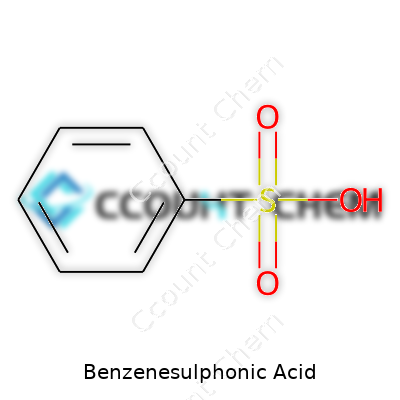
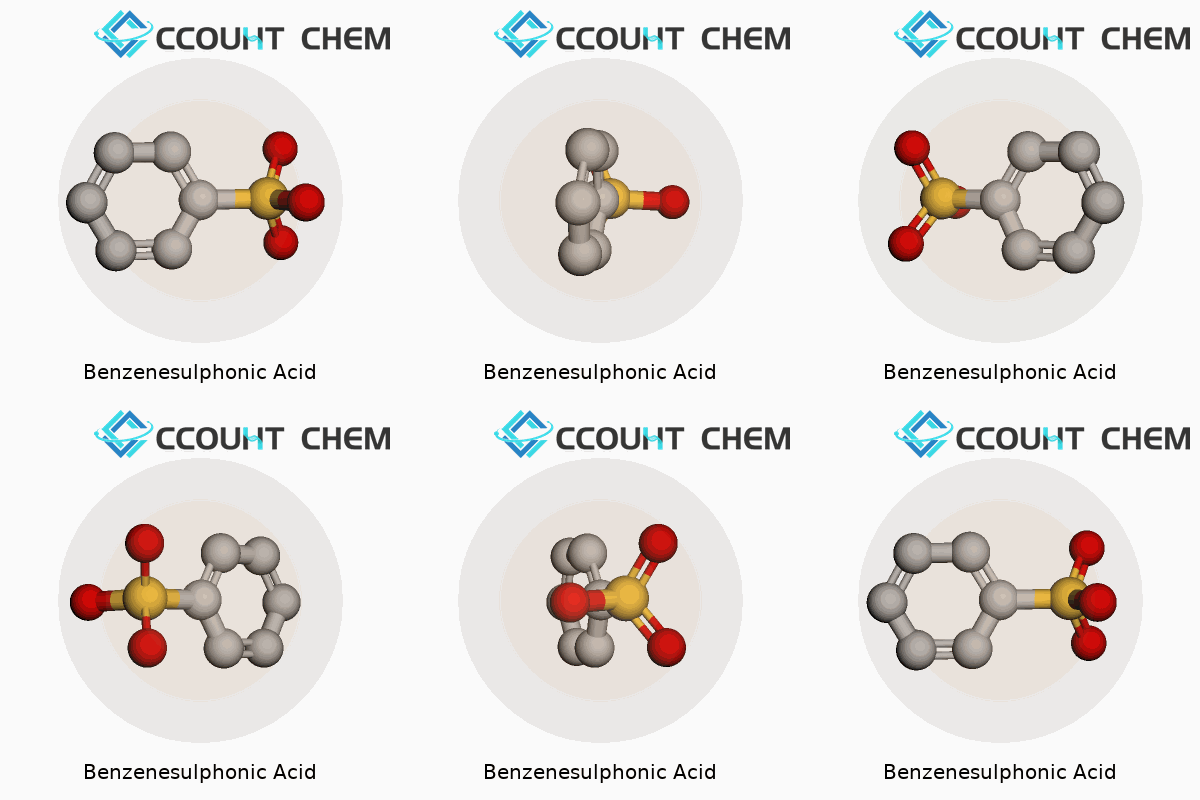
| Names | |
| Preferred IUPAC name | Benzenesulfonic acid |
| Other names |
Benzenesulfonic acid Benzene sulphonic acid Phenylsulfonic acid Benzosulfonic acid |
| Pronunciation | /benˌziːn.sʌlˈfɒn.ɪk ˈæs.ɪd/ |
| Identifiers | |
| CAS Number | 98-11-3 |
| Beilstein Reference | 1718735 |
| ChEBI | CHEBI:30743 |
| ChEMBL | CHEMBL1160 |
| ChemSpider | 767 |
| DrugBank | DB03815 |
| ECHA InfoCard | 100.013.695 |
| EC Number | EC 205-638-1 |
| Gmelin Reference | Gmelin Reference: **126126** |
| KEGG | C00698 |
| MeSH | D001584 |
| PubChem CID | 23851 |
| RTECS number | DB6300000 |
| UNII | F7YLY9GFSX |
| UN number | 2585 |
| Properties | |
| Chemical formula | C6H6O3S |
| Molar mass | 158.18 g/mol |
| Appearance | White or light brown solid |
| Odor | Pungent odor |
| Density | 1.35 g/cm³ |
| Solubility in water | Soluble in water |
| log P | -2.45 |
| Vapor pressure | 0.003 mmHg (20°C) |
| Acidity (pKa) | -2.5 |
| Basicity (pKb) | <1 |
| Magnetic susceptibility (χ) | -45.8×10⁻⁶ cm³/mol |
| Refractive index (nD) | 1.506 |
| Viscosity | 70 - 100 cP (25°C) |
| Dipole moment | 3.70 D |
| Thermochemistry | |
| Std molar entropy (S⦵298) | 151.0 J·mol⁻¹·K⁻¹ |
| Std enthalpy of formation (ΔfH⦵298) | -596.6 kJ/mol |
| Std enthalpy of combustion (ΔcH⦵298) | -3261 kJ/mol |
| Hazards | |
| Main hazards | Corrosive, causes severe skin burns and eye damage, harmful if swallowed, harmful if inhaled |
| GHS labelling | GHS02, GHS05, GHS07 |
| Pictograms | GHS05 |
| Signal word | Danger |
| Hazard statements | H290, H314 |
| Precautionary statements | P264, P280, P301+P330+P331, P303+P361+P353, P304+P340, P305+P351+P338, P310, P501 |
| NFPA 704 (fire diamond) | 3-0-2-A |
| Flash point | > 180°C |
| Autoignition temperature | 528 °C |
| Explosive limits | 2.5–28% (as benzene) |
| Lethal dose or concentration | LD50 oral rat 500 mg/kg |
| LD50 (median dose) | > LD50 (median dose): 500 mg/kg (oral, rat) |
| NIOSH | DS8050000 |
| PEL (Permissible) | 5 mg/m3 |
| REL (Recommended) | 1 mg/m³ |
| IDLH (Immediate danger) | 250 ppm |
| Related compounds | |
| Related compounds |
Benzenesulfonic acid sodium salt p-Toluenesulfonic acid Sulfanilic acid Phenol Aniline |



