


Interest in buffering agents surged in the twentieth century. In that period, researchers worked to understand how living cells maintained steady pH levels. Many substances were too weak, too unstable, or too toxic for delicate experiments. Norman Good and his collaborators introduced a series of buffers in the 1960s designed specifically for biological research. Among them, 2-Morpholinoethanesulphonic acid (abbreviated MES) stood out for its reliability. The need was clear: experiments involving proteins or nucleic acids demanded stable pH environments. MES, with its morpholine ring and sulfonic acid group, tackled this challenge, earning a place in labs worldwide. Listening to stories from old-school biochemists, you’ll hear how the arrival of buffers like MES broadened the possibilities in protein research and opened doors to more precise measurements, especially where pH made all the difference.
MES serves as a buffer in biological and biochemical research, keeping the pH steady between 5.5 and 6.7. Unlike older or less selective buffers, MES doesn’t interfere much with enzyme activity or metal ions. This versatility brings peace of mind in complicated experiments where other additives can cloud the results. In the day-to-day of a molecular biology lab, MES usually appears as a white crystalline powder, ready to dissolve in water and start keeping things steady. Every batch comes with clear labeling, listing purity and best-use dates, which matters for researchers who want confidence in their reagents.
You can recognize MES by its CAS number 4432-31-9. It carries a molecular formula of C6H13NO4S and weighs about 195.24 g/mol. The powder dissolves easily in water, forming a clear, nearly colorless solution. Serving as a zwitterionic buffer, MES keeps the pH right where you set it, stubbornly resisting outside changes from acids and bases. It speaks to the kind of chemical engineer who cares about reliability and repeatability, since its buffering range matches many important biological processes. MES also handles heat and typical storage well, holding up for years in proper containers, so researchers can avoid the frustration of wasted supplies or erratic results.
MES comes in different grades, from ultra-pure options for sensitive protein work to commercial grades used in less critical testing. Labels call out purity levels, sometimes 99% or higher, and any trace impurities that could disrupt analysis. I always check the lot numbers and expiration dates on the bottle—reagents that sit past their prime can lead to frustrating do-overs. Spec sheets usually spell out solubility, recommended storage temperatures, and shelf-life. For anyone running regulated studies, manufacturers often provide certificates of analysis to satisfy audit trails and quality control.
Manufacturers synthesize MES by reacting morpholine with an ethane sulfonic acid derivative. The technical trick is controlling temperature, pressure, and catalyst choice to minimize by-products. Finished MES gets purified with methods like crystallization or filtration until it passes high-performance liquid chromatography or other quality checks. In one of my research jobs, the difference between batches came down to those purification steps—trace leftovers from solvents or reactants can make or break a tough enzyme assay.
MES rarely reacts with common lab reagents, which speaks to its value as a buffer. Its morpholine ring doesn’t get tangled up with proteins or DNA, keeping hands-off during critical reactions. The sulfonic acid group stabilizes the buffer's strong hold on pH, yet technicians can customize MES buffers by adding salts or other components for specific tasks. Certain modifications let MES double as a matrix for analytical separation in high-pressure ion chromatography, or as part of mobile phases where non-interaction is a virtue.
MES sometimes appears as “2-(N-morpholino)ethanesulfonic acid” or “MES buffer.” Alternative labeling, especially from different vendors or suppliers, sometimes causes confusion. I’ve seen colleagues order “monohydrate” forms or sodium salts and get tripped up when following published protocols. Detailed verification before ordering and making solutions truly saves headaches down the road. Cross-referencing catalog numbers matters more than fancy branding: getting the right grade in the right form is essential.
While MES isn’t corrosive or acutely toxic at working concentrations, basic laboratory safety guidelines still apply. The powder can irritate eyes and mucous membranes, so gloves, goggles, and careful weighing are standard. Spills wipe up easily with water, but I always clean up right away since powders track everywhere. Safety data sheets highlight the usual safe handling and disposal practices—no pouring down the drain in regulated environments. Training new interns, I remind them that small exposures rarely cause harm but complacency in handling always leads to mistakes over time. MES’s safety record makes it a go-to for teaching settings and production labs alike.
Researchers rely on MES mainly for buffering during electrophoresis, protein purification, and cell culture work. Its ability to support pH-sensitive enzyme reactions without getting in the way of other compounds makes it a favorite, especially when compared to phosphate or Tris buffers that sometimes complicate downstream detection. Some diagnostic tests turn to MES for its clean matrix, while vaccine production and bioprocessing use larger amounts to stabilize cultures over weeks. Plant biologists find MES handy for maintaining pH during tissue regrowth or seed germination. In my own lab stints, switching to MES knocked out recurring problems with protein precipitation we faced with other buffers.
Labs expand MES’s uses all the time, tuning concentrations or buffer systems to match the shifting landscape of biotech. Antibody and vaccine manufacturers explore MES for its low background signals, aiming for pure and replicable readouts that FDA inspectors respect. Its compatibility with common plasticware and downstream detection simplifies life in the lab. Contract research organizations often lean on MES to standardize conditions across dozens of assays, making results easier to compare and publish. Sometimes commercial R&D stretches MES into new territories, pairing it with cutting-edge analytical tools or new classes of enzymes, opening paths to higher-throughput and more sensitive screening systems.
Toxicology data for MES shows low human and animal toxicity under normal lab use. Most tests report no major eye, skin, or ingestion dangers, although concentrated powders and massive exposures still prompt caution. Long-term environmental impact stays low, given ready breakdown in wastewater treatment systems. Research into the buffer’s effects on new cell lines and unusual organisms turns up few worries, yet ongoing monitoring keeps old and new users aware of rare reactions. Large pharmaceutical firms always validate their processes to make sure buffer carryover never tips the balance on safety or regulatory review. In my own practice, simple choices like using dedicated glassware prevent cross-contamination and let us respond quickly if any unexpected result crops up.
MES and similar Good buffers face increased scrutiny as analytics become more sensitive and regulatory hurdles climb higher. Biotech and diagnostics companies seek ever-purer grades, driving advances in synthesis and purification. Sustainability takes the reins as industry faces pressure to cut waste and environmental impact: greener routes to MES bring both reputational and regulatory wins. New fields such as single-cell genomics and advanced proteomics demand even tighter pH control, where MES’s stability holds a strong advantage. Like many chemical mainstays, the value comes from robust, reliable performance—MES rarely grabs headlines, but it underpins progress whenever experiments build on what came before. As labs pivot toward automation and digital monitoring, watch for MES to show up in more turn-key, ready-to-use forms, quietly supporting the next round of scientific breakthroughs.
Stepping into any biology or chemistry lab, 2-morpholinoethanesulphonic acid might sound like just another tongue-twister tucked among bottles on the shelf. Most researchers call it MES. It serves a key job, keeping experiments stable and reliable. That stability matters more than many folks outside the lab realize, especially when tiny changes in acidity can ruin hours of hard work.
MES sits in the family of “Good’s buffers”—compounds designed to keep pH at set levels. Scientists lean on them when working with proteins, DNA, or delicate enzymes. MES buffers solutions right around pH 6. The acid doesn’t just hold the fort; it lets researchers see real results without outside noise. In my lab days, I watched students struggle with cheaper buffering agents. Sudden pH swings forced us to repeat experiment after experiment, wasting precious samples and time. Switching to MES often saved the day. Fewer ruined trials, happier teams, steadier outcomes—each one mattered.
MES shows up in tissue culture work, protein purification, and electrophoresis. Labs choose it because it’s gentle, won’t get in the way of most reactions, and won’t feed bacteria. MES also dissolves easily in water, making mixing quick work. In protein analysis using chromatography, MES keeps proteins folded the way nature intended. I can recall times we would compare protein output with phosphate buffers. MES gave clearer, sharper results—and fewer unwanted byproducts. That kind of clarity helps researchers find real breakthroughs, not just statistical noise.
MES also avoids many traps that catch less stable buffers. For example, some buffers encourage metal ions to float loose in a solution, which can ruin certain enzyme actions. MES leaves those metals alone. That’s a game-changer when studying metal-heavy proteins or trying to stabilize samples for storage. In my own cancer research, we depended on MES for pH-sensitive dye assays. We couldn’t afford hiccups that might mean the difference between a new lead or a wasted month.
MES isn’t just a lab staple. It turns up in plant biology, soil studies, and water quality control. Modern plant scientists use MES to test how crops handle stress, like drought or salt. In water labs, MES buffers help run honest pH readings, free from interference. Accuracy counts—small mistakes mean wrong reports, wasted funding, or public health risks if water quality gets misjudged.
Supply is a real concern. High-purity MES comes at a price. More labs worldwide chase reliable outcomes, driving up demand. Manufacturers must keep safety in mind, since MES powder is fine and can irritate eyes or lungs if handled carelessly. Gloves and masks became a habit in my old lab, after one technician developed a cough from overexposure. People often forget that even simple chemicals need respect.
Some new research asks whether greener manufacturing routes can reduce waste and cost for MES production. Sustainability and safety do not always run side by side, but companies that find a way to lower the impact of chemical production while preserving purity will stand out. Science keeps pushing forward, and small improvements in how the basics are made often ripple into big gains for everyone involved.
Every time I step into a lab, bottles and containers stacked across the shelves remind me that careful storage isn’t optional. It’s downright vital—especially for compounds like 2-Morpholinoethanesulphonic acid. Scientists know this molecule under the name MES, a buffer that keeps experiments running reliably in biochemistry and molecular biology research. Skipping over proper storage can turn a dependable resource into a risk for your samples, your data, and your lab budget.
MES comes as a white powder, easy to handle, but it doesn’t mean it takes abuse well. Unlike volatile chemicals, MES doesn’t off-gas or degrade at room temperature quickly, which makes it seem like a low-maintenance substance. Experience says ignoring storage guidelines leads to disappointment. Moisture sneaking into a container will clump up that powder, harden it, and push you back to square one with your buffers. There goes a portion of your research funds.
I still remember a rookie move in my own early days—leaving MES jars out on the lab bench. Humidity is a silent thief. Even a few days exposed to lab air pulls in water and reduces quality. Always store MES in a tightly sealed bottle, away from damp corners. A cool, dry place does the trick. Labs without heavy temperature fluctuations protect the material’s shelf life. Some researchers tuck MES into a refrigerator for extra insurance, especially in humid climates; just don’t freeze it as it serves no extra purpose and risks accidental condensation during thawing.
Dust and contaminants are spike strips in the route towards reproducible results. Close the lid every single time. I learned to transfer just the amount I needed, never dipping measuring spoons into stock bottles to avoid cross-contamination. Scoop into a weigh boat or disposable dish. Label containers with the date opened and keep an eye on the timeline—old MES won’t give you clear readings or reliable results.
MES isn’t one to pick up sunlight and immediately degrade like some light-sensitive chemicals, but there’s no good reason to stack lab lights or sunlight onto its container. UV rays cause unpredictable changes, especially if you work near windows. Transparent bottles look neat, but brown glass or opaque plastic provides more peace of mind. Never store MES close to strong acids or bases. Even closed bottles can absorb fumes. That sort of exposure slowly eats away purity, and you end up second-guessing lab work that runs fine today but falls flat later.
Ignoring solid storage habits costs more than wasted chemicals. I’ve been through batches of buffer solutions that started clear but turned cloudy thanks to damp MES. Poor storage slows down teams, causes repeat experiments, and throws off student results. Proper habits aren’t about ticking off a safety checklist—they’re about saving time, money, and your own credibility. One small slip in routine, multiplied by dozens of experiments, shapes the kind of data that fills a paper with retractions instead of results.
Stick with small, sealed containers. Tuck MES away from heat sources. Respect the climate in your lab and add desiccant packs if you spot humidity creeping up. Pick sturdy, labeled bottles with clear “opened on” dates. Responsible storage goes beyond ticking off protocol steps—it’s about giving your experiments and your coworkers the best shot at success. That’s a habit anyone can build, no advanced chemistry required.
In the corners of many labs and classrooms, you’re bound to spot a bottle marked MES buffer. That’s actually 2-Morpholinoethanesulphonic acid—MED for short. Its reputation as a buffer in biological and biochemical research didn’t happen by accident. You see, scientists pick it because MES maintains a steady pH range around 6.1, crucial for all sorts of experiments where even a small swing in pH can ruin results. If you have ever run a protein isolation or tested enzyme kinetics, MES becomes the quiet backbone, keeping the experiment stable.
The backbone of this story is simple but important: 2-Morpholinoethanesulphonic acid carries the chemical formula C6H13NO4S. Every part of that formula says something real about the molecule—a carbon skeleton dotted with nitrogen, oxygen, and sulfur. That’s not just science trivia; that arrangement gives MES its gentle touch as a buffer, its low reactivity with most metals, and makes it a good companion for sensitive reactions.
Take a look at how buffers affect day-to-day research. Lots of biological systems depend on a tight pH window. MES with its sulfonic acid group holds hydrogen ions in check, supporting countless enzyme reactions that would otherwise fizzle out. Lab teams reach for MES instead of phosphate or Tris buffers when cations like calcium or magnesium threaten to interfere with an experiment. If you have ever smelled the faintly sweet odor from a freshly mixed MES solution, you know how central it becomes in protein crystallography or tissue culture.
Health and safety also get a leg up. With an LD50 (lethal dose to half of test animals) higher than classic acids, MES brings some peace of mind—important for students and technicians who handle buffers daily. Environmental teams also check toxicity: MES doesn’t show high persistence or bioaccumulation. Waste handling rules look lighter compared to other laboratory chemicals, making it preferred in schools and research parks working to cut hazardous waste output.
MES buffer lines up for even greater use as biotech grows. Drug makers, food scientists, and stem cell labs use it for constant, clear reactions. Synthetic biology thrives on predictability, and MES never hogs the spotlight or disrupts cell growth. I’ve met researchers who switched back to MES after frustrating protein aggregation with other buffers—it’s like switching from tap to distilled water for coffee. The chemistry paves the way for clearer results every time.
So, knowing that 2-Morpholinoethanesulphonic acid follows the formula C6H13NO4S might sound technical at first, but it actually matters deeply. That detail spells success or failure from one experiment to the next. Lab science needs that kind of accuracy because patients and whole industries count on the results. If you’re new to buffer prep, it’s worth learning how the structure gives MES its properties—trusted hands in the field always check the formula twice, knowing accuracy saves days or even weeks of work later. Simple, steady, effective: that sums up what MES means in practical science.
People in science labs recognize the acronym MES for 2-Morpholinoethanesulphonic acid. MES works as a buffer in many biological and biochemical experiments. It keeps pH levels steady, which seems minor unless you’re the person struggling with cells that only behave in a certain range. Yet, as soon as a chemical becomes common anywhere, folks start asking about safety. Some see a chemical formula, and worry rolls in.
Straight from the research and safety sheets, MES doesn’t pile onto the big leagues of toxicity. It doesn't behave like formaldehyde or cyanide. MES hasn't grabbed many headlines for harming anyone out of the ordinary. The LD50 (let’s call it a rough marker for how much it takes to seriously hurt a mouse) for MES clocks in higher than table salt, so swallowing a little won’t send anyone to the ER. This brings a sense of calmness compared to truly noxious chemicals that take center stage in toxicology reports.
Still, handling MES day in and day out means you got to respect it. Unless someone’s careless enough to eat it or dump it straight on their skin for hours, regular exposure doesn’t lead to the type of horror stories that chemicals like lead or benzene have racked up. Most experience with MES involves mixing powders, weighing it, cutting open a bag. Accidents happen. Once, I scraped a bit onto a finger; it didn’t cause much—no redness, no burn, just a hasty trip to the sink for a wash.
Not every risk stands out at first look. Even if MES feels harmless, some things deserve respect. Dust can be a nuisance. Breathing in powders, MES or not, never does any good over the long haul. Some folks feel allergic to almost anything kicked into the air, chemicals included. Eyes need protection. Letting buffers splash into eyes means pain and lost time—nobody wants that sting during a busy day.
On top of that, waste disposal leaves a footprint. MES doesn’t break down easily in nature. Industrial labs churning out gallons have an obligation not to dump leftover buffer in the sink and call it a day. Overuse of any manmade chemical tips an unwanted hand to local waterways. I've seen big university labs with fancy disposal drums and filters, all for good reason. This isn’t paranoia; it’s smart stewardship.
Lab safety calls for gloves, goggles, and good ventilation, no exceptions. Training goes a long way. Folks stepping into the lab for the first time get a rundown: don’t eat in the lab, don’t rub your eyes, and don’t skip cleanup. Keeping safety sheets close by and knowing where to find eyewash stations and spill kits makes all the difference during a mess. Digital inventories now help folks keep track of expiration dates and avoid overstocking.
Companies supplying MES should include easy-to-read safety data sheets, not ten-page essays nobody reads. Short, clear warnings about what MES does and doesn’t do keep misunderstandings low. Government agencies can keep pressure on manufacturers to step up their hazard labels—nobody benefits from vague instructions written in legalese. Community outreach might raise awareness about chemical run-off, guiding users to treat waste with respect.
MES doesn’t belong among the truly feared toxins, but it’s no baking soda either. A lot of safety lies in how people treat it. Consistent routines, common sense, and goodwill between labs and the environment shape a world where useful chemistry sticks around without creating a mess for the next generation.
2-Morpholinoethanesulphonic Acid, known in many labs as MES, brings stability to pH in a range ideal for many biological experiments, around pH 5.5 to 6.7. Experience has shown that MES remains one of the most reliable buffering agents you can use, especially if your reactions involve sensitive proteins or enzymes. The lack of interference with most biological assays gives it a clear edge over older buffers that can produce unpredictable results.
Preparing an MES buffer starts simply — accurate measurement always matters. You’ll need pure MES powder, a precise balance, and distilled water. In my years working at the bench, I learned to use freshly prepared water and calibrate the scale regularly; even tiny errors in weighing MES alter the buffer’s effectiveness.
Start by weighing out the desired amount of MES powder. For a 0.1 Molar buffer in 1 liter, measure 19.52 grams of MES. Pour the MES into a clean beaker and add about 800 milliliters of distilled water. Stir with a magnetic stir plate or glass rod until the powder disappears completely.
MES alone leaves your solution with a pH below most working ranges, so the next task involves adjusting pH. Pour the nearly finished buffer into a beaker fitted with a pH meter. A pH meter that’s cleaned and calibrated before each use earns its keep — I’ve seen inaccurate readings ruin whole batches of buffer.
To raise the pH, slowly add small amounts of sodium hydroxide solution (usually 1 M NaOH). Drop by drop works best; the MES buffer changes pH quickly, and overstepping mistakes are common. Whenever working with sodium hydroxide, gloves and goggles aren’t optional — a splash in the eye or on skin causes serious harm. Stir well after each addition and allow readings to stabilize before checking again.
Depending on the target pH, you may want to add only a minimal amount of NaOH. MES excels at holding pH steady within its intended range; pushing it outside hinders its buffering power. Aim for your experiment's ideal pH — often, it's 6.0, but always confirm.
Once pH hits the mark, adjust the volume of the buffer by adding more distilled water until you reach exactly the total volume, usually one liter. Mix the solution thoroughly. I prefer filtering my buffers using 0.22 micron membrane filters to remove particulate bacteria and ensure longevity; it pays off in days, especially in busy shared labs where cross-contamination creeps in.
Pour the buffer into clean storage bottles. Label each container with concentration, pH, and date made. Refrigeration extends shelf life, and from personal trial and error, I saw how a day at room temperature sometimes sets the stage for microbial growth — and ruined experiments.
Every detail counts. A buffer like MES won’t hide preparation mistakes. Skipping pH verification or proper mixing translates to skewed assay results or protein degradation. In my experience, tight quality control and documenting each batch shield projects from unnecessary setbacks. Colleagues who consistently followed the preparation process always encountered fewer surprises in their results, driving their research ahead much faster.
Reliable preparation not only delivers trustworthy experimental results; it saves time, reduces frustration, and prevents the waste of expensive reagents down the line, reinforcing good practices with each round at the lab bench.
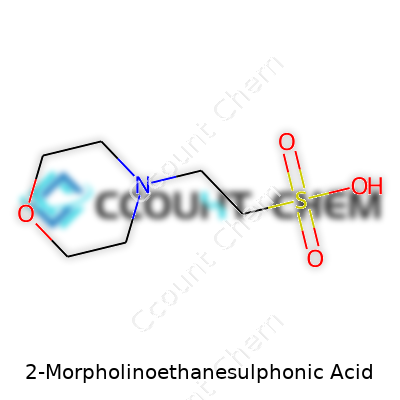
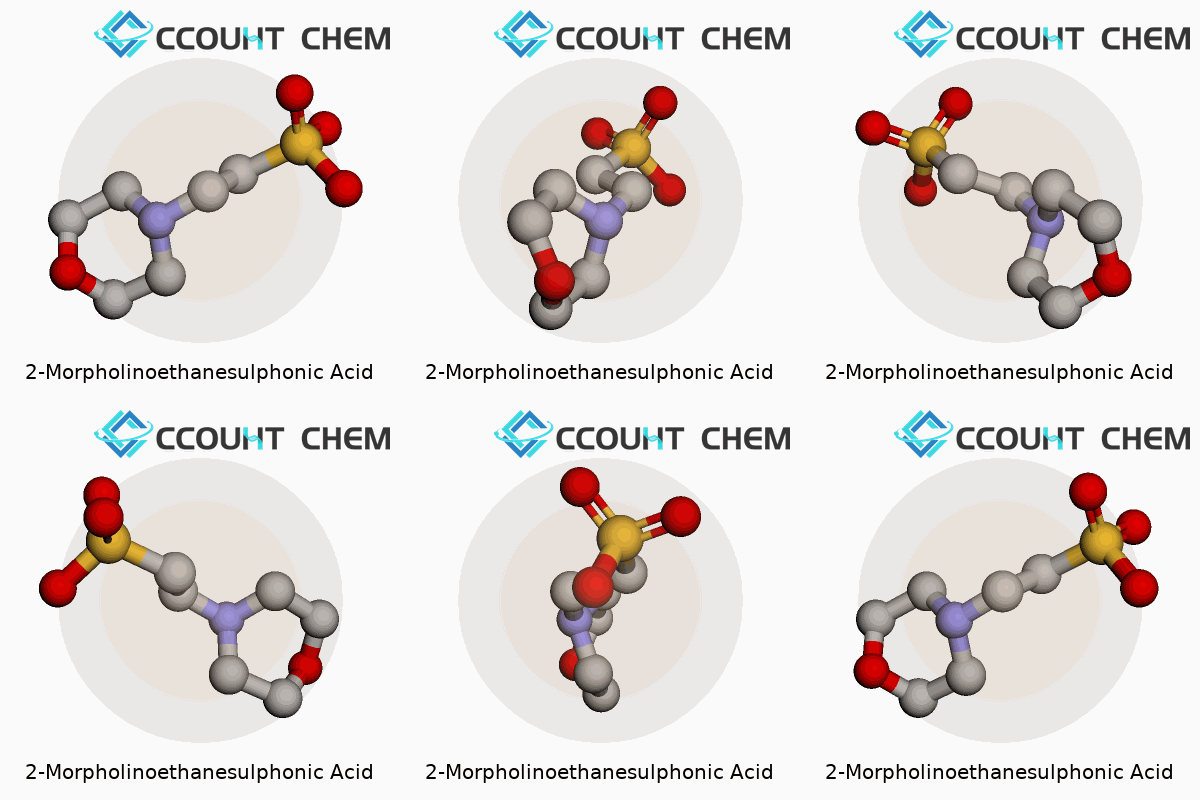
| Names | |
| Preferred IUPAC name | 4-Morpholineethanesulfonic acid |
| Other names |
MES Morpholinoethanesulfonic acid 2-(N-Morpholino)ethanesulfonic acid 2-Morpholinoethane sulfonic acid 4-Morpholineethanesulfonic acid |
| Pronunciation | /tuː mɔːˌfɒrɪˌloʊ.iːˈθeɪnˌsʌlˈfɒnɪk ˈæsɪd/ |
| Identifiers | |
| CAS Number | 4432-31-9 |
| Beilstein Reference | 1720290 |
| ChEBI | CHEBI:39099 |
| ChEMBL | CHEMBL1375 |
| ChemSpider | 16718 |
| DrugBank | DB03742 |
| ECHA InfoCard | 100.037.414 |
| EC Number | 01-2119489399-20-XXXX |
| Gmelin Reference | 82289 |
| KEGG | C02336 |
| MeSH | D017176 |
| PubChem CID | MES (2-Morpholinoethanesulphonic Acid) has the PubChem CID: '7017' |
| RTECS number | MP8050000 |
| UNII | J3R93D8PMK |
| UN number | “UN1760” |
| CompTox Dashboard (EPA) | DTXSID2021697 |
| Properties | |
| Chemical formula | C6H13NO4S |
| Molar mass | 207.24 g/mol |
| Appearance | White crystalline powder |
| Odor | Odorless |
| Density | 1.045 g/cm³ |
| Solubility in water | Soluble in water |
| log P | -4.2 |
| Vapor pressure | 6.5 x 10^-7 mmHg (25°C) |
| Acidity (pKa) | pKa = 7.1 |
| Basicity (pKb) | 5.6 |
| Refractive index (nD) | 1.511 |
| Viscosity | Viscous liquid |
| Dipole moment | 6.44 D |
| Thermochemistry | |
| Std molar entropy (S⦵298) | 309.0 J·mol⁻¹·K⁻¹ |
| Std enthalpy of formation (ΔfH⦵298) | -482.8 kJ/mol |
| Std enthalpy of combustion (ΔcH⦵298) | -2063 kJ·mol⁻¹ |
| Pharmacology | |
| ATC code | NO ATC |
| Hazards | |
| Main hazards | Causes serious eye irritation. |
| GHS labelling | GHS07 |
| Pictograms | GHS07 |
| Signal word | Warning |
| Hazard statements | H302, H315, H319 |
| Precautionary statements | Precautionary statements: P261, P305+P351+P338 |
| NFPA 704 (fire diamond) | 1-0-0 |
| Flash point | > 230 °C |
| Autoignition temperature | 210°C |
| Lethal dose or concentration | LD50 Oral Rat 5200 mg/kg |
| LD50 (median dose) | LD50 (median dose): >5,000 mg/kg (oral, rat) |
| NIOSH | NJ0525000 |
| PEL (Permissible) | Not established |
| REL (Recommended) | 5 mg/m³ |
| IDLH (Immediate danger) | Not listed |
| Related compounds | |
| Related compounds |
MES sodium salt HEPES MOPS PIPES TES Tricine |



